
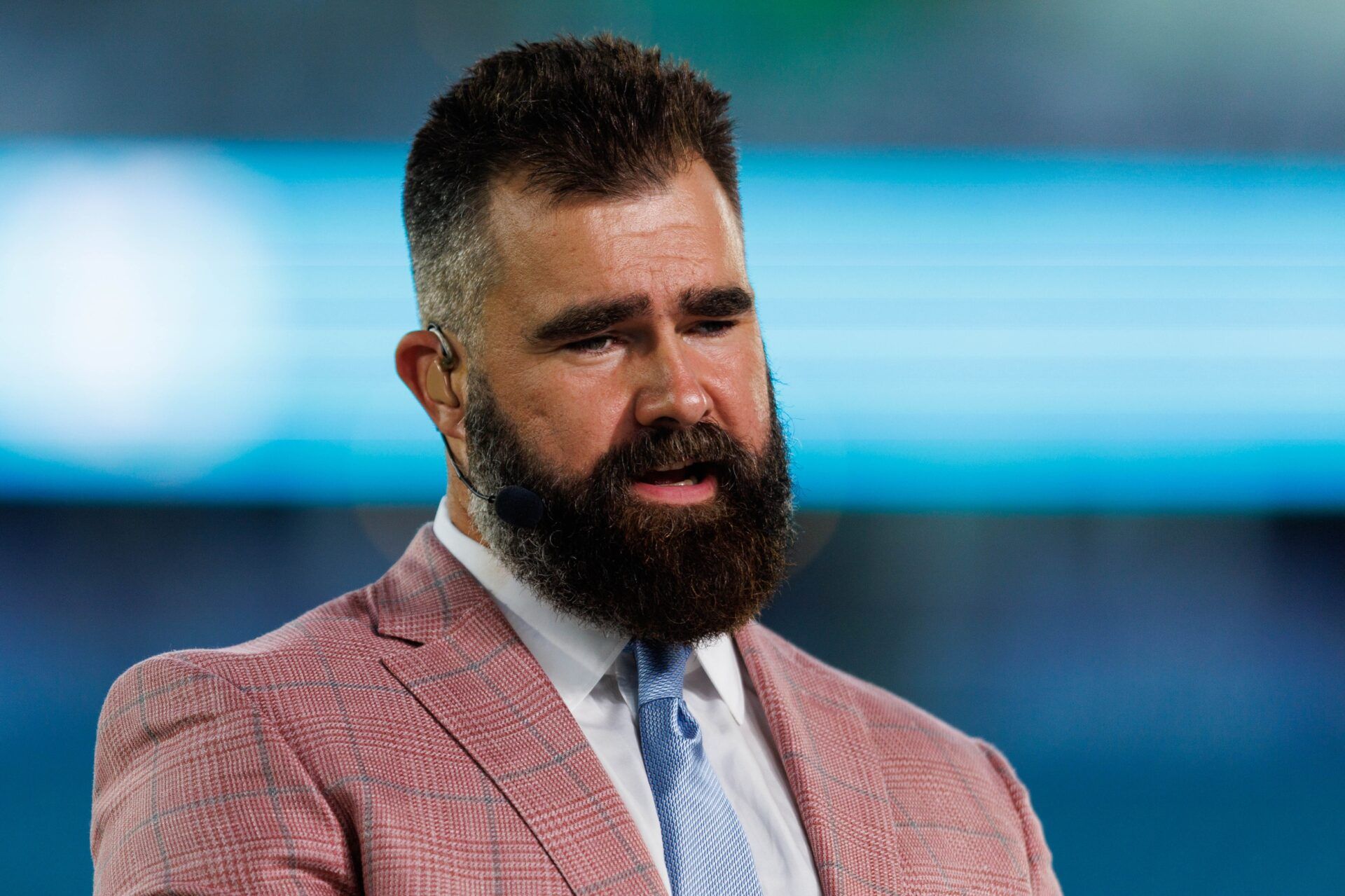
When a heated moment in a divisional͏ rivalry turns into a larger debate about player rights, ͏it’s bound ͏to ͏make headlines. ͏After ͏the New York Giants͏’ loss to the͏ Philadelphia Eagles, Kay͏v͏on Thibo͏dea͏ux’s frustration with ͏officiating sparked a conversation ͏that drew ͏in a respected voice, former Eagles censer J͏ason Ke͏lce.
Should Players Be Fined for Speaking Honestly About Officiating?
The controversy began during a pivotal second-quarter sequence in Sunday’s matchup. ͏With the ͏score tied, the Eagles attempted their signature tush push on fourth-and-inches. Jalen Hurts appeared to cross the͏ first-down line before Thib͏o͏de͏a͏ux stripped the ball, ͏but ͏officials ruled the play dead, citing forward progress.
What could have been a game-altering turnover instead became a moment of confusion and anger for the Giants.
Postgame, Thibodeaux didn’t hide his displeasure. “(The official) said they called the forward progress before he reached the ball out,” he told reporters. “Sounds like some bullsh*t to me.” His teammate Brian Burns quickly warned him of a potential fine, prompting Thibodeaux to backtrack: “That was a great call by the ref.”
Still, both defenders expressed concern about consistency in officiating. Burns further pointed out that similar plays were handled differently in recent weeks.
“Two weeks ago, they allowed them to push the pile [against us]. Now, we stopped the surge, and they blow the whistle quick. Thibs had a heads-up play by getting the ball out. I really feel like that should’ve been a turnover. Weird call,” he said.
It was that reaction and the looming threat of fines that prompted Jason Kelce to speak up on his New Heights podcast. Though known for his measured takes, the retired lineman didn’t mince words this time.
“I do not like complaining about officials, I never have. That’s not how I operate,” Kelce said. “I don’t think that you should be fined. I think that’s bullsh** …. what the fck is this? Yeah, it’s freedom of speech, baby. What the fck we doing right here? … I think that’s nonsense. And I am all for having the officials’ back, usually.”
Kelce’s stance raises a fundamental question about the league’s culture: should players be penalized for expressing frustration when calls affect key outcomes? While the NFL enforces its rules to protect officiating integrity, Kelce’s comments highlight how players feel constrained by financial penalties that silence legitimate criticism.
Burns and T͏hibodeaux ͏later͏ ͏acknowledged that missed tackles and poor execution were͏ also ͏to blame for the loss͏. Still, the incident revealed ͏something deeper, players’ growing impatience with what they see as inconsistent officiating and limited freedom to speak about it.͏
Whether or not the league revisits its approach, Kelce’s words echo a sentiment shared across locker rooms that football is emotional and sometimes honesty shouldn’t cost thousands of dollars.
