
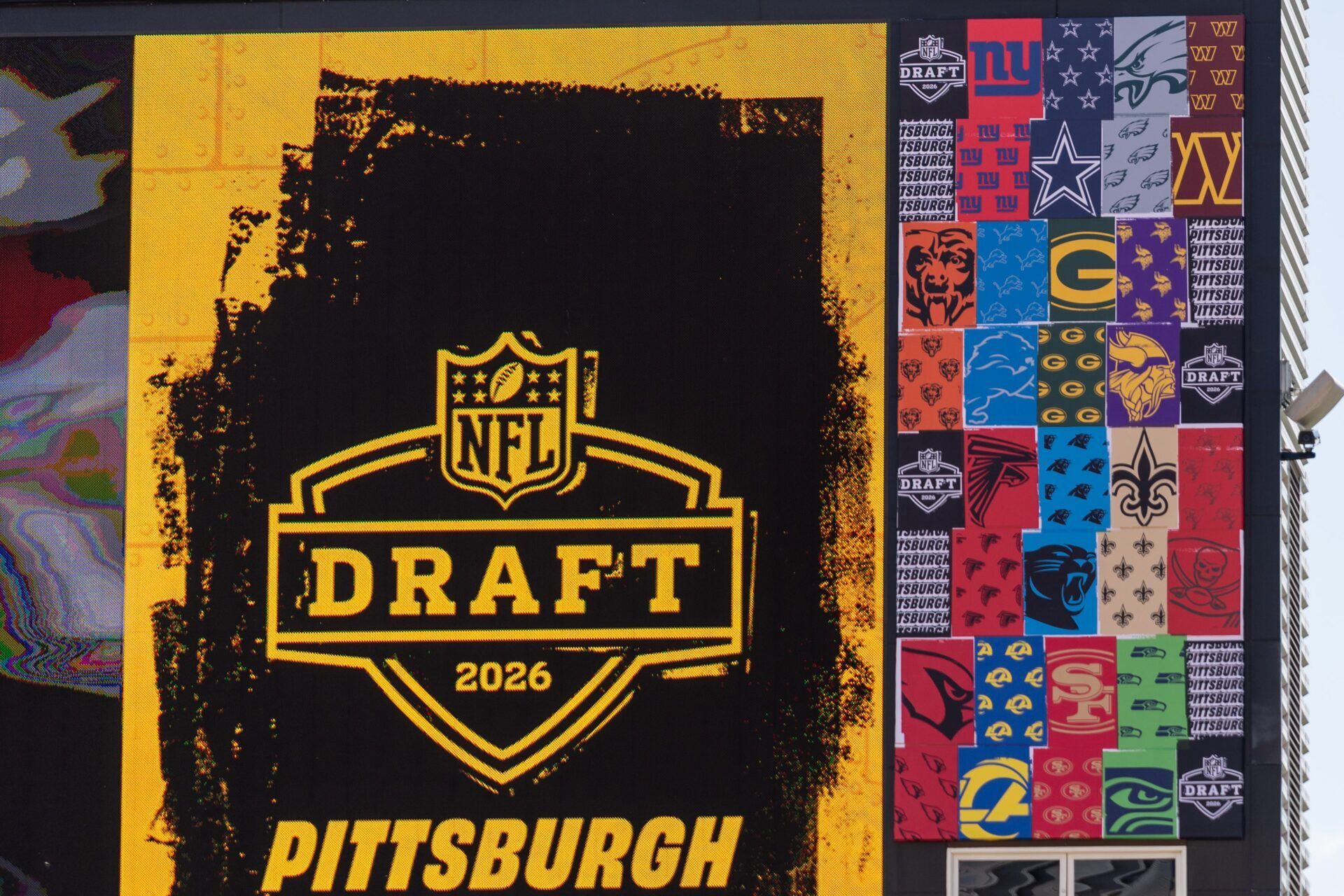
The NFL shaved two minutes off every first-round pick for 2026, and Steelers general manager Omar Khan is already feeling it. On Thursday night in Pittsburgh, every team making a first-round selection will work on an eight-minute clock instead of the 10 minutes they had from 2008 through last year. The change is small on paper and significant in practice, particularly for any GM hoping to engineer an in-round trade.

NFL Draft Pick Time Limits by Round in 2026
Teams get eight minutes per pick in Round 1, seven minutes in Round 2, five minutes for each selection in Rounds 3 through 6, and four minutes in Round 7. Those windows apply to regular and compensatory picks alike. The league left Rounds 2 through 7 untouched and targeted the opening round alone, where pacing had ballooned to nearly four hours.
It’s the first timing adjustment to the first round since 2008, when the window dropped from 15 minutes to 10. At eight minutes apiece across 32 selections, the theoretical ceiling drops by 64 minutes. Commissioner Roger Goodell first floated the idea of a shorter first round on “The Pat McAfee Show” last spring, proposing seven minutes with a one-time extension. The league settled on eight minutes and made it official in December.
The 2026 NFL Draft kicks off Thursday at 8 p.m. ET in Pittsburgh. Rounds 2 and 3 follow Friday at 7 p.m., with Rounds 4-7 beginning Saturday at noon. Total selections: 257, including 33 compensatory picks spread across 15 teams.
The asymmetry of the change is the part most previews have glossed over. The league tightened the window where picks carry the most capital and the most TV attention, then left every other round alone. Any creative in-round maneuvering now has to happen during the one round where every team has the least time to do it.
GMs are already working around that. Khan said he’d prefer the old format but called the new window workable. “Eight minutes is what it is, but those two minutes, it feels like an eternity sometimes,” Khan told reporters. He added that trade groundwork has to be laid earlier, with GMs around the league holding more pre-draft conversations to lock in move-up and move-down values before they’re ever on the clock.
San Francisco general manager John Lynch made the same point. “You aren’t going to have that ability on draft day,” Lynch said of in-round negotiating. “Two less minutes to make those things happen.”
What Happens When the NFL Draft Clock Runs Out
A team that doesn’t submit a card before the buzzer doesn’t forfeit the pick. The next team in line can jump ahead, and the delayed team still selects whenever it’s ready. However, the player it wanted may be gone by then.
The 2003 Vikings were the textbook cautionary tale. Minnesota thought it had agreed to a trade with Baltimore at No. 7, but Ravens GM Ozzie Newsome said afterward that the deal was never finalized because he hadn’t confirmed it with the league. Jacksonville grabbed Byron Leftwich at No. 7. Carolina took Jordan Gross at No. 8. Minnesota finally turned in its card at No. 9 and selected Kevin Williams, the player it had been targeting all along.
The Vikings had 15 minutes that night. This year’s GMs have eight.
The mechanics tighten the squeeze further. A runner physically carries each team’s selection card from its table to league personnel, who input the pick into a database that notifies every other club. Every second counts toward the trade window, and every second also has to cover the handoff.
Six teams walk into Pittsburgh with two first-round picks: the Browns, Chiefs, Cowboys, Dolphins, Giants and Jets. Movement is coming. The subplot worth watching Thursday night is whether any GM pushes the new eight-minute envelope past its breaking point, and what it costs them when they do.