
No team has ever been shut out in 59 Super Bowls. Through blowouts, upsets, and some of the most dominant defensive performances the sport has produced, every team that has taken the field on football’s biggest stage has managed to put at least some points on the board.
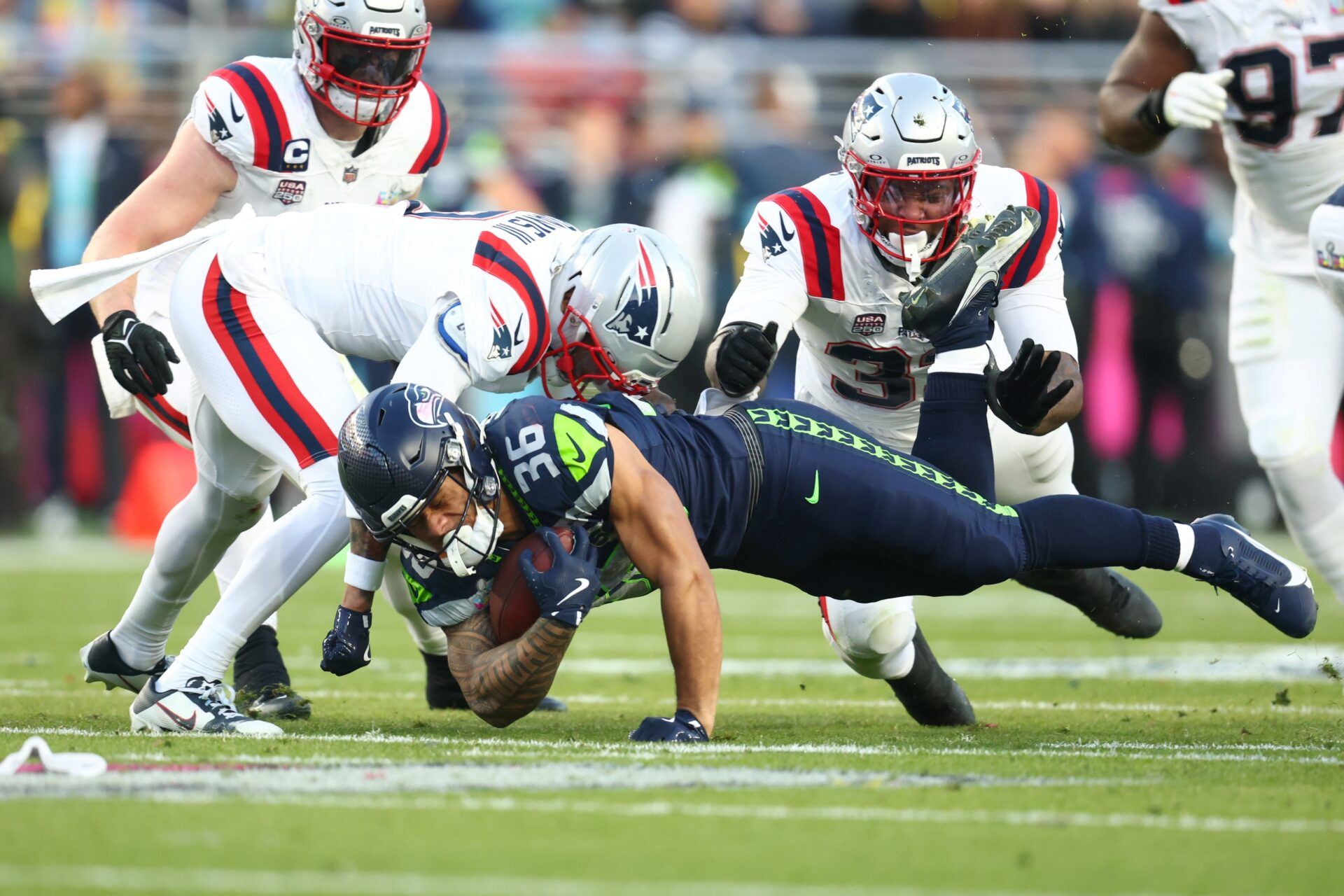
That streak is being tested in Super Bowl 60, where Seattle’s suffocating defense held the Patriots scoreless through the first half at Levi’s Stadium. Whether or not that holds, 59 prior champions and losers alike have all avoided the goose egg.
Why No Super Bowl Team Has Ever Been Shut Out
The closest any team came to recording a shutout in the Super Bowl remains one of the most famous blunders in league history. In Super Bowl VII on Jan. 14, 1973, the Miami Dolphins were cruising 14-0 against Washington with just over two minutes remaining, poised to cap their perfect 17-0 season with a 17-0 victory.
Kicker Garo Yepremian lined up for a 42-yard field goal that would have sealed both the shutout and a poetic finish. Instead, the kick was blocked. Rather than falling on the loose ball, Yepremian picked it up and attempted a forward pass. The ball slipped from his grip, floated into the air, and Washington cornerback Mike Bass grabbed it and returned it 49 yards for a touchdown.
“I shoulda just fallen on the ball,” Yepremian told reporters afterward. “I shoulda ate it, but I made a mistake.”
Miami still won 14-7, completing the only perfect season in NFL history. But the shutout vanished in an instant, replaced by a blooper that went 1970s viral. Yepremian later said: “Every airport you go to, people point to you and say, ‘Here’s the guy who screwed up in the Super Bowl.'”
That remains the longest a team has gone scoreless in a Super Bowl. Washington didn’t score until 2:07 remained in the fourth quarter, and that lone touchdown came entirely from the defense.
Beyond that near-miss, two teams share the record for fewest points in a Super Bowl with three: the 1971 Miami Dolphins in a 24-3 loss to Dallas in Super Bowl VI and the Los Angeles Rams in their 13-3 loss to New England in Super Bowl LIII. That Patriots-Rams game also holds the record for fewest combined points in Super Bowl history at 16.
MORE: Ranking the 5 Best Super Bowls of All-Time: Revisiting the Most Exciting Title Games in NFL History
The Vikings hold an unfortunate distinction of their own. In Super Bowl IX, Minnesota’s offense was completely shut out in a 16-6 loss to the Pittsburgh Steelers. The Vikings’ only points came on a blocked punt recovered for a touchdown. Minnesota was held to single-digit scoring in three of their four Super Bowl appearances, never cracking double digits until a 32-14 loss to Oakland in Super Bowl XI.
Then there’s Super Bowl XLVIII, when Seattle’s legendary Legion of Boom dismantled Peyton Manning and the record-setting Broncos offense. The Seahawks built a 36-0 lead before Denver scored with zero seconds left in the third quarter, on the way to a 43-8 rout.
That 36-0 advantage was the largest shutout lead in Super Bowl history, shattering the previous record of 24-0 shared by the Dolphins in Super Bowl VIII and Washington in Super Bowl XXVI. Seattle scored the first seven times it had the ball in that game. Denver, the league’s highest-scoring offense that season, looked like it had wandered onto the wrong field.
Seattle’s 2025 Defense and the Super Bowl 60 Shutout Watch
What competing coverage misses when exploring this question is the connection between why shutouts don’t happen and what it would take for one to finally occur. The two-week preparation window before the Super Bowl gives offensive coaching staffs time to scheme around even the most dominant defenses. Teams don’t walk in blind. The quality of opponent also matters. By definition, both Super Bowl teams won three or four playoff games to get there. These are not overmatched rosters.
That context makes what the 2025 Seahawks have done all season even more striking. Seattle led the NFL in scoring defense, allowing 17.2 points per game during the regular season, the first time the franchise topped that category since doing it for four straight years from 2012-15. Mike Macdonald’s unit also finished No. 1 in total defense and No. 1 in DVOA, the same efficiency metric that loved those early-decade Seattle defenses that produced back-to-back Super Bowl trips.
Lake Forest’s Rylie Mills with an impressive sack on Drake Maye in the Super Bowl 💪 pic.twitter.com/As4R4KrhFq
— Adam Hoge (@AdamHoge) February 9, 2026
DeMarcus Lawrence, who signed with Seattle before the season, called this the best defense he’s played on in 12 NFL seasons. “Yes, and I mean that wholeheartedly,” Lawrence said after the team’s 26-0 shutout of Minnesota in Week 13. “Y’all haven’t seen the best of us.”
Leonard Williams, who had that Lawrence quote printed on a T-shirt he wore to a press conference, put it more simply: “I feel like we just have a pack of dogs, a pack of wolves on our defense. What makes us great is that we just play as one and we swarm.”
The Seahawks held opponents to a league-low 3.7 yards per carry, built a franchise-record 26-game streak without allowing a 100-yard rusher, and generated 122 quarterback hits during the regular season. They are, by almost every measure, the most dominant defense to reach the Super Bowl since Seattle’s own 2013 unit.
A shutout remains the one piece of Super Bowl history no defense has claimed. If any group has the talent and the mentality to do it, it’s a unit whose defensive coordinator, Aden Durde, built a “death zone mentality” inspired by a mountaineering documentary, and whose players believe they haven’t peaked yet. Sixty Super Bowls in, the zero remains unclaimed.