
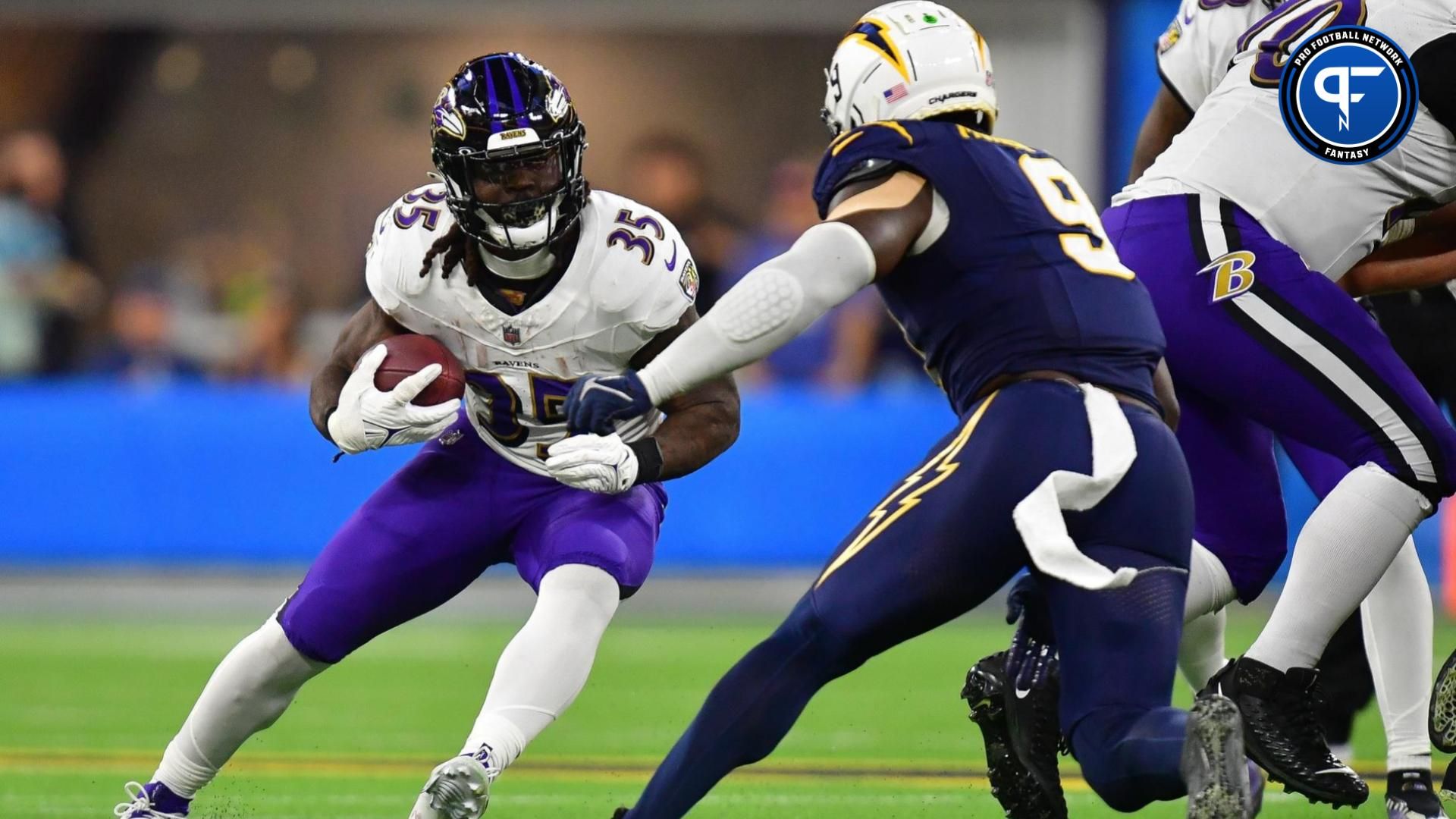
Los Angeles Chargers RB Gus Edwards is coming off a career year with the Baltimore Ravens (13 touchdowns, doubling his career total entering last season) and is hoping to repeat that success in an offense that projects as run-centric under Jim Harbaugh.
The fantasy football community is skeptical despite what appears to be a featured role. Should you embrace the discount or take your chances elsewhere?
Should You Select Gus Edwards at His Current ADP?
ADP: 107th Overall (RB37)
Whether you play in PPR, half-PPR, non-PPR, or some exotic format, the ability to catch the ball is a valuable trait for running backs. You’re rewarded differently in leagues on a per-reception basis, but these touches come with more yardage upside and increase a player’s playing time. I’m told that being on the field is directly correlated to fantasy potential.
Edwards has 30 catches in 69 career games, and a run-heavy scheme isn’t likely to result in any major changes on that front. At the moment, he’s being drafted just outside the top 35 at the position despite having a pretty clear path to consistent work.
The Chargers also brought over J.K. Dobbins from Baltimore this offseason, though he has yet to prove capable of holding up during a full professional season.
I don’t mind the idea of stashing a player like Edwards. I’m just not doing it in this range. He figures to still hold scoring equity when the Chargers get in tight, and a touchdown can bail you out if you’re battling injuries/bye weeks. But this isn’t the type of profile that I’m really ever going to consider starting outside of an emergency.
In Edwards’ ADP range is Ezekiel Elliott (a versatile version of him on a better offense) and Charbonnet (less weekly upside, but I’d instantly rank him higher if Kenneth Walker III were to get injured).
Edwards is going shortly after Nick Chubb and Chase Brown, two running backs whose downside I’d be much more likely to overlook based on the offenses built around them.
My most common selection in the Round 10-11 neighborhood in which Edwards lives is Mike Williams, an injury-plagued receiver set to play with a Hall of Fame quarterback. Williams is, essentially, the WR version of Edwards and in a situation I prefer given the players around him.
There’s no such thing as a “bad” pick at this point in the draft. Edwards just isn’t a fit for how I like to fill out my bench.
Edwards’ Fantasy Profile for the 2024 NFL Season
This is a classic “how valuable is the role” situation. We see a handful of similar decisions pop up annually, and they can make or break your season. Nothing Edwards did last season looked much different than his career prior outside of his conversion rate in close.
Gus Edwards getting it done 💪 pic.twitter.com/1ZNimnJrCV
— Fantasy Life (@MBFantasyLife)
Edwards’ yards per carry tanked (down 20.5% from his career rate prior), he averaged under one target per game (something he has done in all five of his NFL seasons), and he failed to generate big plays (one fewer 10+ yard rush in 2023 than Zach Charbonnet despite 90 more attempts).
All of that should make Edwards an easy fade this season. Yet, because he ran hot on extended opportunities inside the 20-yard line, we’re obligated to at least consider him as a viable option.
Edwards Red-Zone Conversion Rates
- 2023: 33.3%
- 2022: 25.0%
- 2021: DNP
- 2020: 23.5%
- 2018-19: 6.3%
Efficiency crossed with volume at the exact same moment, which made Edwards a consistent Flex-worthy option. That was great if you rostered him in 2023, but it doesn’t mean anything for 2024.
Not only is a big touchdown season like that hard to repeat for a marginal talent who lacks versatility but the waters muddy further when you remove the offensive environment that allowed Edwards to overachieve.
Gone is Todd Monken’s creative system. Gone is an all-world athlete under center who threatens defenses on the perimeter. Gone (likely) are upwards of half of the red-zone trips his team will make. (Baltimore averaged 39.3% more red-zone drives per game last season than Los Angeles, a gap that could widen given the offseason movement of both teams.)
No matter how you view the Chargers’ new-look offense (new coaching staff and new roles for just about everyone), they don’t carry nearly the upside as the Ravens do. That figures to sap value from Edwards in a significant way.
But that’s no secret, and it’s baked into Edwards’ ADP. Is the downgrade in his stock enough?