
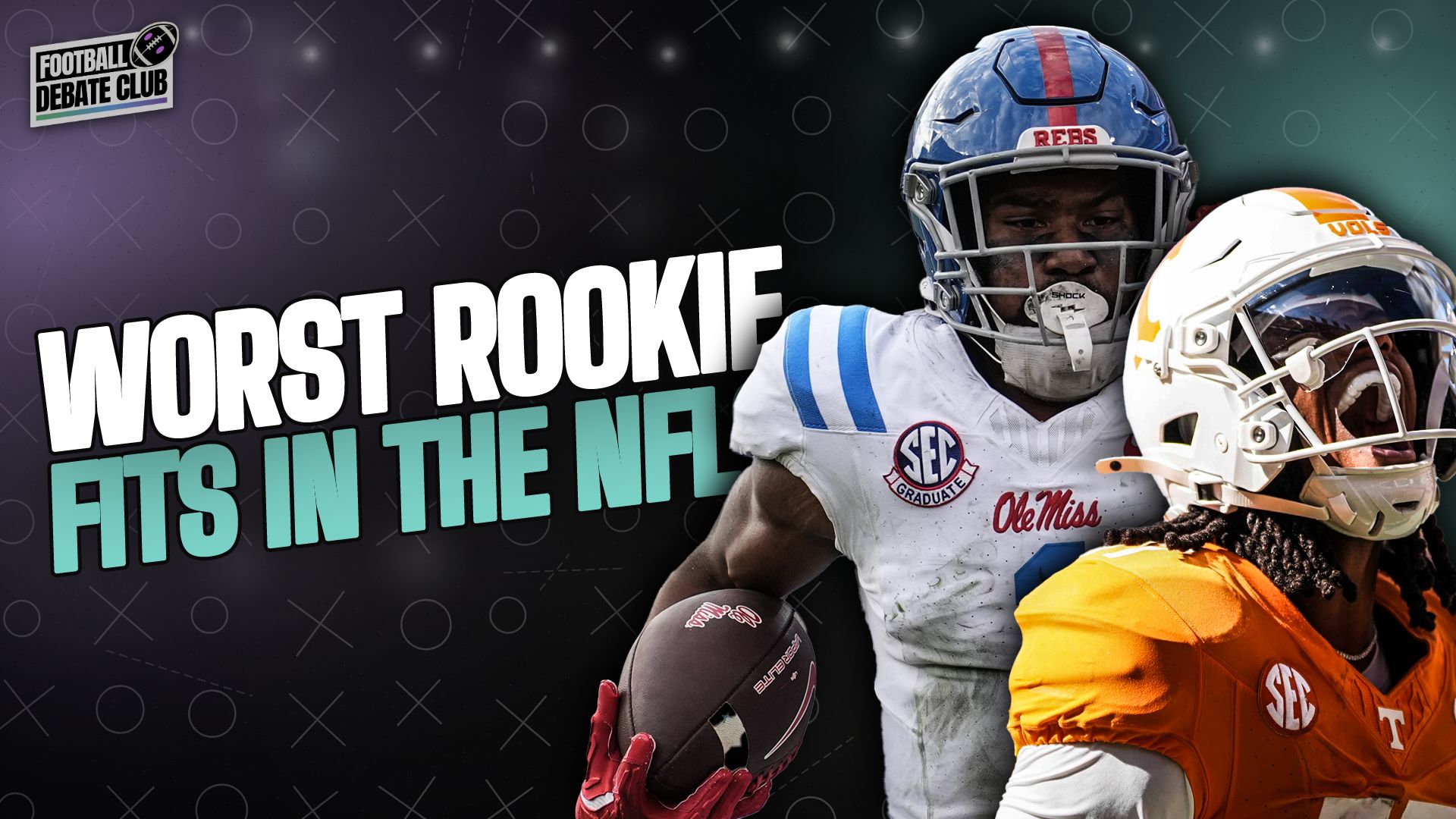
The worst landing spot for a 2026 rookie receiver did not go to a late-round flier. It went to a player San Francisco valued enough to take with the first pick of the second round.
De’Zhaun Stribling went No. 33 overall to the 49ers, the highest-drafted of the rookie receivers whose fits drew scrutiny, and he walked into a room that may not have a snap to spare. On PFSN’s Football Debate Club, when the panel searched for the rookie in the toughest spot, Alec Elijah landed on Stribling. The target math is hard to argue with.
Why San Francisco Is the Worst Landing Spot for a Rookie Receiver
The 49ers added Mike Evans and Christian Kirk in free agency. They already had Ricky Pearsall, their 2024 first-round pick, entering his third season as the room’s ascending incumbent. Then they spent their first selection of the draft on another receiver.
“To me, this was not just a bad spot, but more of a head scratcher pick, considering there were other deep threats available like Denzel Boston, Malachi Fields and even Chris Brazzell,” Elijah said.
Stribling is not the problem. He ran a 4.36 40-yard dash at 6-foot-2 and produced across three programs at Washington State, Oklahoma State and Ole Miss, even if he never cleared 1,000 receiving yards in a single season. The issue is the depth chart in front of him. Evans, Kirk and Pearsall will command the bulk of the targets in Kyle Shanahan’s offense, and rookies rarely pry volume loose from that kind of veteran group.
“I really don’t find a way that Stribling can get fed in that offense,” Elijah said.
There is a runway, just not in 2026. Kirk arrived on a one-year deal, but Evans signed for three years, so the veterans ahead of Stribling are not all short-term placeholders. For now, Stribling profiles as a developmental fourth option on a contender, the definition of a tough Year 1.
Chris Brazzell, Bryce Young and Carolina’s Runner-Up Case
Ian Cummings went a different direction, flagging Chris Brazzell to the Carolina Panthers at No. 83 overall. His concern was not opportunity. It was fit.
“I did think it was very good value. That said, I don’t know if it’s the best fit with Bryce Young as a QB,” Cummings said. “Bryce Young’s 6.4 average depth of target last year was 29th out of 33 qualifying quarterbacks.”
Young was one of the league’s more conservative downfield passers in 2025, leaning on quick, high-percentage throws. Brazzell, a 6-foot-4 catch-point operator, is built to win down the field and at the boundary, not to work as an underneath outlet. Carolina also already has its big-bodied perimeter weapon in Tetairoa McMillan, the 2025 Offensive Rookie of the Year.
“What Carolina needed was a short range man coverage separator who could provide an easy outlet for Bryce Young,” Cummings said. “He’s more of a deep target. I think he’s fairly redundant with the personnel that they had.”
The redundancy is real, but Brazzell’s path to snaps may be clearer than Stribling’s. Carolina’s pecking order behind McMillan is unsettled, while San Francisco’s top three is locked in. Worst landing spot is a Year 1 question, and the answer is Stribling. The follow-up worth watching is whether Kirk’s one-year deal and Pearsall’s trajectory leave him a path to climb the depth chart in 2027, with Evans signed through 2028.