
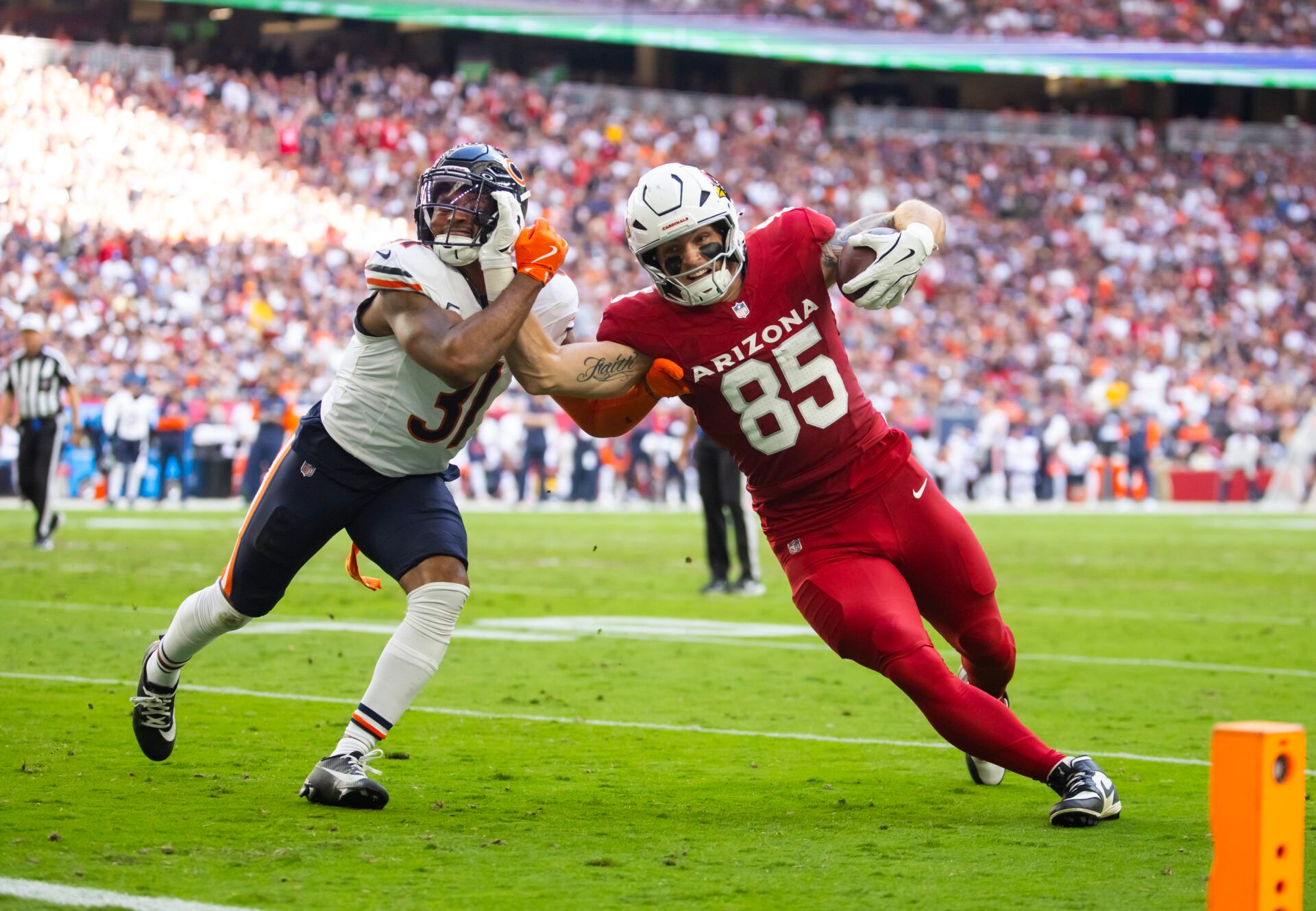
Trey McBride enters 2025 with the production to warrant early-round consideration, but PFSN data reveals concerning patterns that suggest fantasy managers should pump the brakes.
While industry consensus has McBride going in the third round, PFSN’s Fantasy Football Mock Draft Simulator shows that managers are often waiting until the late fourth, sensing value others are missing.

The Touchdown Drought Dilemma
McBride’s reliability becomes questionable when examining his scoring consistency.
Across all three NFL seasons, he’s had a run of at least seven straight games without a touchdown, representing a troubling pattern that transforms reliable weeks into fantasy frustration. These extended droughts aren’t outliers; they’re recurring themes that can sink playoff hopes regardless of target volume.
The 2024 season exemplified this feast-or-famine approach. Despite finishing with solid overall numbers, 111 receptions for 1,146 yards, McBride failed to record a receiving touchdown until Week 17. He finished with just three touchdowns total on the season.
On his 98th catch of the year, Trey McBride gets his first TD!
📺: #AZvsLAR on NFL Network
📱: Stream on #NFLPlus pic.twitter.com/vaEpSTZawt— NFL (@NFL) December 29, 2024
Field Position Tells the Story
The underlying data explains why these scoring droughts persist. Throughout his career, 56.6% of McBride’s catches and 57.2% of his targets have occurred on Arizona’s side of the field. This usage pattern suggests the Cardinals view him primarily as a security blanket for moving the chains rather than a red zone weapon.
While raw touchdown totals can fluctuate year-over-year, this field position trend indicates limited touchdown equity within an otherwise impressive receiving profile. McBride’s value stems from volume and yardage accumulation, not scoring upside that separates elite tight ends from the pack.
The Playoff Schedule Mirage
Many analysts point to Arizona’s favorable fantasy playoff schedule in 2025, which includes matchups against Atlanta and at Cincinnati, as reason to target McBride earlier than his PFSN ADP suggests.
However, favorable matchups matter little when a player’s usage pattern limits red zone opportunities. The Cardinals’ offensive philosophy channels McBride’s targets toward the middle of the field, making him less likely to capitalize on defensive weaknesses near the goal line.
Value Versus Upside
PFSN users recognize the disconnect between McBride’s perceived value and his fantasy ceiling. While he offers a safe floor through consistent targets, the scoring droughts and field position data suggest his ceiling remains capped compared to tight ends drafted in similar ranges.
The late fourth-round price reflects this nuanced understanding. Managers can still access McBride’s reliable target share without paying a premium for touchdown upside that may never materialize. This positioning allows roster construction flexibility while acknowledging both his strengths and limitations.
McBride remains a viable fantasy option, but the PFSN data reveals why our users are letting others reach for him earlier. Sometimes the best move is recognizing when a good player isn’t worth the premium price, especially when patterns suggest the scoring inconsistency will continue.
