
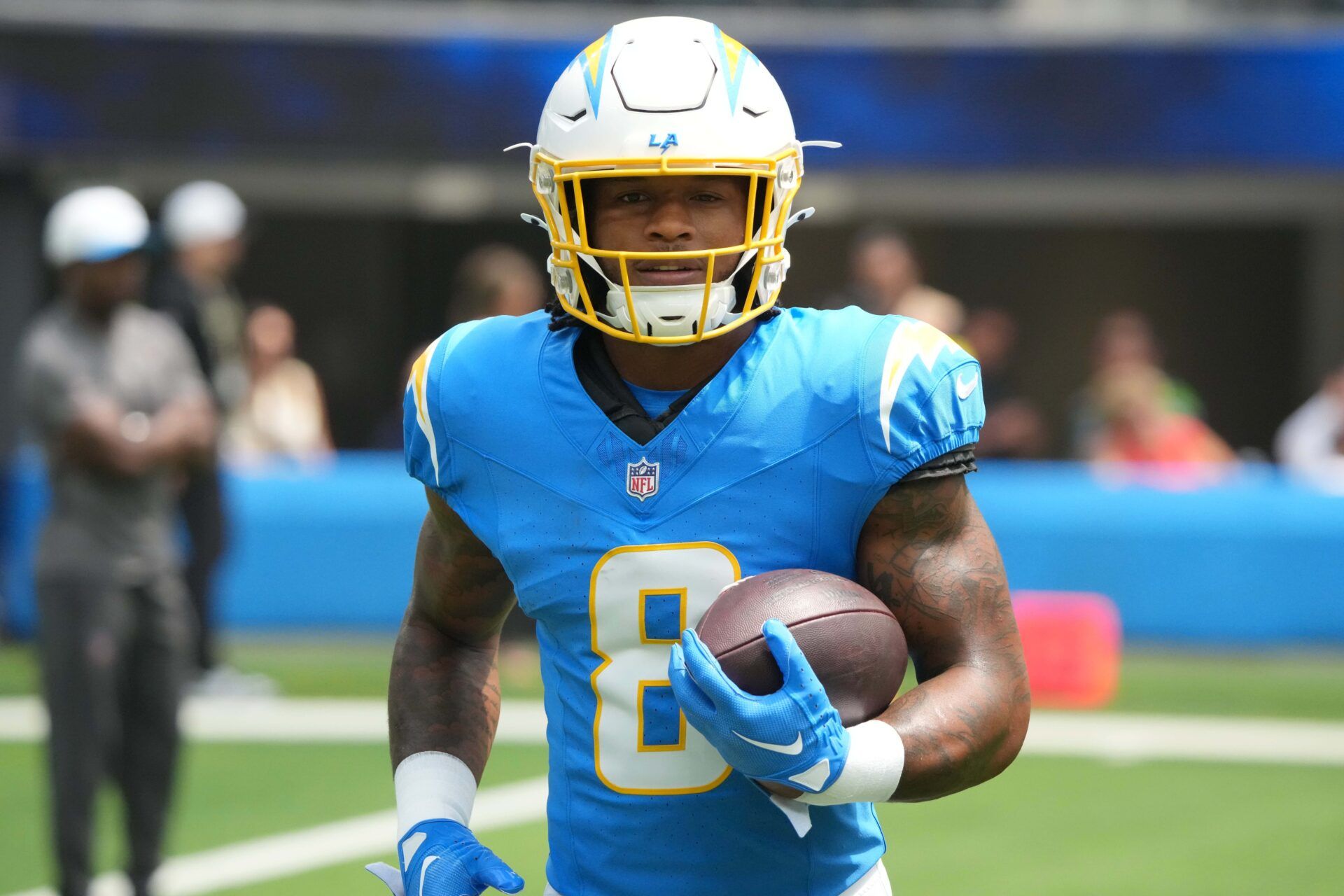
We are two weeks into a long NFL season. Yet, fantasy football managers can be quite impatient with slow stars, especially from players they expected more from. Los Angeles Chargers rookie running back Omarion Hampton has come out of the gate slower than a Peyton Manning scramble. Should fantasy managers look to move on already?
Should You Drop Omarion Hampton?
The answer is a resounding no. Hampton’s slow start has been frustrating, but dropping him would be rash and premature. Despite the early struggles, fantasy managers should stay the course with their third-round investment.
Hampton has averaged just 3.1 yards per carry through two weeks, a concerning efficiency mark that has fantasy managers questioning their draft choice. While he’s seen 72% of the Chargers’ running back carries, his 6.6% target share in the passing game remains disappointingly low. Most troubling for fantasy purposes, Hampton has yet to score a touchdown despite significant volume.
The Chargers’ offensive approach has also worked against Hampton’s fantasy value. Los Angeles has been more pass-heavy than expected, throwing 59% of the time in neutral game script situations. This shift toward aerial attack limits Hampton’s ceiling in what many expected to be a ground-heavy Jim Harbaugh offense.
Hampton’s rush share is also somewhat misleading when examining the broader context. Najee Harris was on a strict snap count in Week 1 as he worked back from his eye injury, inflating Hampton’s early usage numbers. Harris became more involved in Week 2, and it’s becoming clear that head coach Harbaugh envisions this as a committee backfield rather than a feature back situation.
The fumble against Las Vegas on Monday night further complicated Hampton’s standing. Following his late-game turnover, Hampton did not play again, with Harbaugh opting to use Harris to salt the game away in the final minutes. This usage pattern suggests the coaching staff may have concerns about Hampton’s ball security in crucial situations.
However, these early struggles don’t define Hampton’s long-term outlook. Not every rookie can burst onto the scene like Saquon Barkley or Ezekiel Elliott did in their debut seasons. Hampton still possesses the talent and draft capital that made him the 22nd overall pick and can still develop into an RB2 with league-winning upside.
Through two weeks as rookies
> Bucky Irving averaged 5.9 FPG
> Rashee Rice had run 16 total routes
> Jahmyr Gibbs had a 37% snap share and 10.3 FPG
> De’Von Achane had played five snaps
> Breece Hall had a 36% snap share and 12.1 FPG
> Najee Harris averaged 3.2 YPC
>…
— Ryan Heath (@RyanJ_Heath) September 16, 2025
Fantasy managers need perspective when evaluating their early-season disappointments. Hampton was likely drafted in the third round. He’s not the only highly drafted player underperforming through two weeks. If you look back at your league’s history, many successful fantasy teams struggled early before finding their rhythm as the year progressed.
The season is far from over, despite what 0-2 records might suggest. Eight losses end fantasy seasons, not two. There’s still plenty of football left to be played, and Hampton’s talent will eventually translate to production as he adjusts to NFL speed and the Chargers find their offensive identity.
If frustration with Hampton’s performance is mounting, fantasy managers have options beyond dropping him outright. Benching Hampton for more reliable options makes sense until his usage stabilizes and efficiency improves. However, releasing a player with his upside after just two games would be a mistake that could haunt managers later in the season.

omarian hampton so buns