
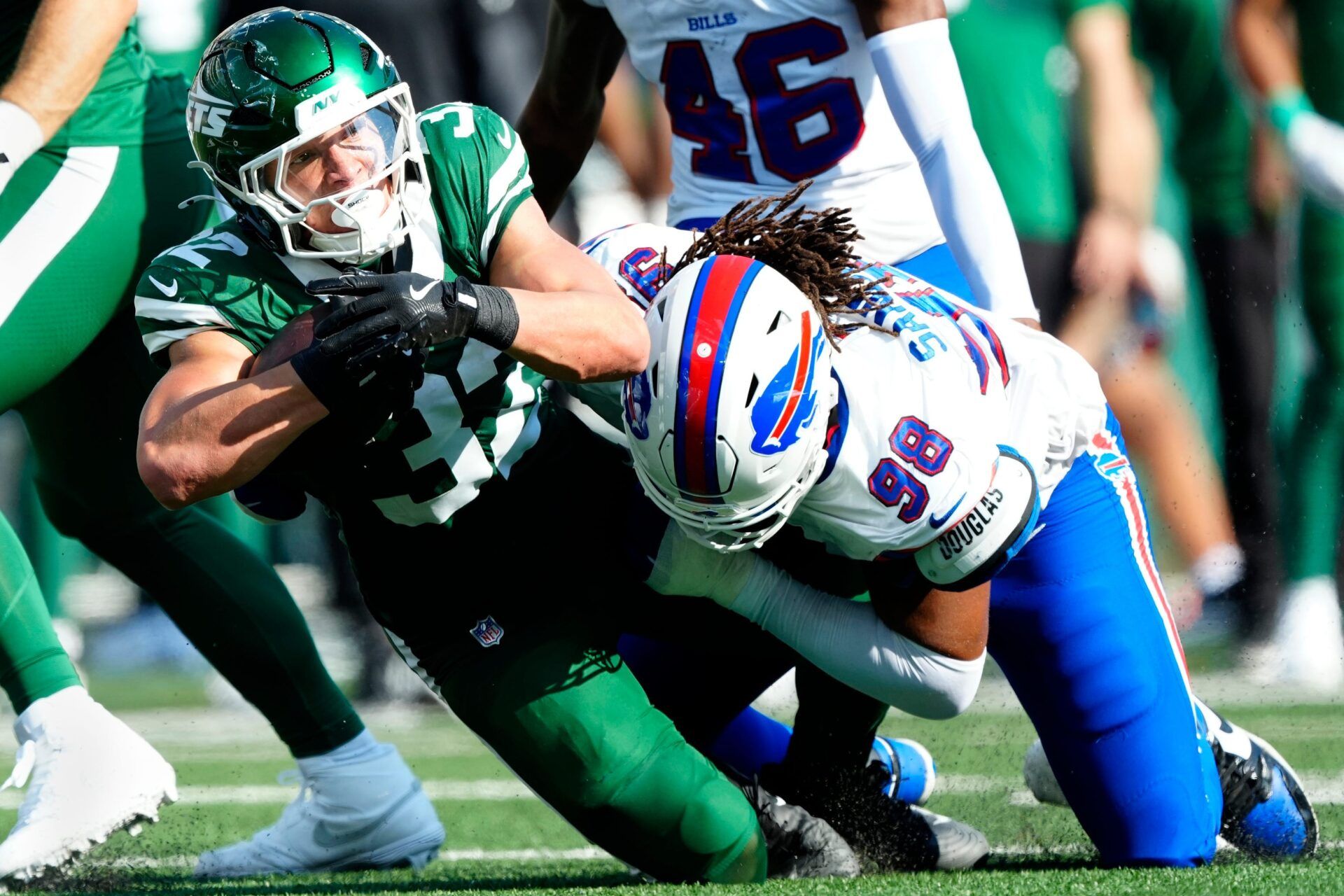
Fantasy football managers are constantly searching for that next breakout player who can salvage their season or provide crucial depth during bye weeks and injuries. The waiver wire becomes a weekly battleground where smart pickups can make the difference between playoffs and disappointment.
With running back injuries mounting across the league, identifying handcuffs and potential starters becomes increasingly valuable. The Jets’ backfield situation presents an interesting case study for Week 5 waiver wire decisions.

Should Isaiah Davis Be a Fantasy Football Waiver Wire Add in Week 5?
Rostered: 0%
On Monday night, the Jets lost Braelon Allen to what looks like a sprained MCL. The injury could cost him 4-6 weeks. That reduces the Jets’ three-man backfield to two men.
Breece Hall is the biggest beneficiary, as he may see upwards of a 70% opportunity share now. But the other guy moving up the depth chart is Isaiah Davis.
The Jets will not keep a three-man backfield just for the sake of doing so. It was based on the personnel they had. Without Allen, this would consolidate into just Hall and Davis.
In the right game script, Davis could be a desperation RB3. At worst, he’s now the Hall handcuff. All of the injuries across the NFL make Davis worth adding.
Aggressiveness Rating: 3.0
Running Back Handcuffs and Depth Chart Changes Drive Fantasy Success
The fantasy football landscape continues to evolve each week, with injuries creating both challenges and opportunities for savvy managers. Davis represents exactly the type of speculative add that can pay dividends in deeper leagues or for managers facing roster construction issues.
While Davis may not immediately step into a featured role, his situation illustrates the importance of staying ahead of backfield changes. The Jets’ offensive system has shown it can support multiple fantasy-relevant running backs when given the right circumstances. With Allen sidelined, Davis moves from complete obscurity to legitimate handcuff status overnight.
Fantasy managers should evaluate their roster construction when considering Davis. Teams already rostering Hall have an obvious motivation to secure his backup, while managers in deeper formats may find value in Davis as a potential flex option during favorable matchups. The condensed backfield means more guaranteed touches for both remaining players.
The broader lesson extends beyond just this specific pickup. Running back depth remains one of the most volatile aspects of fantasy football, with injuries creating weekly opportunities for prepared managers. Davis exemplifies how quickly situations can change and why maintaining active waiver wire engagement proves crucial throughout the season.
Whether Davis becomes a league-winner or simply roster depth depends largely on Hall’s health and the Jets’ offensive efficiency. However, at zero percent rostered, the risk-reward calculation favors adding Davis in most competitive leagues where running back scarcity continues to define weekly lineup decisions.
