
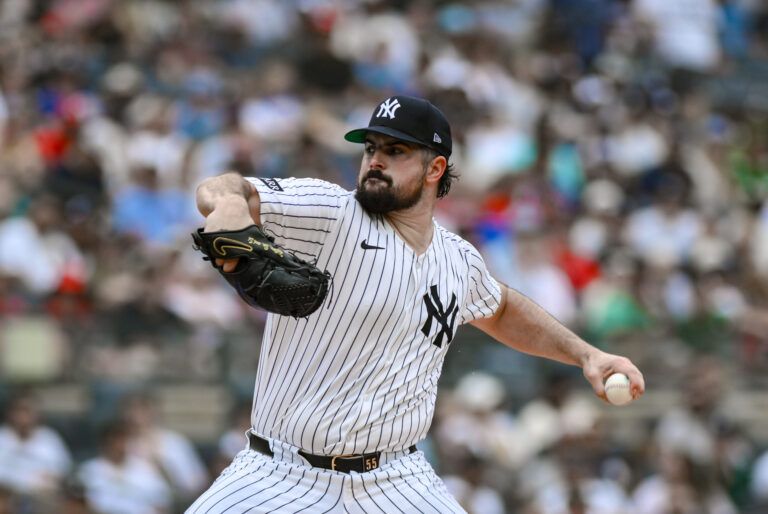
Carlos Rodon’s declining trade value tells a story that savvy fantasy managers should heed. According to PFSN’s Fantasy Baseball Trade Analyzer, the New York Yankees left-hander has been shipped off rosters in 68.3% of trades involving him, signaling widespread concern about his second-half reliability.
While Rodon has delivered solid production this season, his track record suggests trouble may be brewing as the dog days of summer approach.
Why Is Carlos Rodón Being Traded Away at Record Rates?
Rodon’s 2025 campaign presents a fascinating dichotomy that explains the mass exodus from fantasy rosters. Since early June, he has been dominant against NL Central opponents, posting a pristine 0.00 ERA across 14 innings. This microscopic sample size has kept some managers holding onto hope, but the broader picture tells a different story.
Outside of those NL Central matchups, Rodon has been decidedly ordinary with a 5.19 ERA during the same timeframe. This stark contrast highlights a critical issue for fantasy purposes. Matchup dependency has become a defining characteristic of Rodon’s profile. The problem? The Yankees have only three remaining games against NL Central teams, making that dominant stretch meaningless for fantasy planning.
This split performance mirrors concerning patterns that have emerged since Rodon donned pinstripes. His struggles against quality competition and success against weaker opponents suggest a pitcher whose stuff may not translate consistently at the highest level.
For fantasy managers, banking on a small sample of success against inferior competition represents a dangerous gamble.
What Makes Rodón’s Late-Season History So Concerning?
The most alarming aspect of Rodon’s profile involves his documented late-season decline. In 2023, he completely fell apart down the stretch, posting an abysmal 6.85 ERA in September when fantasy championships are won and lost. While he managed to avoid a similar regular season collapse in 2024, his postseason performance revealed the same underlying issues with a 5.60 ERA when the games mattered most.
These patterns suggest that Rodon’s body and effectiveness deteriorate as innings accumulate throughout the season. At 32, this trend becomes even more concerning as recovery time between starts decreases and the physical toll of a full season compounds. Fantasy managers who rode Rodon’s early success in previous years learned this lesson the hard way when he torpedoed their championship hopes.
The PFSN trade data perfectly supports this narrative. Experienced fantasy players recognize these warning signs and are proactively moving off Rodon before the inevitable decline hits. The 68.3% ship rate indicates that fantasy managers aren’t waiting to see if this year will be different. They’re assuming it won’t be based on established patterns.
How Should Fantasy Managers Handle Rodón Right Now?
Current Rodon owners face a critical decision point. His name value and solid overall numbers make him an attractive trade candidate right now, but that window is closing rapidly. The fantasy community’s collective wisdom, as reflected in the trade data, suggests that moving Rodon sooner rather than later represents the optimal strategy.
For those considering trading for Rodon, the discount might seem tempting given his pedigree and current production. However, the data suggests that acquiring him now means buying a depreciating asset just as its decline phase typically begins. The track record of late-season struggles combined with his age profile makes him a poor bet for fantasy success during championship season.
The timing element cannot be overstated. Fantasy playoffs typically begin in late August or early September, precisely when Rodon has historically faltered. Managers who hold him through his inevitable decline will watch helplessly as their championship hopes evaporate, while those who sold high will be thanking themselves for heeding the warning signs.
Rather than gambling on Rodon bucking his established trends, fantasy managers should view him as a prime sell-high candidate whose value may never be higher than it is right now.
The 68.3% trade-away rate represents collective fantasy wisdom that shouldn’t be ignored – sometimes the best move is following the smart money out the door before everyone else realizes the party is over.