
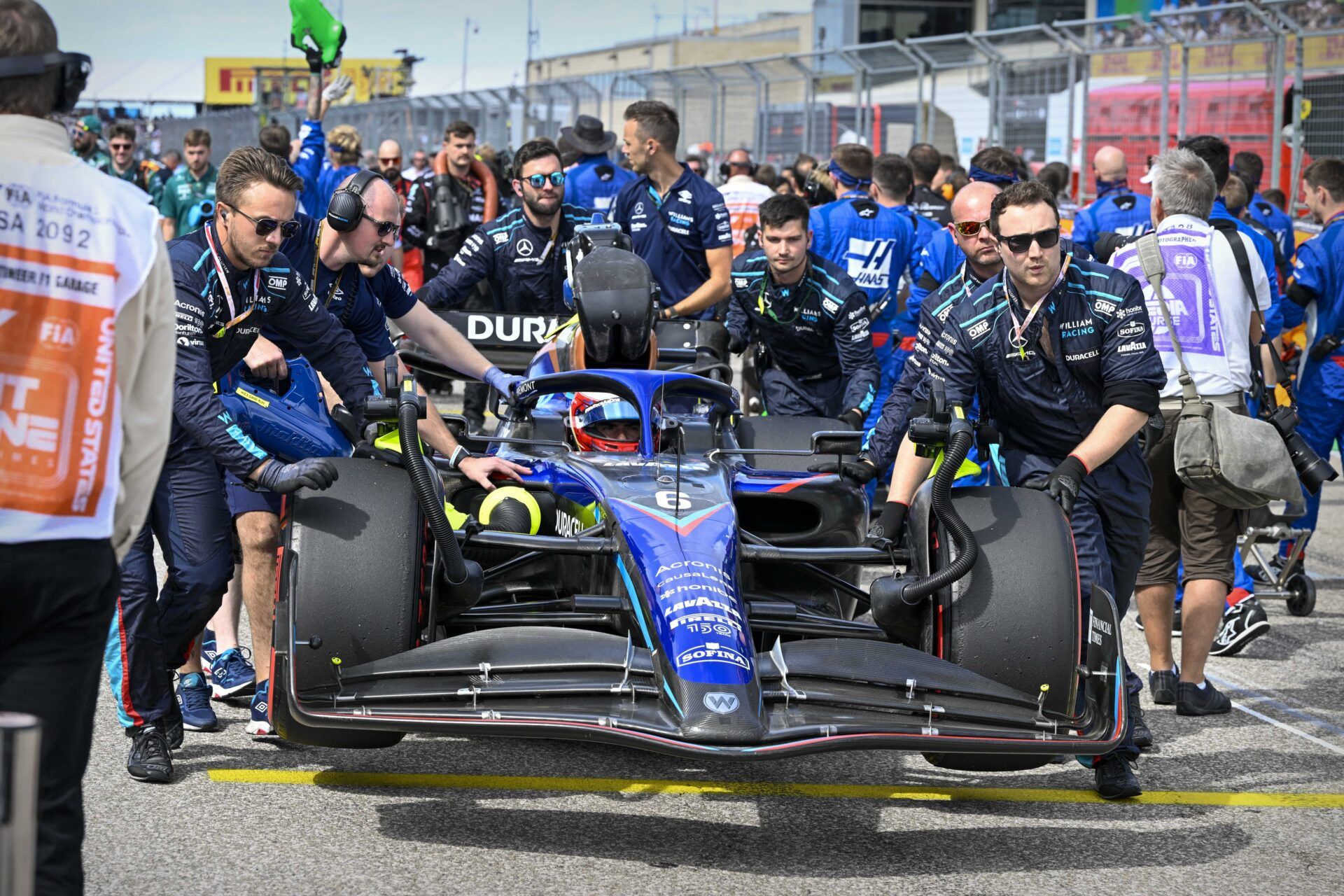
For a very long time, Williams looked like a team stuck in another era as the famous blue cars were often seen at the back of the grid, fighting just to stay out of trouble instead of chasing points. For fans of the historic championship-winning team, it was a painful sight as this squad once ruled F1, but by the end of 2022, it had become a regular at the bottom of the standings.
Three years on, the picture is quite different now as Williams finished fifth in the 2025 Constructors’ Championship with 137 points, two podiums, and a step ahead of its midfield rivals. It has not been a miracle turnaround or a lucky season but a slow and steady rebuild led by one man who arrived with a clear plan, James Vowles.
Williams’ Journey From the Back of the Grid to the Midfield Fight
Williams ended 2022 with just eight points, and the gap to the rest of the field was huge as the team was often isolated at the rear of the grid. Years of limited investment, outdated systems, and structural delays had caught up with the once title-winning outfit as the entire operation was behind modern standards.
When Vowles arrived in January 2023 from Mercedes, he did not promise quick fixes but instead wanted changes in the foundations, processes, and people. It was clear from the start that he was not interested in temporary fixes and clearly wanted to rebuild the team properly.
One of the first changes was also one of the most important, as until 2024, Williams was still using massive Excel spreadsheets to manage parts, which meant tracking around 20,000 components manually. It slowed everything down and made errors more likely, and hence Vowles pushed for proper ERP, MRP, and PLM systems.
These tools enable teams to track the location of parts, their lifespan, and virtually everything a business enterprise needs to operate. For most top teams, this was basic information, but for Williams, it represented a significant step forward.
At the same time, he fought hard to increase CapEx spending, too, as this is the part of the budget that can be used outside the cost cap to upgrade facilities. Williams had fallen behind here as their factory, tools, and simulator were not at the level needed to compete at the highest levels.
Thanks to the FIA’s tiered system, smaller teams are allowed more room to invest, and Vowles ensured that Williams utilized this opportunity, as a new simulator was one of the key upgrades that further helped drivers and engineers prepare more effectively.
People, Belief, and a New Direction for Williams
Technology was only part of the story, as Vowles also focused heavily on the people within the team and brought in experienced engineers to fill key roles and rebuild areas where leadership had been lacking.
Slowly, the mood changed as Williams stopped feeling like a backmarker team and started to look like a proper project, and that shift became clear when Carlos Sainz chose to join the Grove-based team. He had other options, including Audi, but he believed Williams offered a better path in the short to medium term.
The 2025 season backed that up as Sainz scored two Grand Prix podiums and another third place in the Austin Sprint. Williams was often the strongest team in the midfield and finished well clear of its closest rivals as the car was seriously competitive and the operations were clean.
Williams also secured a major sponsor, which is another sign that confidence in the team is returning, as partners want to be associated with projects that are moving forward.
Vowles’ biggest achievement at Grove may not be the points or podiums but the identity he has helped restore, as Williams now has a clear technical direction, a modern structure, and a sense of belief heading into 2026.
