
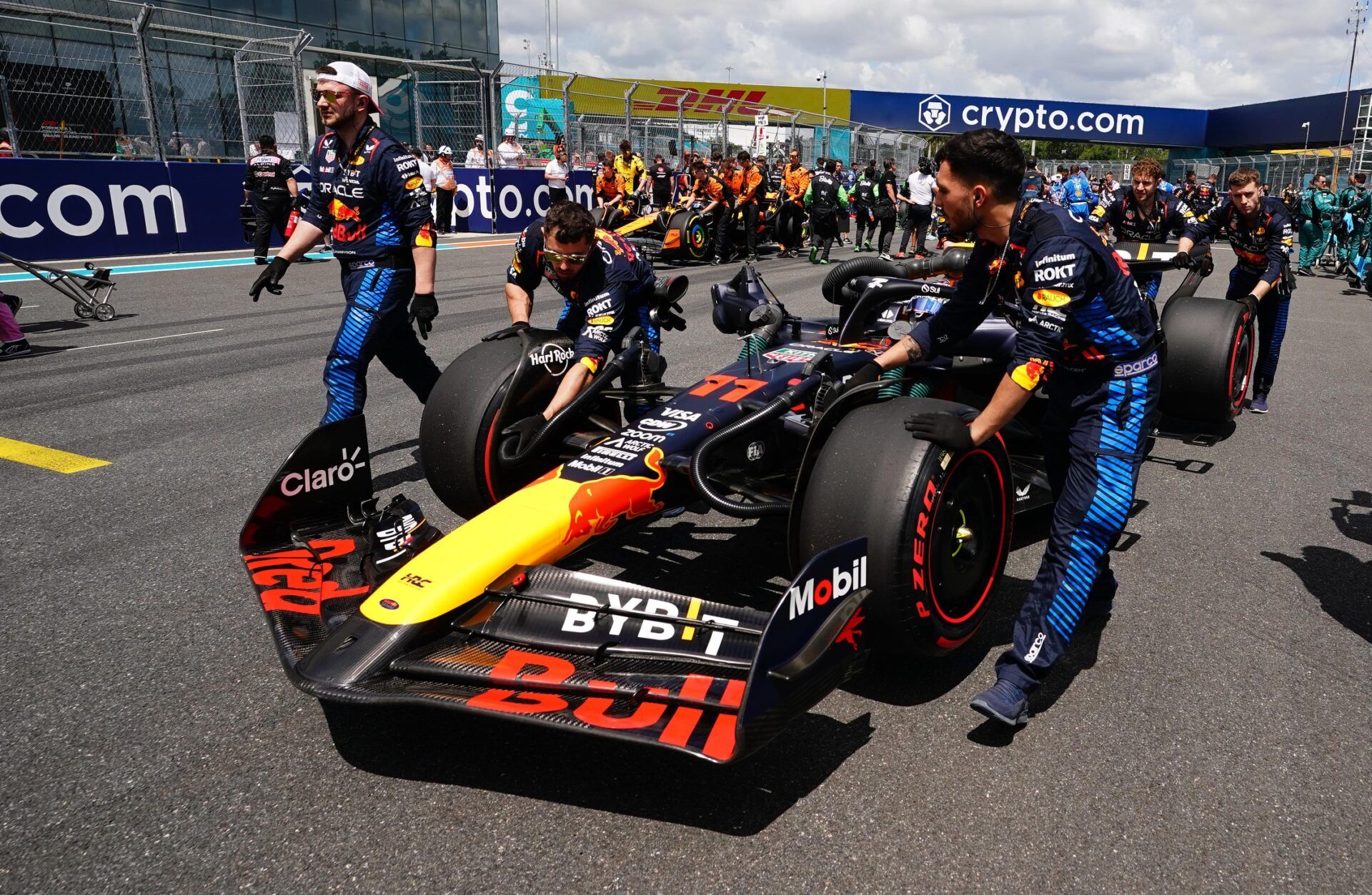
Red Bull Racing has never liked taking the easy route in F1, and that reputation feels very much alive again with the RB22, a car that already stands out as one of the most talked-about machines of the new era.
As the sport prepares for a major reset under the latest regulations, Red Bull has chosen not to blend in and instead has rolled the dice on a bold concept, and they need this project to work not only to stay ahead of its rivals but to keep their star driver, Max Verstappen, in the team.
A Familiar Red Bull but a Very Different-Looking Car
This is no longer the Red Bull of Adrian Newey’s genius touch, but flashes of the old design philosophy can still be seen on the new car. Under technical director Pierre Wache, the team has produced a car that deliberately goes against some of the trends seen elsewhere in the paddock. More importantly, it is a car that must convince Verstappen to keep his future in Milton Keynes, especially with Mercedes waiting in the background.
Red Bull is one of F1’s most successful modern teams, a multiple world champion operation built on innovation and confidence. The new car fits into that tradition yet again, even if the faces behind the garage doors have changed.
Compared to last year’s RB21, the RB22 is a clean-sheet design, and the most striking visual change is around the sidepods and the area beside the cockpit. The volumes here have been dramatically reduced, especially toward the rear, which forms a striking ‘coke bottle’ shape that channels airflow tightly toward the back of the car.
This packaging was made possible by a complex internal aerodynamic layout with radiators and heat exchangers appearing to be stacked in multiple layers, allowing the outer bodywork to shrink aggressively. It is an idea Red Bull experimented with on the RB20, and it seems the team believes the new rules finally allow them to unlock the full benefit of this design concept.
However, cooling has not been ignored, as the inlet design is less extreme than in previous iterations, suggesting that Red Bull is being cautious with its powertrain. Reliability remains non-negotiable in the new era, even if the design leaves room for a tighter cooling package later if the power unit proves efficient.
Red Bull’s Engineering Choices Aimed at Performance
Beyond the sidepods, the RB22 is full of details that show how carefully the Austrian team has balanced innovation with stability. The curved surface between the sidepod and halo flows down toward the engine cover, opening space for the rear wing to work more efficiently. The cooling inlet is noticeably large and hints at a fully reworked system made possible by the return of curved radiator cores.
In the suspension department, Red Bull has gone with a pushrod layout at both ends but without chasing extreme geometries. At the front, the steering arm sits forward, and the upper wishbone shows only mild anti-dive, prioritizing braking behavior. Everything is carefully shaped to improve aerodynamic performance without overcomplicating the mechanics.
At the rear, the pushrod is only slightly inclined, paired with a multi-link arrangement that follows current trends but avoids going too far. The front wing has a subtle curvature in the main plane and an innovative twisted endplate that expands the first element’s surface area. It is Red Bull’s latest attempt to manage outwash around the front wheels, which already looks distinctive.
The new car’s underbody is highly developed at such an early stage, with a blown diffuser that appears larger than anything else on the grid so far. Mercedes and Ferrari have similar ideas, but Red Bull’s execution stands out.
The RB22 has shown promising pace in early running, even if it has not always looked easy to drive. Red Bull is trying to show Verstappen that it still has the courage to innovate and the technical confidence to build something different even after Newey’s departure to Aston Martin.
