
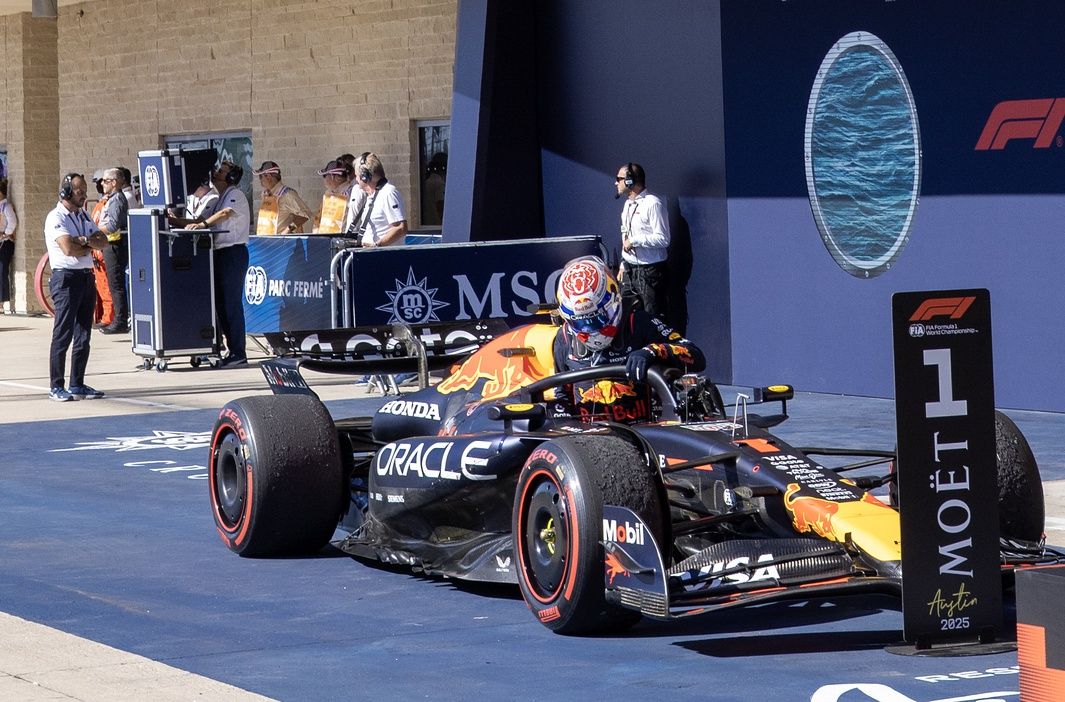
Red Bull Racing has reportedly shifted its stance in Formula 1’s escalating 2026 power unit regulations dispute, now backing Ferrari, Audi, and Honda. The new shift in sides poses a threat to Mercedes’ reported 2026 engine advantage.
Red Bull’s Power Play in the Engine War Could Redefine Mercedes’ Advantage
According to reports, the FIA has agreed to change the criteria for measuring engine compression ratios following a letter sent several months ago by manufacturers Ferrari, Audi, and Honda.
At the heart of the dispute is a loophole within the 2026 F1 power unit regulations that Mercedes engineers are believed to have identified and exploited. Under the original version of the regulations, compression checks were to be conducted on ‘cold’ components.
However, it is widely believed that Mercedes, and initially Red Bull as well, used thermal expansion properties of certain engine components to their advantage, allowing the compression ratio to rise to as much as 18:1 once the engine is ‘hot’.
This interpretation would keep the engines technically legal under “cold” measurement conditions while delivering a potential on-track performance gain of up to 0.3 seconds per lap.
The situation prompted an outcry from Audi, Ferrari, and Honda, who raised formal concerns with the FIA, leading the FIA to suggest that inspections would now be carried out “hot,” with V6 engine components statically heated before measurement.
But this regulatory change is subject to a formal vote. Approval would need a majority consisting of the FIA, Formula 1, and four of the five engine manufacturers. Reports suggest that this shift in voting dynamics makes the rule change increasingly likely.
While Red Bull had initially adopted a neutral stance in the controversy, reports now indicate that Red Bull Powertrains has shifted position to support Audi, Honda, and Ferrari, significantly weakening Mercedes’ position. Thus, increasing the likelihood that any perceived advantage will be eliminated.
As per a report on X, “Yesterday, Red Bull Powertrains decided to take the side of Audi, Honda, and Ferrari, even though it was initially neutral. The FIA appears to be heading toward a modification of the current regulations.”
If it goes through, the change would directly affect Mercedes, which has been widely reported to have developed a potential competitive edge by interpreting the compression ratio under the original “cold” measurement framework. A switch to “hot” testing conditions could effectively neutralize that advantage ahead of the 2026 season.
The outcome of the vote will be pivotal in shaping the competitive landscape of F1’s next engine era, with Red Bull’s position potentially deciding whether Mercedes’ technical edge survives.
