
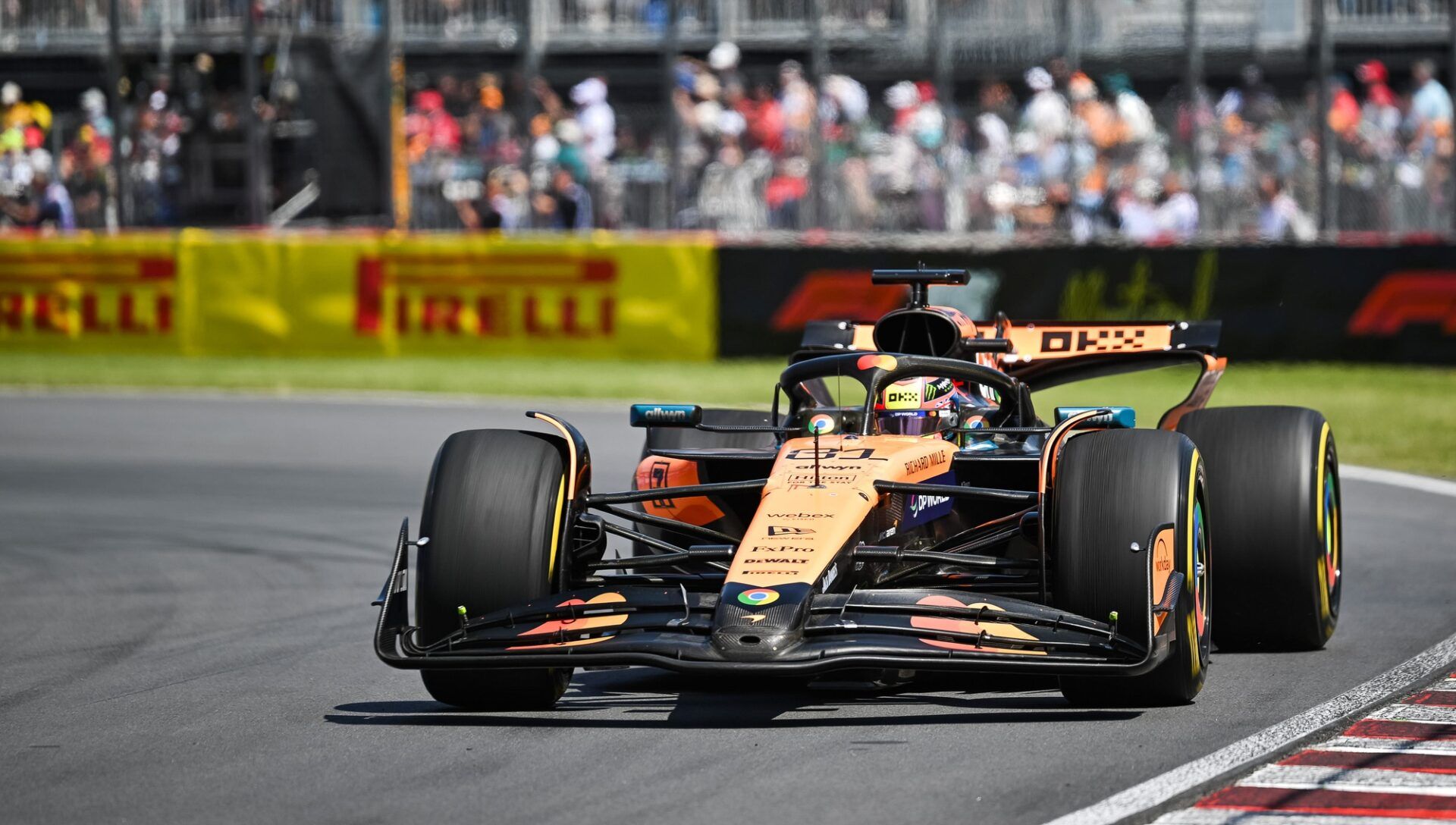
Pirelli has introduced a significant safety measure for the upcoming Qatar GP following concerning findings from last year’s F1 race. The tyre supplier has implemented a maximum of 25 laps per set across all track sessions in response to critical structural issues discovered during technical analysis of 2024 performance data.
Pirelli’s Tyre Restrictions and Subsequent Strategic Impact
Pirelli’s technical document, confirmed on November 16, reveals that drivers will face a maximum of 25 laps per tyre set at the Lusail circuit.
“The decision, taken in agreement with the FIA and Formula 1 and discussed in regular meetings with the teams, is confirmed today by the tyre manufacturer through the usual technical document containing event-specific prescriptions sent out two weeks prior to each Grand Prix,” as stated in Pirelli’s technical document.
The lap counter operates cumulatively across all track sessions, including practice runs, qualifying sessions, and the Sprint race, with Safety Car and Virtual Safety Car laps also included in the total. Grid laps, formation laps, and laps completed after the checkered flag will not count toward the cumulative total. Before the race commences, Pirelli will inform teams regarding the remaining lap allocation for each tyre set.
News from @pirellisport ahead of the Qatar GP: “In Qatar, a limit will be introduced for the number of laps that each set of tyres can cover over the course of the whole race weekend. The decision, taken in agreement with the FIA and Formula 1 and discussed in regular meetings…
— Adam Cooper (@adamcooperF1) November 17, 2025
The Lusail circuit’s demanding characteristics create exceptional stress on tyre compounds. The track generates intense thermal stress, high lateral energy, and substantial wear due to its fast-flowing layout and challenging corner combinations.
Qatar will utilize the hardest compounds available in Pirelli’s 2025 range, with C1 designated as the hard compound, C2 as the medium, and C3 as the soft option. For this sprint weekend format, each driver will receive two sets of hard tyres, four sets of medium, and six sets of soft.
Last Year’s Data Reveals Structural Concerns
Last year’s grand prix exposed serious structural vulnerabilities in tyre construction. Analysis conducted by Pirelli determined that multiple sets, particularly the left front compound, reached maximum wear levels during the race weekend.
MORE: Ex-IndyCar Star Unpacks Lando Norris’ Push To Match Max Verstappen’s Mental Game
“These conditions, combined with the high lateral energy, had increased the structural fatigue of the construction,” according to the official technical assessment. Teams had previously attempted to manage tyre degradation by reducing performance drop-off rates, a strategy that sometimes extended stints beyond the safe operational lifespan of the tyres.
And here’s how the @pirellisport lap limit will work in Qatar: “Every set of tyres supplied to the teams at the start of the race weekend can cover a maximum of 25 laps of the Lusail track, which is very demanding on tyres in terms of energy, thermal stress and wear. The laps…
— Adam Cooper (@adamcooperF1) November 17, 2025
This marks the second consecutive year that Pirelli has implemented emergency tyre restrictions at Lusail. In 2023, the supplier introduced an 18-lap stint limit following sidewall separations caused by pyramid-shaped kerbs around the circuit. Subsequent modifications, including the rounding of those kerbs and the addition of gravel strips, resolved the 2023 problems.
Despite these track changes, 2024 data revealed fresh concerns that necessitated the new lap restriction to prevent potential structural failures and protect driver safety during what remains one of the most demanding weekends on the F1 calendar.
