
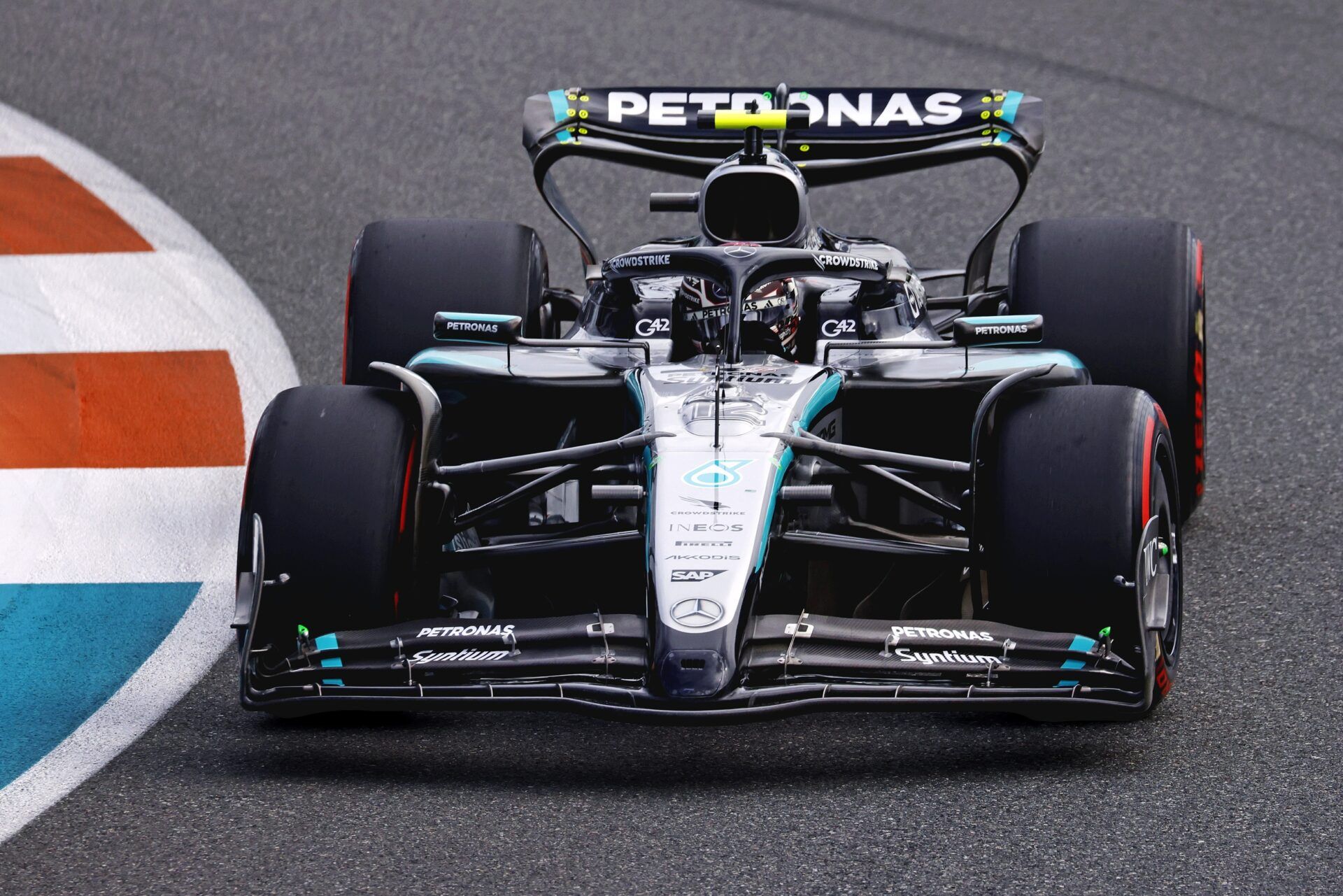
The 2026 season hasn’t started, but Mercedes and Red Bull are already under fire. While most teams are busy in their factories and simulators, a different kind of pressure is building away from the track for Mercedes and the rest of the grid. This week, an important meeting could shape how competitive the sport looks when the season begins.
The focus is on engine compression ratios and how they are measured under the new regulations. Small gains here and there can mean real performance on track, especially at the start of a new rules cycle when everyone’s fresh off their winter development period.
This FIA Meeting Matters to Mercedes and the Whole Grid
Several manufacturers believe a clever interpretation of the rules may be giving certain rivals an early edge, and the governing body is now stepping in to resolve the situation in the best way possible. The meeting will bring together engine experts and senior figures from across the grid. Its job during this session is not to pick winners and losers but to ensure everyone understands the rules the same way.
Ferrari, Audi, and Honda have raised concerns, believing Mercedes and Red Bull Powertrains may be operating engines at a higher effective compression ratio than the permitted 16:1 limit set by the FIA. The key issue is how that ratio is checked, and current regulations require measurements to be taken at ambient temperature, not when the engine is running at full heat. Rivals argue that this leaves room for interpretation and possible advantage on the track.
So far, the FIA appears reluctant to rewrite rules that were finalized only recently, and insiders suggest the most realistic outcome is clear guidance rather than an outright revamp of the rulebook. Clear instructions can shut down grey areas and prevent protests once racing begins.
Single-seater director Nicolas Tombazis has already hinted that clarification could arrive sooner rather than later: “We have an objective to make sure that procedures are interpreted and understood in the same way. We are confident the rules can be clarified, and I would say that I’m sure it will no longer be a talking point very soon.”
Changing Course Is Very Hard for F1 Engine Makers
Power units are homologated, meaning significant changes cannot be rushed through overnight, and Red Bull Powertrains technical director Ben Hodgkinson has been blunt about the timelines involved.
He said, “The bit that I don’t think is fully understood amongst the rulemakers is that the gestation time of an idea in power units is much longer than it is for the chassis. So if I need to make a change, firstly, I’ve not just got two cars to update, I’ve got a whole fleet of engines in the pool. So I could have 12 engines that I need to update. That takes time.”
“I think that if a team has an advantage on the power unit in race one, it’s going to take some time before anyone else can catch up,” he admitted. By the time a rival reacts, half a season could be gone.
That is why some manufacturers are pushing for future-focused solutions, even if the current season stays the same.
Audi project leader Mattia Binotto has made it clear that he hopes to agree on a better measurement method rather than tear up the rulebook right now, ”It’s simply we are trying, all together, to really develop a methodology where we can measure it in real time while the car is running. My hope in that meeting is not clarity on the regulation itself, but more to define a methodology for the future.”
There is also the budget cap to consider, as extra engines will hit manufacturers’ budgets directly, making late-season resets painful.
F1 lives on innovation. And this discussion may not settle everything overnight, but it will shape how teams head into a new chapter of the sport.
