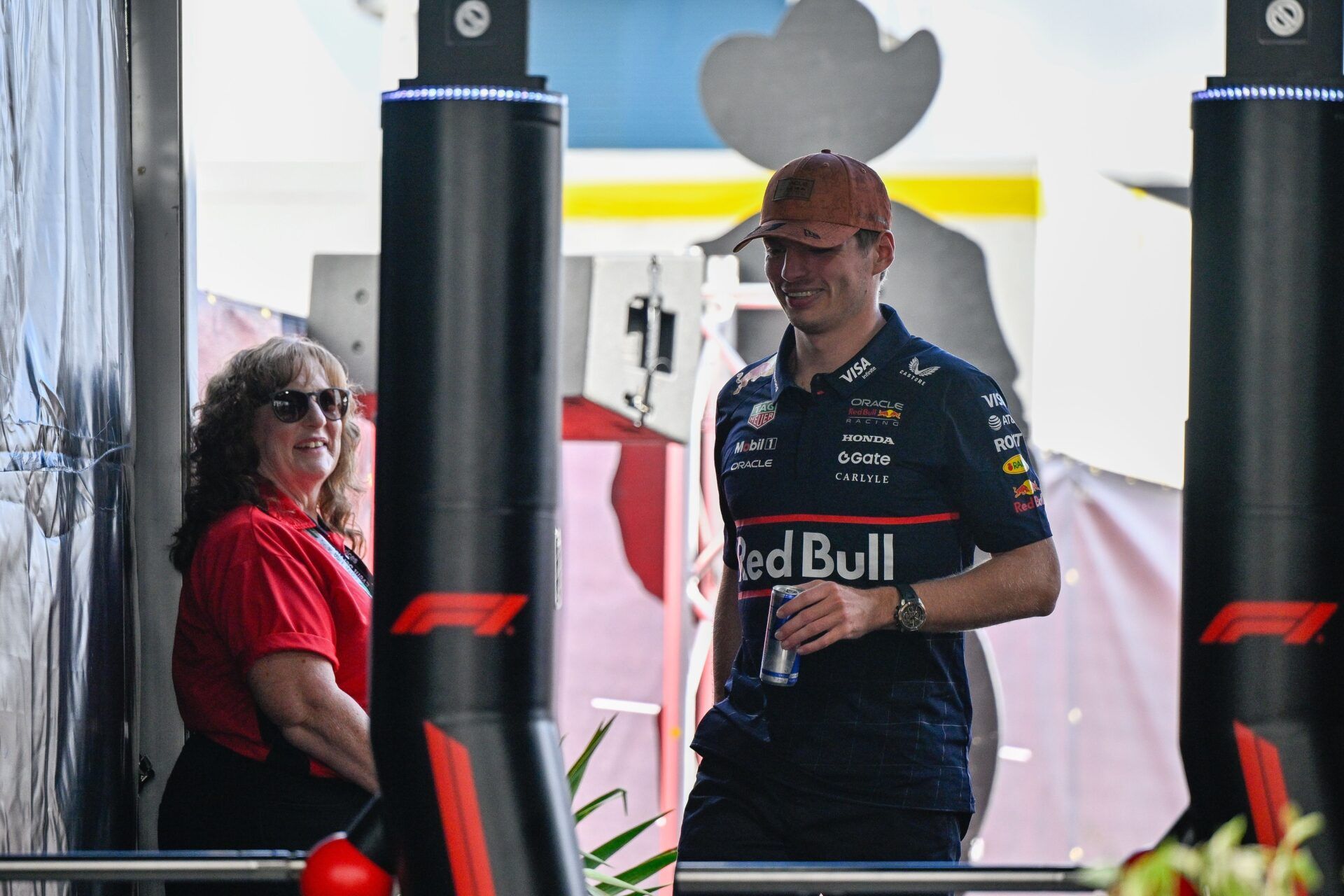
“Fun” was the word Max Verstappen chose to sum up his first-ever GT3 outing at the famed Nurburgring Nordschleife earlier this year. However, as more updates come in, what unfolded then was far more than just fun.
Teaming up with British talent Chris Lulham, the four-time F1 champion stormed to a jaw-dropping victory in his NLS9 GT3 debut, a performance so dominant that it’s now triggering a seismic shift in how the motorsport world views development pathways, particularly sim racing.
‘Max Verstappen’s Participation Was Crucial’ – How The Dutchman Triggered an Unprecedented Global Change
In a move primarily driven by Verstappen’s influence, motorsport has rewritten its rulebook: sim racing experience will now count toward earning a DMSB Permit Nordschleife licence. The shift follows his remarkable NLS appearance in September, where he piloted an Emil Frey Ferrari 296 GT3 to success despite lacking any real-world multi-class racing background.
This groundbreaking acknowledgment of virtual racing as a legitimate motorsport training method marks a watershed moment, underscoring how seriously German authorities now regard sim racing, following its official designation as a motorsport discipline in 2018.
VLN sporting director, Christian Vormann, who was also partly involved in both real-world NLS race control and DNLS race direction, openly acknowledged the Red Bull Racing ace’s impact on the rule change.
Robin Strycek, who oversees sporting matters for the DMSB, emphasized the significance of this change: “The new Permit B regulations reinforce the connection between real and digital motorsport further.”
Those aiming for the vital DPN B licence now have multiple options. They can take the conventional course, compete in two RCN races with a driver swap (or one alone), or opt for a hybrid path: one RCN outing plus three spotless DNLS (Digital Nurburgring Langstrecken-Serie) winter events.
While the Dutchman has made his ambition to contest the 24 Hours of the Nurburgring clear since the September event, it wouldn’t be the first time Verstappen‘s sheer ability compelled officials to rethink the rulebook.
As his RBR team principal, Laurent Mekies revealed earlier, about a conversation with former FIA President Jean Todt. “I reached the FIA just as Max got his super license at 17,” the Frenchman began before detailing the conversation.
“The very first thing Jean Todt, president of the FIA at the time, asked me to do was: ‘This young kid, Max, just got his license at 17 years old. That’s ridiculous. People will not understand why you cannot have a driving license for the street, but you can drive a Formula 1 car. Please look at it with your team and make a new structure for how you get a super license, because this cannot happen again.'”
On the “Talking Bulls” podcast, Mekies explained that he wasn’t personally responsible for the changes, but admitted Verstappen’s unbelievable rise pushed the FIA into swift action. In the aftermath of that discussion, the governing body overhauled the entire super licence structure, introducing the now-standard minimum age rule (18) and the points-based progression system used by young drivers today.
“So thanks to Max being that outstanding, we now have a completely new super license points system. It doesn’t take a lot of time, including the minimum age,” Mekies added.
That 17-year-old “kid” soon rewrote F1 history, debuting in Australia in 2015 as the sport’s youngest ever racer. Since then, he’s amassed four world championships, 68 victories, and a reign of dominance that has reshaped the sport’s modern era entirely.
