On the heels of Mercedes announcing a deal with PepsiCo, Haas has now also made a business move of its own, locking in an F1 partnership with Toyota. The 2025 season has yet to conclude, but teams are already looking ahead to next year regarding their car development and sponsorship agreements.
Find out more about the latest Haas-Toyota partnership and the Japanese powerhouse’s history in F1.
Haas F1 Joins Forces With Toyota, Capitalizes on Japanese Manufacturer’s Deep Roots in Racing
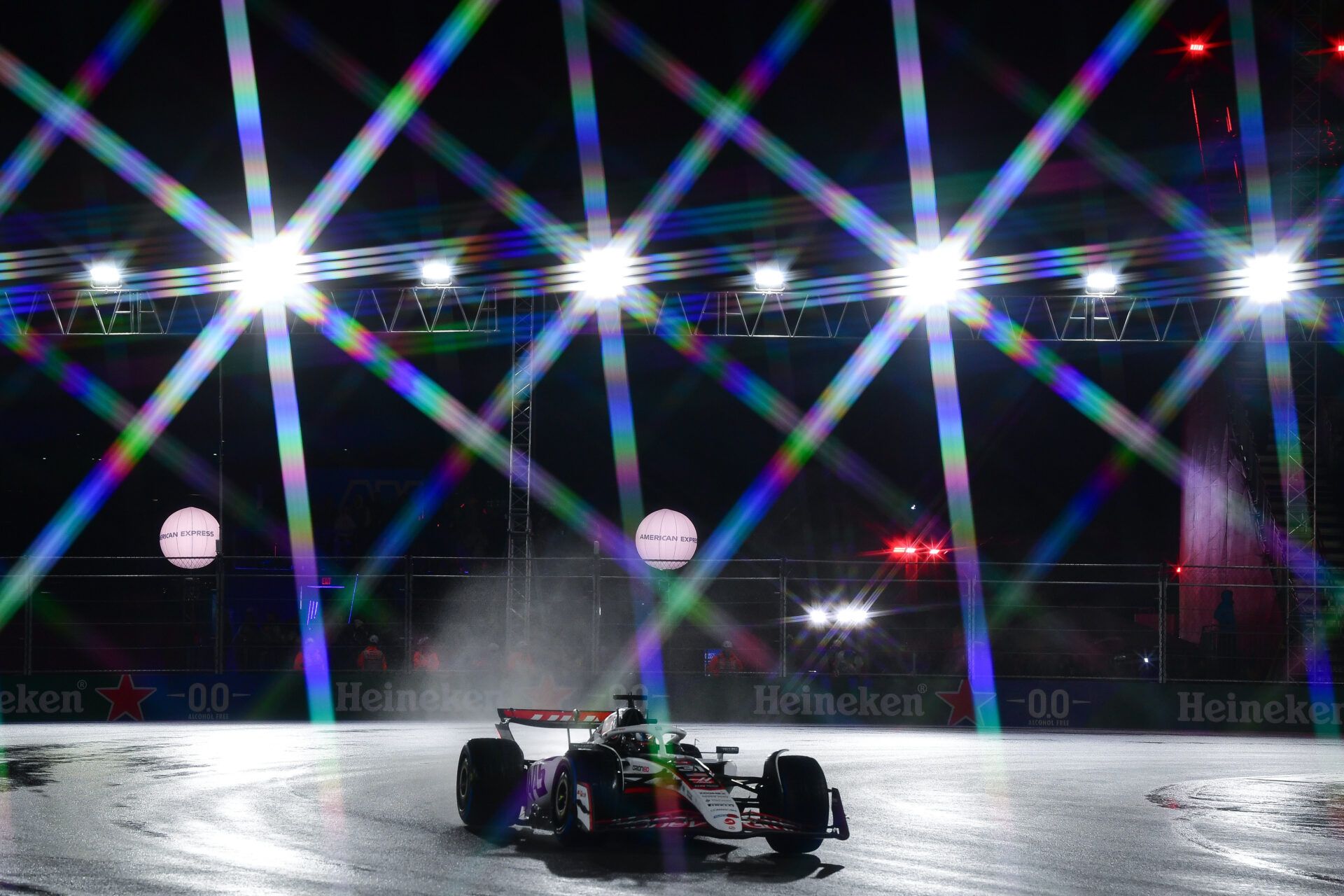
The American racing outfit announced the news on Thursday morning. Toyota Gazoo Racing is set to become Haas’s title partner in 2026, changing the team’s name from MoneyGram Haas F1 Team to TGR Haas F1 Team.
Toyota Gazoo Racing is the motorsport competition and research and development division of Toyota, which famously competes in endurance racing and the Dakar Rally.
“TOYOTA GAZOO Racing set to become team’s new title partner in 2026,” the announcement read. “In a move signifying a further strengthening of the relationship between our two brands, Haas F1 Team will officially be titled TGR Haas F1 Team for the 2026 FIA Formula 1 World Championship – with TOYOTA GAZOO Racing (TGR), the motorsport competition and research and development division of Toyota Motor Corporation… The new title partnership deal is a further bonding of the core objectives of the relationship between Haas F1 Team and TGR – focusing on ‘People, Product, Pipeline’.”
TOYOTA GAZOO Racing set to become team’s new title partner in 2026
In a move signifying a further strengthening of the relationship between our two brands, Haas F1 Team will officially be titled TGR Haas F1 Team for the 2026 FIA Formula 1 World Championship – with TOYOTA GAZOO… pic.twitter.com/cQyKLsAegn
— MoneyGram Haas F1 Team (@HaasF1Team) December 4, 2025
The relationship will also include a technical collaboration and the use of the Testing of Previous Car (TPC) program, which allows Haas to work with Toyota’s racing technology.
The Japanese car brand’s racing roots date back almost 70 years, to its first entry into rally racing in 1957. However, it only got into Formula 1 about 40 years later, announcing its pivot from rally and endurance racing to open-wheel competition in 1999.
Toyota debuted in 2002 at the Australian Grand Prix, with Allan McNish and Mika Salo running the works team’s TF102. It wasn’t a successful season by any measure, as Salo scored the team’s only two points of the campaign, and neither driver was kept on for 2003.
The Japanese outfit’s debut season marked the start of an eight-year run in F1, featuring notable drivers such as Ralf Schumacher, Timo Glock, and Kamui Kobayashi. It took the manufacturer only three years before it supplied other teams with engines, starting with Jordan in 2005, which became Midland in 2006 but still ran Toyota engines.
In 2007, Williams became another customer, and Nico Rosberg and Alexander Wurz ran the Japanese power units to a 4th-place constructors’ finish. However, the team couldn’t get the same performance out of the power units the following season, finishing eighth, while Toyota outperformed them in fifth.
In 2009, Toyota’s final season as a constructor in F1, there were more middle-of-the-pack results for both the Japanese brand and Williams. Toyota ceased its F1 operations thereafter due to its parent company suffering its first-ever financial loss. Williams, on the other hand, switched to Cosworth engines for 2010.
Stefan Grand Prix was close to getting Toyota’s chassis and engines in order to enter F1 in 2010, but the team was denied entry to the championship. HRT tried buying the chassis to replace its struggling Dallara chassis; however, the deal never went through.
The cars never competed again, and 2024 marked Toyota’s return when it signed with Haas as a technical partner.
