
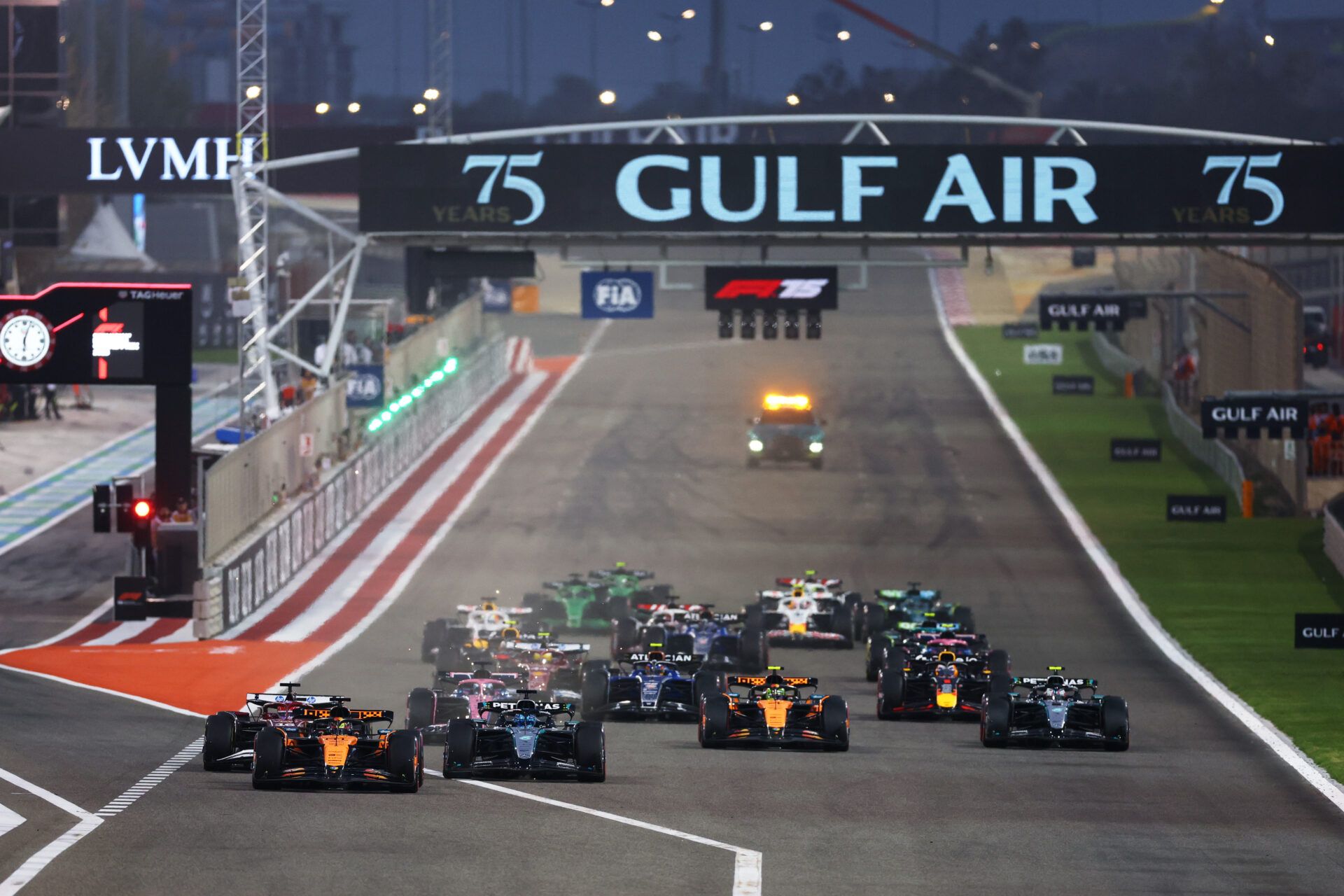
Formula 1 has been compelled to issue a formal statement on the security of its upcoming races in the Middle East amid escalating regional tensions, amid concerns over the safety of the Bahrain and Saudi Arabian Grands Prix.
The sport’s leadership is publicly insisting that, for now, there is no immediate threat to either event, even as missile strikes and military actions heighten uncertainty across the Gulf region.
Fear Looms over Bahrain and Saudi Grands Prix
The backdrop to Formula 1’s response is a recent surge in hostilities following coordinated military operations by the United States and Israel against targets in Iran, and subsequent missile activity that has touched several Gulf states.
Reports indicate that at least one Iranian missile landed in Bahrain, prompting some countries, including Bahrain itself, to temporarily close their airspace.
F1’s governing body and Formula One Management issued a statement acknowledging the situation, while emphasising their ongoing commitment to safety and close coordination with authorities.
A spokesperson reiterated that while Bahrain and Saudi Arabia are scheduled to host the fourth and fifth rounds of the 2026 season in April, there is no current indication that these events will be canceled or postponed.
ALSO READ: Christian Horner Takes Savage Final Swipe at Toto Wolff After Red Bull Exit Ends Bitter F1 Rivalry
“Our next three races are in Australia, China and Japan and not in the Middle East. Those races are not for a number of weeks,” the F1 spokesperson said, underlining that the situation will continue to be monitored closely alongside relevant governments and security partners.
Still, concern is not purely hypothetical. Some logistical disruptions have already been felt. A number of team personnel were due to transit through Middle East airspace on their way to the season opening in Melbourne, and several have reportedly had to reroute flights as a precaution.
Additionally, tyre supplier Pirelli canceled a planned two-day test at the Bahrain International Circuit, citing safety concerns amid the evolving geopolitical climate.
Formula 1 has previously faced similar challenges in the region. During the 2022 Saudi Arabian Grand Prix, a missile strike on an oil facility near the Jeddah circuit sparked lengthy safety discussions before the race ultimately went ahead.
That precedent, along with the successful hosting of races in Qatar and Abu Dhabi amid previous Middle Eastern tensions, informs the sport’s current risk assessments and contingency planning.
Despite reassurances, not all stakeholders are unconcerned. Some fans and commentators argue that the evolving geopolitical situation could force more substantive decisions closer to the race dates, especially if airspace closures persist or if broader regional conflict intensifies.
For now, however, Formula 1 maintains that its approach remains one of heightened vigilance rather than alarm, keeping its focus on safety while pressing ahead with plans for the busy 2026 calendar.
