
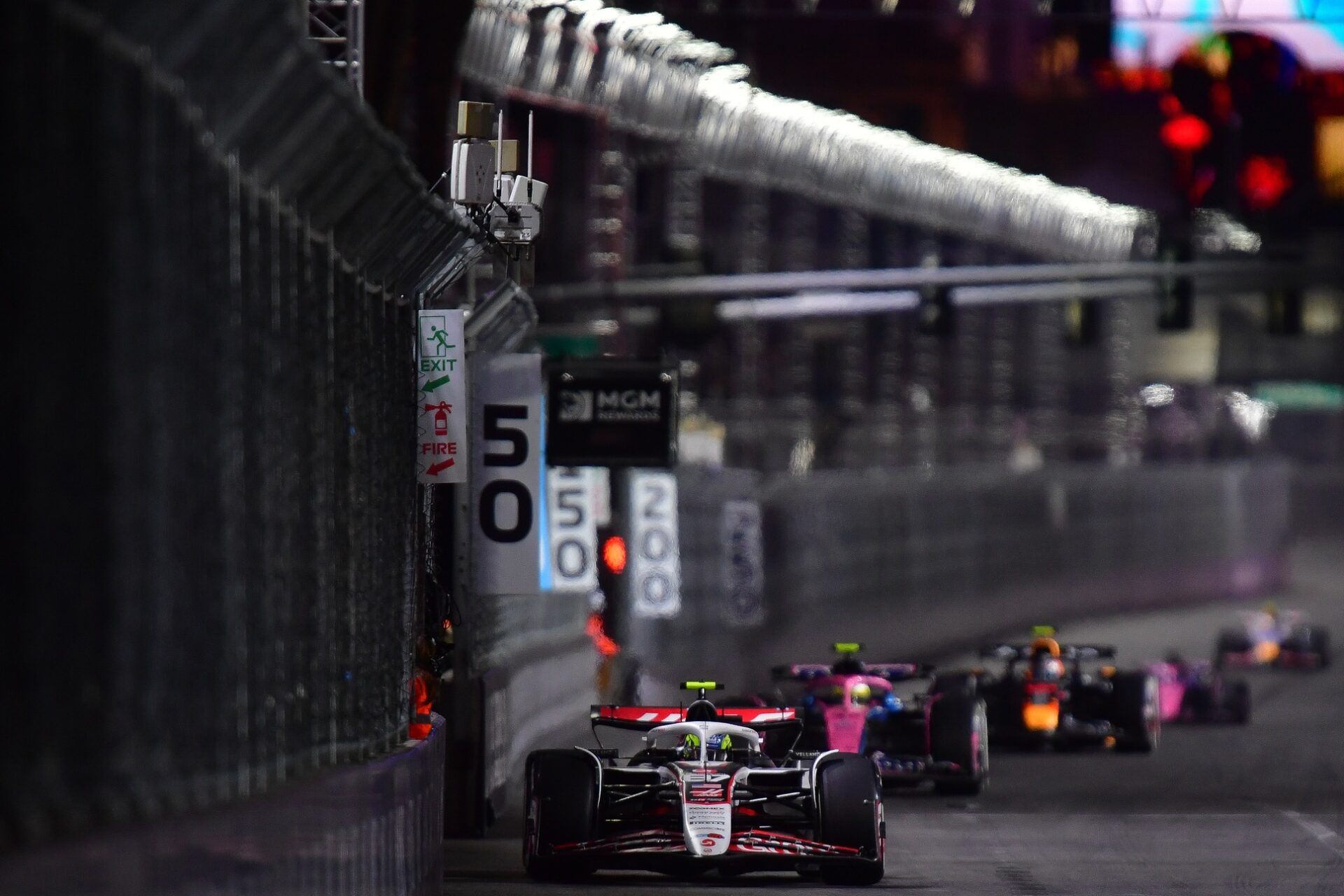
After a dramatic finale at the Abu Dhabi GP, where Lando Norris claimed his maiden F1 title over Max Verstappen, the hype for the upcoming season is already underway. One of the significant changes that fans are highly anticipating for the next season is the alteration to the car.
And some F1 insiders have joined the bandwagon before anyone else by giving a glimpse at what the sport has in store for the following year. The details about the new car have fans going wild over just how much F1 is going to change with the changes in the vehicles.
Active Aerodynamics Will Change The Game Next Season
Though Ferrari and Mercedes had already given a taste of what was to come in the next season in the postseason testing at Abu Dhabi, it was far from the full picture. The prototype primarily focused on the movable front wing flaps, which simulated the technology to be integrated into the cars.
The technology, termed “active aerodynamics,” will enable the front and rear wings to activate differently depending on whether the car is traveling on a straight line or around corners. This will primarily help control the drag and downforce.
In straight-line mode, the flaps adjust to reduce drag, thereby decreasing aerodynamic resistance and improving speed and efficiency. The corner mode, on the other hand, generates more downforce to aid in grip and stability when cars are cornering, thanks to increased aerodynamic load.
🚨 | 2026 FORMULA 1 REGULATIONS!
Cars will be smaller and lighter, with a minimum weight of 768 kg.
Active aerodynamics: Front and rear wings will actively change configuration depending on driving mode to balance drag and downforce.
Straight mode: Low-drag configuration for… pic.twitter.com/EteLj6jeqq
— Race+ (@racepluscom) December 17, 2025
These will apply to both front and rear wings, which will calibrate to the angles preset by the teams. Both wings, however, will rotate in sync with each other within the predetermined maximum range for both modes.
The technology will surely give team engineers more control over fine-tuning the cars for different circuits, where aerodynamics need to be tailored for specific conditions.
Other Key Changes In F1 Cars
While active aerodynamics has been one of the highlights of the new cars, it is not all that the new machines will pack. Starting next season, the cars overall will be smaller and lighter, with a minimum weight requirement of 768 kg.
There will be no changes in the diameter of the tyres, and they will remain 18 inches; however, they will be narrower and lighter to complement the cars.
The cars will also have overtaking mode, in which, when a driver is within a second’s reach of the vehicle in front, the additional electric power will aid in overtaking rather than the opening of the rear wing.
ALSO READ: 5 Legendary F1 Circuits That Need to Be Back on the Calendar
Apart from this, the cars will also feature a boost mode, allowing drivers to harness energy from the ERS for optimal performance directly. Lastly, the “Recharge” mode in vehicles will work on recharging the battery instead of juicing the power source for maximum performance.
With these changes and additions to the cars, the quality of racing is sure to increase by a few levels. While drivers might take a while to get used to all the changes, in the bigger picture, the alterations will only take the sport to a new stratosphere.
