
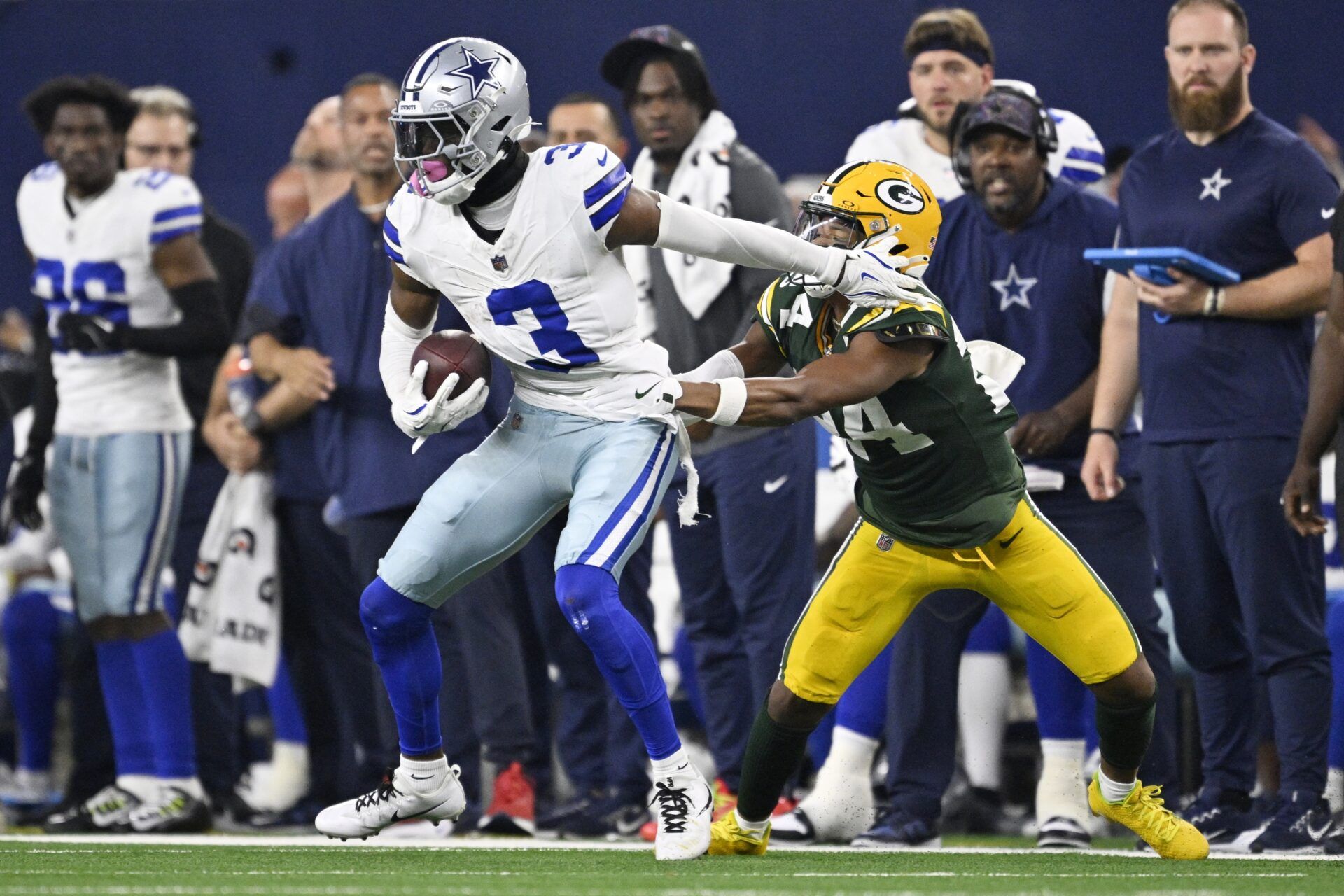
The 40-40 tie between the Dallas Cowboys and Green Bay Packers on Sunday Night Football sparked a fresh debate about how NFL games should be decided.
Eight-time Pro Bowler Patrick Peterson added a player’s voice to the discussion, urging the league to adopt a college-style format to ensure every game produces a winner.
Patrick Peterson Drops Bold Take On NFL OT Rule
On the “Up & Adams” Show, host Kay Adams framed the moment and asked directly, “We saw the second‑highest scoring tie in NFL history [Sunday] night. How do you feel about the overtime format, and how would you settle a tie?”
Peterson replied, “Oh, man. They need to change it because that was a really, really good football game last night, and we fans don’t want to see football games end in a tie. So, what the NFL should do is, if the game is still a tie at the end of the regulation of overtime, put the ball at the 20‑yard line and play college rules.”
He continued, “First team, if they score, you automatically have to go for the two‑point. The opposing team will get an opportunity. If they score successfully, then they get an opportunity to score two points, and they win.”
His appeal followed a rare result as the Packers-Cowboys game was only the fifth tie since the 2010 overtime tweak, in which both teams made OT field goals, and the contest still ended level. The game’s finish and the split sentiment it produced have already put the rulebook under the microscope again.
What Are NFL Overtime Rules?
The NFL has changed the overtime rules multiple times. From 1974 to 2010, sudden death decided regular-season games in a 15-minute extra period.
In 2010, the league adopted “modified sudden death” so that if the first team kicked a field goal on its opening overtime drive, the opponent would get a possession; a touchdown on the opening drive still ended the game immediately. In 2017, the regular-season OT period was shortened to 10 minutes.
Following the 2022 postseason change that guaranteed both teams a possession in playoff overtime, clubs approved an alignment in 2025. Both regular-season and postseason overtime formats now ensure each team receives at least one offensive possession, even if the first drive results in a touchdown.
In the regular season, if the game remains tied after both teams have possessed the ball and 10 minutes expire, the result is a tie. In the postseason, tied games continue into additional 15-minute periods until a winner emerges.
MORE: Why Did the Packers Choose to Kick in Overtime vs. Cowboys? Explaining the NFL’s New OT Rules
Peterson’s proposal mirrors the college model, which ensures a decisive outcome. In NCAA play, each team starts a series at the opponent’s 25-yard line with no game clock, only the play clock. Starting with the second overtime, teams must attempt a two-point conversion after scoring a touchdown.
Beginning in the third overtime, teams alternate two-point tries until one team converts and the other fails. His suggestion to spot the ball at the 20 and require immediate two-point attempts reflects that emphasis on forcing resolution.
The SNF tie has revived a familiar question — should the NFL trade ties for guaranteed finishes? Recent changes already moved the league toward fairness by ensuring each side touches the ball, but Peterson’s college-style framework would prioritize decisiveness over duration.
With public interest high and players weighing in, the next step is whether the competition committee discussions turn a vocal suggestion into an item on the offseason agenda.
