
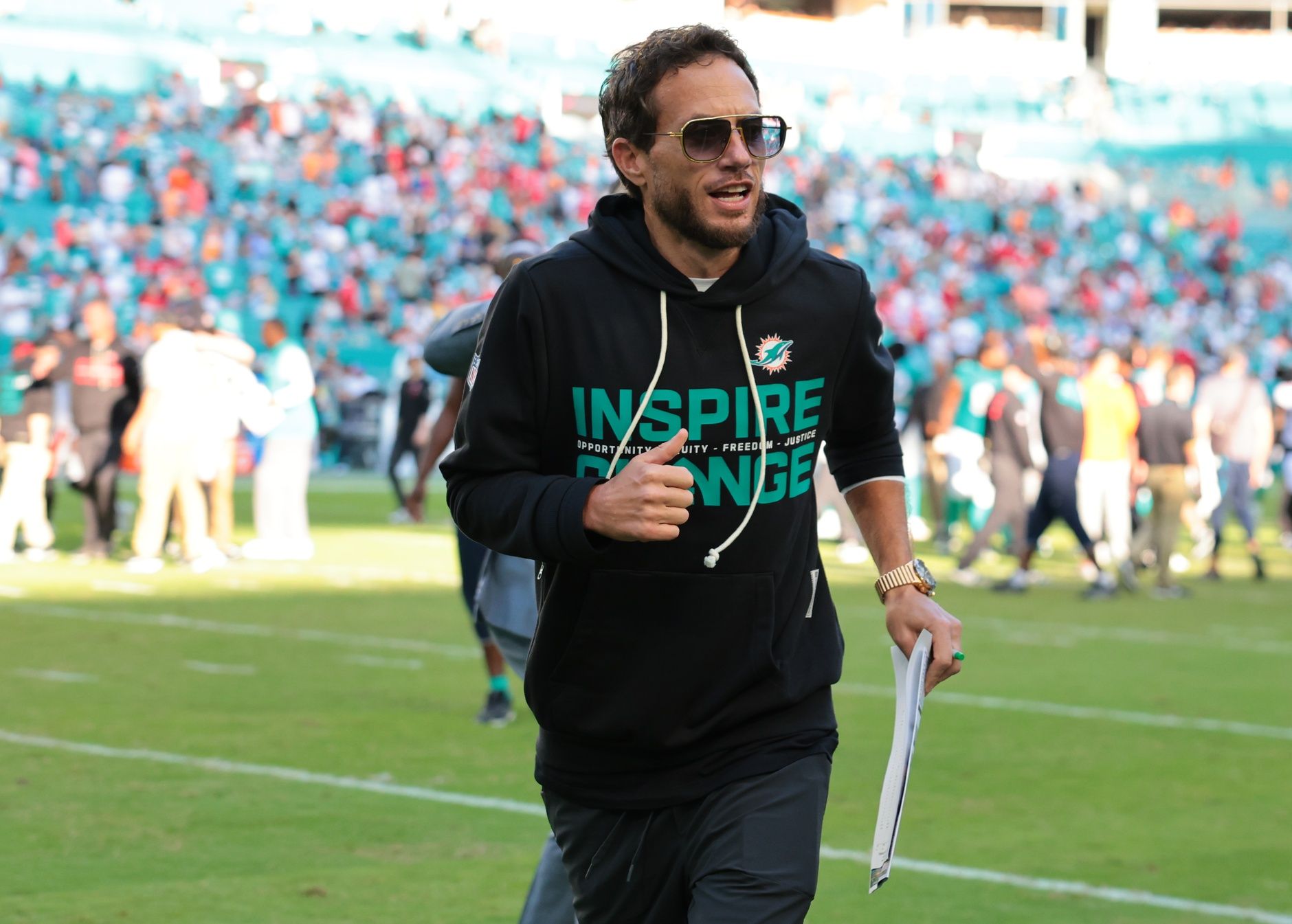
For much of the recent NFL hiring cycle, Mike McDaniel’s name kept surfacing in connection with head coaching interviews across the league. To outsiders, it looked like a fired coach retaining significant league-wide respect. But a tense on-air exchange involving a longtime Miami Dolphins reporter raised an uncomfortable question about why that interest existed at all.
On-Air Exchange Raises Doubts About the Motivation Behind Mike McDaniel’s HC Interviews
The discussion unfolded on “The Dan Le Batard Show,” where Dolphins reporter Greg Cote suggested that McDaniel’s popularity as a head coaching candidate may not have been driven purely by football considerations. According to Cote, a Dolphins source said McDaniel’s candidacy helped teams meet the Rooney Rule interview requirements.
Cote framed it cautiously but directly, saying he had been told by a high-ranking Dolphins official that McDaniel’s interview volume was linked to Rooney Rule compliance. When pressed, he clarified his position, “I think that’s part of the reason why,” stopping short of claiming it was the sole factor.
His comments immediately drew pushback from Dan Le Batard, who warned that such a claim would quickly escalate into national news.
Le Batard repeatedly challenged whether Cote was formally reporting that McDaniel’s race influenced the number of interviews he received. The discomfort in the exchange underscored how sensitive the issue remains within NFL circles, especially when diversity policies intersect with hiring outcomes.
NFL insider Dianna Russini offered a firm rebuttal.
While she acknowledged that Cote may have been told that by a team source, she rejected the premise outright in McDaniel’s case. “In Mike’s case, I do not believe that to be true,” Russini said, emphasizing that teams such as Cleveland showed legitimate football-driven interest in McDaniel’s offensive acumen rather than treating him as a procedural checkbox.
That context matters, especially given McDaniel’s resume. Fired by the Dolphins after a 7-10 season, he still compiled a 35-33 record over four years and led the Dolphins to consecutive playoff appearances in 2022 and 2023. His offenses ranked among the league’s most productive, and his reputation as an innovative play designer remained intact even after his dismissal.
That reputation played a central role in his swift landing spot. The Los Angeles Chargers hired McDaniel as offensive coordinator to pair him with quarterback Justin Herbert following another early playoff exit.
Chargers coach Jim Harbaugh described wanting “a head coach of the offense,” language that aligns closely with McDaniel’s prior responsibilities with the Dolphins.
The broader issue raised by Cote’s comments extends beyond McDaniel himself. The NFL’s Rooney Rule, established to expand diversity in leadership hiring, requires teams to interview minority candidates for top jobs. Critics argue it can sometimes lead to token interviews, while defenders maintain it broadens access and exposure.
In McDaniel’s case, the debate highlights a gray area. Even if teams complied with league policy, Russini’s reporting suggests McDaniel was evaluated on merit, not merely identity. Still, Cote’s revelation shows how skepticism persists, reflecting lingering mistrust about how faithfully teams follow both the spirit and the letter of the Rooney Rule.
