
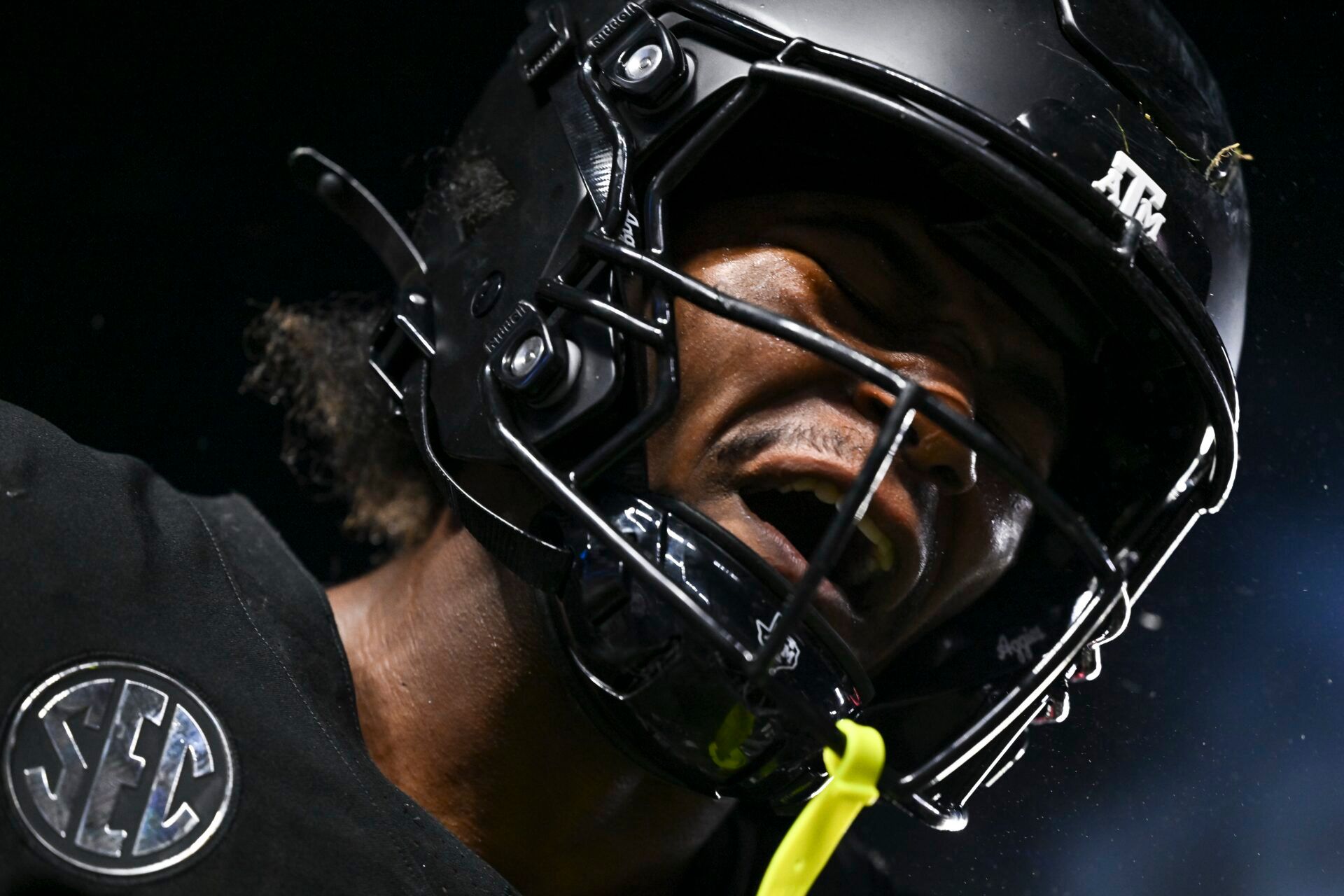
Two days from the draft, the Dolphins’ receiver plan is coming into focus. Barry Jackson reports Miami will “very likely” spend one or two of its seven picks in the first three rounds on a wideout — a nearly certain outcome given a depth chart currently headlined by Tutu Atwell and Jalen Tolbert.
The more interesting question is where Jon-Eric Sullivan pulls the trigger. Sean Payton essentially handed the league his scouting report on pick 30 at the owners’ meetings, and it was not flattering.
Meanwhile, the WR4-and-below tier is deeper than most fans realize, with real options from late round one all the way into Day 3. And on the quarterback front, Penn State’s Drew Allar joined Miami’s growing list of developmental QB visits — a small investment with a sky-high ceiling if Jeff Hafley’s staff can iron him out.
Here’s the full picture two days out — and if you want to build your own receiver plan, take control of the Dolphins in the PFSN NFL Mock Draft Simulator.
Sean Payton Told Miami What To Expect at 30, but does Jon-Eric Sullivan Agree?
Sean Payton didn’t have to say this. But he did, and it’s fascinating.
When the Broncos traded pick 30 to Miami for Jaylen Waddle, they weren’t agonizing over what they were giving up. Payton told reporters at the owners’ meetings that his staff studied who would realistically be sitting there at 30 and boiled it down to seven or eight guys. His verdict? Not a single one of them was worth more than a proven receiver with three years of control.
“We could safely say that pick would’ve been one of these seven or eight players. We didn’t feel like that pick would help us as much as Jaylen Waddle.”
Cool. Thanks for the scouting report, Sean.
Payton basically handed the entire league his assessment of pick 30’s value, and if you’re Jon-Eric Sullivan, that’s the kind of quote that either makes you want to trade back or proves you’re smarter than everyone else by staying. Denver is a win-now team that needed a sure thing. Miami is a rebuild that needs swings. Different math, different answers. But it’s hard to ignore when a Super Bowl-winning coach tells you the cupboard at 30 is only so full.
The Dolphins have brought in receivers Makai Lemon, KC Concepcion, and Denzel Boston on receiver visits. All three could be first-round targets, the latter two at pick 30. Barry Jackson reports Miami will “very likely” spend one or two of its seven picks in the first three rounds on a wideout, which is less of a prediction and more of a glance at a depth chart that currently features Tutu Atwell and Jalen Tolbert as starting options.
If Sullivan’s board agrees with Payton’s that pick 30 is a tier below the top of the round, the smart play is to trade back a few spots, pocket an extra asset, and grab the same receiver at 34. If he disagrees and has a guy he loves sitting right there, he stays and makes the call. That’s why they pay him.
Bottom line: Payton did Sullivan a favor by being honest. Now it’s on the Dolphins’ GM to decide if he sees the same board or a different one. Either way, at least one receiver is coming in the first three rounds. The only question is how much Sullivan pays for it.
The Wide Receiver Board Beyond the Big Three
The top three receivers in this class get all the attention, but the Dolphins probably won’t any of them. Carnell Tate is likely gone before pick 11, Makai Lemon could go anywhere in the teens or twenties, and Jordan Tyson’s durability concerns (and rising stock following his workout last week) make him a risky fit for a rebuilding team. That means Sullivan’s receiver search probably starts in the late first round or early second, and the options there are more interesting than most fans realize.
The names to know start with Indiana’s Omar Cooper Jr., Washington’s Denzel Boston, and Texas A&M’s KC Concepcion who are battling it out for the WR4 slot depending on who you ask. Mel Kiper has Cooper going 16th and Boston at 20, while PFSN’s Jacob Infante has Cooper going 22nd and Concepcion 26th. Boston visited the Dolphins last week and has the size (6’4), hands (only four career drops on 209 targets), and red zone ability to be a legitimate number-one receiver.
Cooper’s stock has been climbing since midseason, and scouts are reportedly enamored with him. Concepcion also visited Miami earlier this month. He’s shorter than the other two but is the most agile of the WR tier. Ian Cummings refers to Concepcion as “a human joystick with incredible throttle control, change of direction, and spatial feel.”
The Day 2 tier gets deep. Alabama’s Germie Bernard is Kiper’s pick for Miami at 34 in a projected trade-back scenario from 30. Infante has Bernard going to Miami with pick 43. He ran a 4.48, has reliable hands, and could be a versatile piece for Bobby Slowik’s offense.
Tennessee’s Chris Brazzell (6’5, 1,017 yards, nine TDs) has legitimate downfield explosion and might be my favorite WR of the clear “Day 2 tier.” Cummings says Brazzell “has all of the catch-point skills you’d expect… can create vertical separation and box out DBs with his frame, and he can snare high passes with steely focus and gravity-defying body control.”
Notre Dame’s Malachi Fields (6’4, averaged 17.5 yards per catch) is a physical bully who could slide to the third round. Georgia’s Zachariah Branch is a 5’10 speedster who plays like Zay Flowers and averaged 7.9 yards after the catch, though he was arrested Sunday morning in Athens on seemingly minor misdemeanor charges.
Keep an eye on Georgia Southern’s Ted Hurst, too. Miami brought him in for a 30 visit, and at 6’4 with a 4.42 forty and 15 touchdowns over two seasons, he’s the kind of Day 3 swing that could outperform his draft slot. NFL Network’s Daniel Jeremiah said he “can run, can build speed, track the ball, and had a strong Senior Bowl.”
Bottom line: Sullivan doesn’t need to panic about receiver on Thursday night. The class is deep enough that he can go trenches or defense at 11, do the same at 30 (or trade back), and still find another viable WR option at 43 or in the third round. The board has options at every level. The key is not reaching for a name and trusting the depth to deliver value where the picks actually fall.
The Allar Question: What if He Puts It Together?
Drew Allar is the draft’s biggest “what if” at quarterback. NFL executives can’t stop talking about him, and they can’t stop contradicting themselves while they do it.
The Penn State product has everything you want on paper. He’s 6’5, 228 pounds, with a cannon arm. He went 26-9 as a starter, threw 61 touchdowns against just 13 interceptions, and set an FBS record with 311 consecutive pass attempts before his first pick. He was the nation’s top QB recruit coming out of high school. One NFC coach told Tom Pelissero that his pre-draft interview was “incredible” and compared his physical profile to a young Joe Flacco.
BE AN NFL GM: PFSN’s Ultimate GM Simulator
The problem is the tape doesn’t always match the talent. Multiple evaluators told Pelissero that Allar’s accuracy is streaky and his pocket presence gets jittery under pressure. One AFC exec put it bluntly: “You could have back-to-back the same exact throw with him and one time it looks excellent… and then it’s the same exact play, same coverage, same throw, and he looks completely different.”
His senior season lasted only six games before a broken ankle ended it, and less than 24 hours after the injury, James Franklin was fired. Not exactly a confidence-building finish.
Pelissero confirmed that Miami brought Allar in for a visit. He fits the developmental QB profile Sullivan has been exploring all offseason, alongside Taylen Green, Carson Beck, Jalon Daniels, and Mark Gronowski. An AFC executive called him the kind of mid-round shot worth taking: “If you’re going to take a shot in the middle rounds, he’s got arm talent, he’s big, he played better in the past.”
For the Dolphins, Allar at pick 90 or 94 would be a fascinating swing. He’s not going to push Malik Willis for the starting job in year one, and nobody is asking him to. But if you’re Sullivan and you believe in the Green Bay model of stashing a quarterback behind the starter, Allar has the highest ceiling of any Day 2 or Day 3 QBs in this class. The gap between his best throws and his worst throws is massive, but that’s also what makes him a development candidate worth the gamble.
Bottom line: One AFC exec summed up the Allar experience perfectly: “He’s frustrating to watch because he leaves you wanting more. He shows you he can do it, just not consistently.” If Sullivan thinks Jeff Hafley’s coaching staff can iron out the mechanical inconsistencies and give Allar time to grow behind Willis, a third or fourth-round pick is a small price to pay for a quarterback with that kind of raw ability. If the consistency never comes, it’s a mid-round pick, not a franchise-altering miss.
Don’t Miss Out!
- Do your best Sully impression and take control of the Dolphins in the PFSN NFL Mock Draft Simulator.
- Get all of the information you could ask for on the 2026 NFL Draft prospects at PFSN’s NFL Draft HQ — including rankings, measurables, scouting reports, and so much more.