
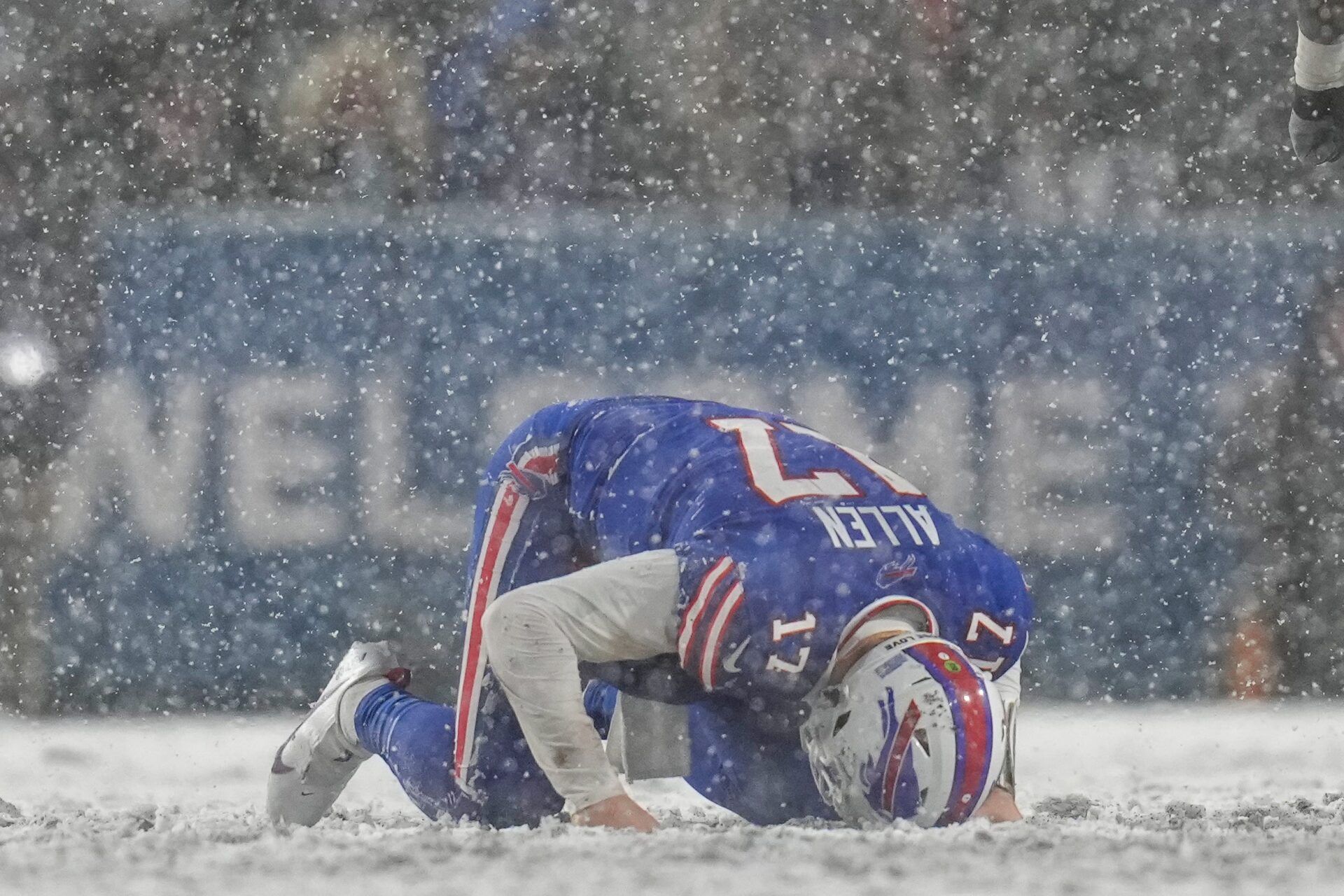
When temperatures plunge below zero, football transforms into something closer to survival. Playbooks shrink. Fingers go numb. And for players who endured the NFL’s coldest games, the effects don’t end when the final whistle blows. Let’s look back at the coldest games in NFL history.
The NFL’s Coldest Games Left Marks That Haven’t Faded
1. The Ice Bowl | Dec. 31, 1967: Packers 21, Cowboys 17
Lambeau Field | Temperature: -13°F | Wind Chill: -48°F
Green Bay’s Lambeau Field holds the undisputed record, and nothing has come close in nearly six decades. The temperature at kickoff sat at minus-13 degrees, with wind chill dropping to minus-48. Referees’ whistles froze to their lips. The heating system beneath the field failed, turning the turf into a sheet of ice.
Bart Starr’s quarterback sneak with 16 seconds remaining sealed the victory, but the play nearly didn’t happen. Running back Donny Anderson couldn’t gain traction on the frozen surface during the previous two attempts.
Starr told coach Vince Lombardi he could shuffle his feet and lunge forward. Lombardi’s response became legendary: “Run it, and let’s get the hell out of here.”
The Packers won their third consecutive NFL championship, but even a title couldn’t warm what that day did to the 50,861 fans who braved conditions no modern game would allow.
2. The Freezer Bowl | Jan. 10, 1982: Bengals 27, Chargers 7
Riverfront Stadium | Temperature: -9°F | Wind Chill: -59°F
Cincinnati hosts the coldest game by wind chill factor, and the circumstances made it particularly brutal for San Diego. One week earlier, the Chargers defeated Miami in 84-degree weather during “The Epic in Miami.” Seven days later, they stepped onto a frozen concrete bowl along the Ohio River. The temperature swing approached 150 degrees.
The Bengals’ offensive line, including future Hall of Famer Anthony Munoz, played the entire game with bare arms — a psychological tactic designed to intimidate the warm-weather Chargers. Tight end M.L. Harris caught the game’s first touchdown wearing the same brown leather gloves he wore walking into the stadium.
MORE: Try PFSN’s Free NFL Mock Draft Simulator
What’s often overlooked: the lasting physical damage. Players such as Kellen Winslow and Ken Anderson have said they felt the effects of the cold in their fingers and toes decades later.
Cincinnati won the toss and made an unusual choice: instead of receiving, they elected to kick with the brutal wind at their backs. The strategy paid off with a 10-0 first-quarter lead. Dan Fouts, whose beard formed ice crystals during the game, threw two interceptions as the wind turned his passes into “fluttering butterflies.”
3. Vikings vs. Seahawks Wild Card | Jan. 10, 2016: Seahawks 10, Vikings 9
TCF Bank Stadium | Temperature: -6°F | Wind Chill: -25°F
Minnesota’s temporary home at TCF Bank Stadium — used while U.S. Bank Stadium was under construction — became the site of the coldest wild-card game ever played. The ending is remembered more than the cold itself.
Blair Walsh missed a 27-yard field goal wide left as time expired, handing Seattle an improbable victory. The conditions played a role, but a chip shot from that distance should convert regardless of temperature. Walsh’s career never recovered.
The Vikings hadn’t hosted an outdoor playoff game since 1976. They haven’t hosted another one since.
4. Chiefs vs. Dolphins Wild Card | Jan. 13, 2024: Chiefs 26, Dolphins 7
GEHA Field at Arrowhead Stadium | Temperature: -4°F | Wind Chill: -27°F
The most recent entry exposed how ill-prepared even modern medicine remains for extreme cold. Miami practiced all week in 86-degree weather. When they landed in Kansas City, it was 10 degrees with a wind chill of minus-6 — a 100-degree swing before temperatures dropped further.
Dolphins offensive tackle Terron Armstead called the conditions “borderline inhumane.” Patrick Mahomes’ helmet shattered after a hit. Andy Reid’s mustache froze on camera.
But the real aftermath emerged in the weeks following. The University of Kansas Health System treated 73 frostbite cases in January 2024, with 17 patients requiring burn unit care. One fan needed months of treatment to save his fingers after developing blisters and swelling overnight.
Tua Tagovailoa finished with 199 passing yards but couldn’t find a rhythm against Kansas City’s defense. Miami’s league-leading offense managed just 264 total yards.
5. NFC Championship | Jan. 20, 2008: Giants 23, Packers 20 (OT)
Lambeau Field | Temperature: -1°F | Wind Chill: -24°F
Tom Coughlin’s face became the game’s signature image — cheeks so red from cold exposure they appeared purple. The Giants’ medical staff applied Vaseline at halftime, which only made his skin look worse.
Lawrence Tynes missed two field goals in regulation, including a 36-yarder as time expired. When Corey Webster intercepted Brett Favre — what would become his final pass as a Packer — on the second play of overtime, Tynes didn’t wait for Coughlin’s decision. He sprinted to his spot before anyone could stop him.
The 47-yard kick split the uprights. Tynes immediately bolted for the locker room’s warmth while teammates celebrated on the frozen field.
“If I miss that 47-yarder, I’m never playing football again,” Tynes said years later.
What Cold Weather Reveals About Football
The pattern across these five games tells a consistent story: warm-weather teams struggle, and the physical toll extends far beyond the final whistle.
Miami entered its 2024 wild-card game having lost 10 straight when kickoff temperature dropped below 40 degrees. San Diego’s high-flying “Air Coryell” offense managed just seven points against Cincinnati’s defense and the Ohio wind. Even Dallas, playing in the Ice Bowl, couldn’t generate offense down the stretch despite Tom Landry’s meticulous preparation.
The NFL has discussed weather contingencies following recent extreme-cold games. Commissioner Roger Goodell has floated extending the season, which could push more playoff games into colder conditions — a prospect that should concern players and medical staffs alike.
For those who played in these games, the memories remain vivid. Forrest Gregg, who played in the Ice Bowl for Green Bay and coached Cincinnati in the Freezer Bowl, called the 1982 AFC Championship the coldest he’d ever experienced.
The elements add drama to January football. But when fingers go numb and players feel the effects four decades later, the romance of frozen tundra collides with the reality of what these games demand.