
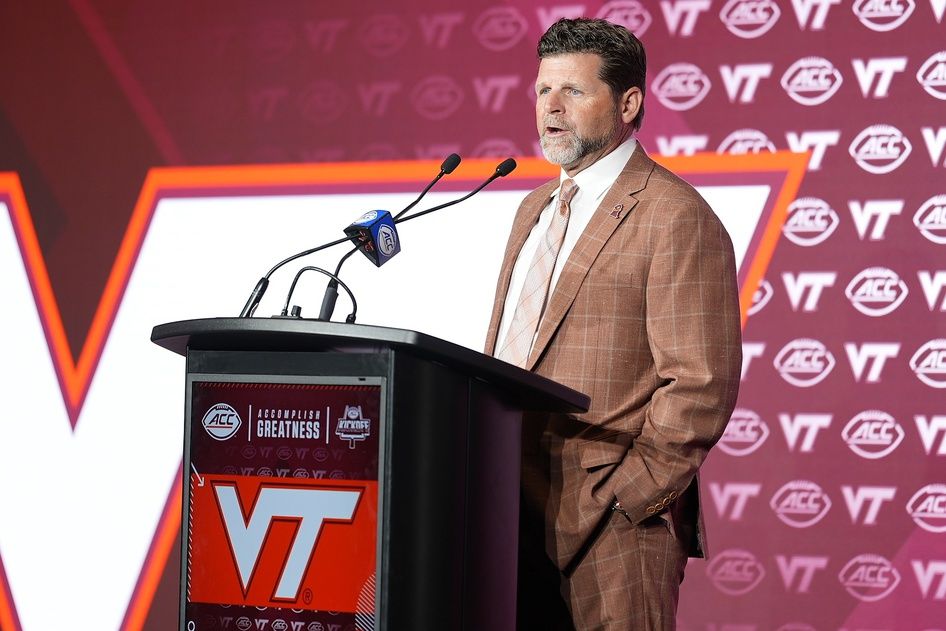
Virginia Tech parted ways with Brent Pry three weeks into the 2025 season after a 0-3 start. When a college coach is fired so early, players often redshirt or transfer to preserve an extra year of eligibility.
However, Virginia Tech claims that redshirting counts as “opting out” and has used that to revoke scholarships and terminate NIL revenue-sharing deals, prompting legal scrutiny and contributing to an increasing number of players entering the transfer portal.

Virginia Tech Faces Legal Pressure Amid Player Exodus After Brent Pry’s Firing
After Pry’s firing, Virginia Tech has reportedly used NCAA bylaws and the House Settlement, which introduced revenue sharing to college athletics, to prevent players from redshirting. In college football, if a player’s coach is fired before they’ve played four games in a season, they can redshirt to preserve a year of eligibility.
Allowing a player to redshirt puts the Hokies in a difficult position. That player can then enter the transfer portal without losing a year of eligibility, potentially decimating the roster. For context, some believe Florida may be waiting to fire Billy Napier until after their fourth game to avoid a similar situation. Virginia Tech is effectively holding players hostage, claiming that a redshirt this season counts as “opting out,” and using that justification to terminate scholarships and revoke revenue-sharing NIL deals.
Darren Heitner, a lawyer and NIL instructor at the University of Miami Law School, is challenging Virginia Tech’s attempts to revoke scholarships and terminate NIL revenue-sharing payments. Heitner argues that the university is using fraudulent misrepresentation under NCAA bylaws under the House settlement to justify these actions, and says one Virginia Tech player has already retained him.
I am shocked by Virginia Tech’s untenable position that a decision to redshirt constitutes “opting out” and fraudulent misrepresentation under the NCAA’s Bylaws, justifying immediate termination of scholarships and revenue-sharing payments under the House settlement. Redshirting…
— Darren Heitner (@DarrenHeitner) September 26, 2025
“I am shocked by Virginia Tech’s untenable position that a decision to redshirt constitutes ‘opting out’ and fraudulent misrepresentation under the NCAA’s Bylaws, justifying immediate termination of scholarships and revenue-sharing payments under the House settlement,” Heitner wrote.
Since Pry’s firing, Michael Short, Dante Lovett, and Tucker Halloway have entered the transfer portal. While none explicitly cited the university’s stance on redshirting as their reason for leaving, it likely played a role.
If the Hokies continue to block players from redshirting, many more could follow Short, Lovett, and Halloway. Virginia Tech players have a 30-day window following Pry’s firing to enter the transfer portal. Since he was fired on September 14, players now have 18 days to decide.
This situation should be closely monitored, and while Heitner was the first to raise concerns, additional legal action could arise as events continue to unfold.
