
The House v. NCAA settlement, which will allow college athletic departments to directly pay their players through a revenue-sharing model, has been met with a lot of controversy since the ruling was announced last week.
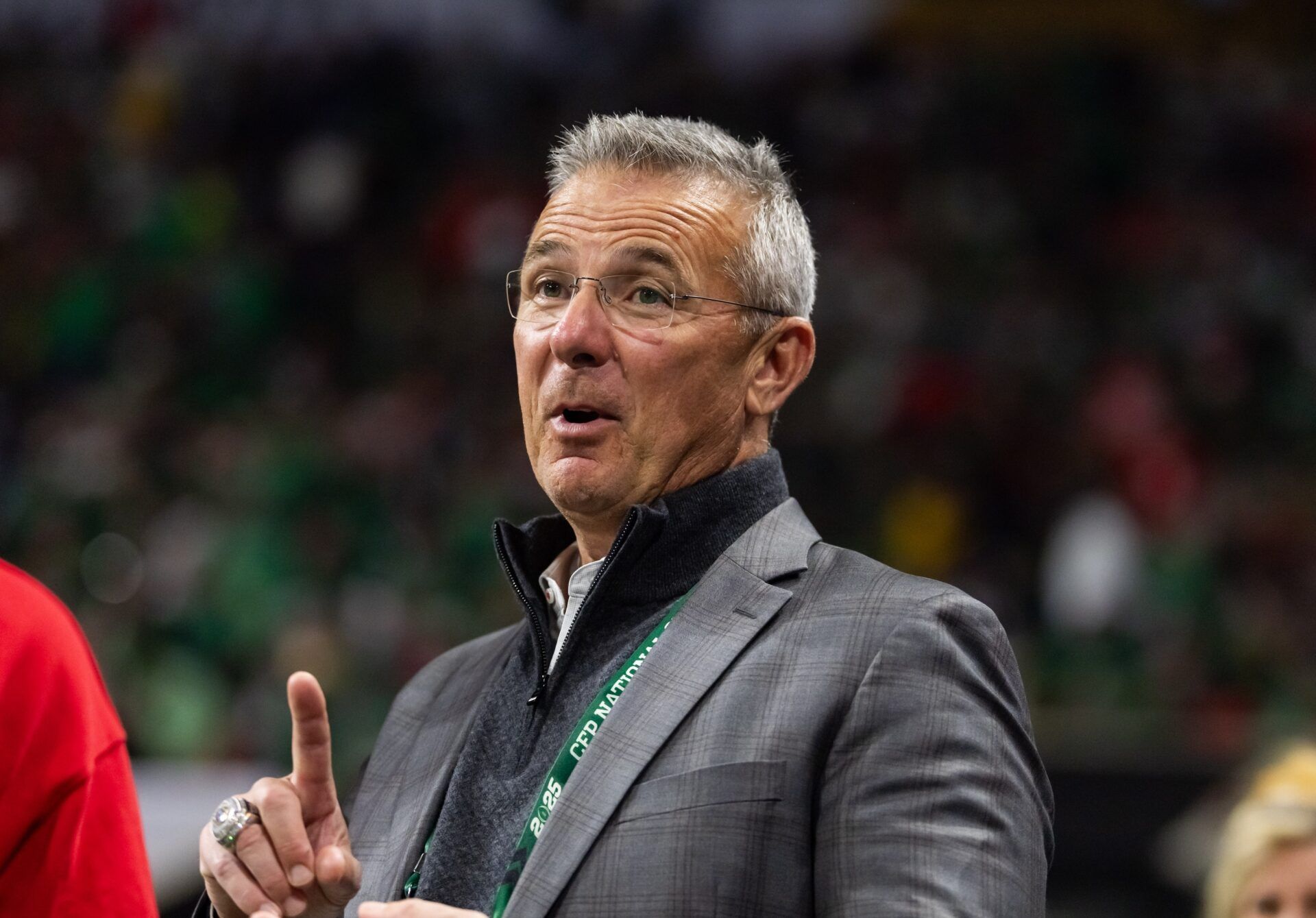
A big skeptic of the ruling is former Florida and Ohio State head coach Urban Meyer, who left college football before the NCAA legalized players making money from their NIL (Name, Image, and Likeness) ties. While Meyer’s skepticism may seem petty, one college football analyst offers his take on where Meyer is coming from.
Adam Breneman Reacts to Urban Meyer’s Skepticism Over Revenue Sharing
Under the revenue-sharing model, colleges will be able to pay their athletes up to $20.5 million. But any scrutiny on outside deals from boosters and businesses will reportedly be much higher.
Meyer, upon hearing about this deal, was quite heated about it and shared his thoughts on “The Third Option” show. Among his quotes, Meyer said, “You’re damn right I’m skeptical of revenue sharing.”
Some people think Meyer’s skepticism might revolve around him being away from college football during the NIL era. Former college football star Adam Breneman broke down why Meyer is so skeptical on in an Instagram post.
View this post on Instagram
“But Urban Meyer isn’t popping champagne yet,” Breneman said. “After 40 years of living in fear of compliance offices, now there’s zero trust, zero clarity, and states are already passing laws that contradict the entire thing.
“Urban Meyer says, ‘The only way this works is with real power,'” Breneman said. “He’s talking about subpoena power. Lie under oath, your career is over. No more coaching, no more playing. Urban doesn’t hate the idea of paying players, he just wants a system with structure and teeth.”
Meyer coached college football for over 40 years and knows better than anyone that the rules often aren’t enforced. Meyer just wants college football to stay great. In order to do that, though, college football does need regulations and punishments.
Through the settlement, there will be a new body called the “College Sports Commission.” It reportedly will be in charge of making sure everyone complies with the revenue sharing rules. It also will be the body to monitor outside NIL funding.
There’s no way of knowing what types of punishments will be dished out for breaking rules under this new model. It’s clear, though, that Meyer doesn’t trust the NCAA to do their job and make sure that everyone complies.
