
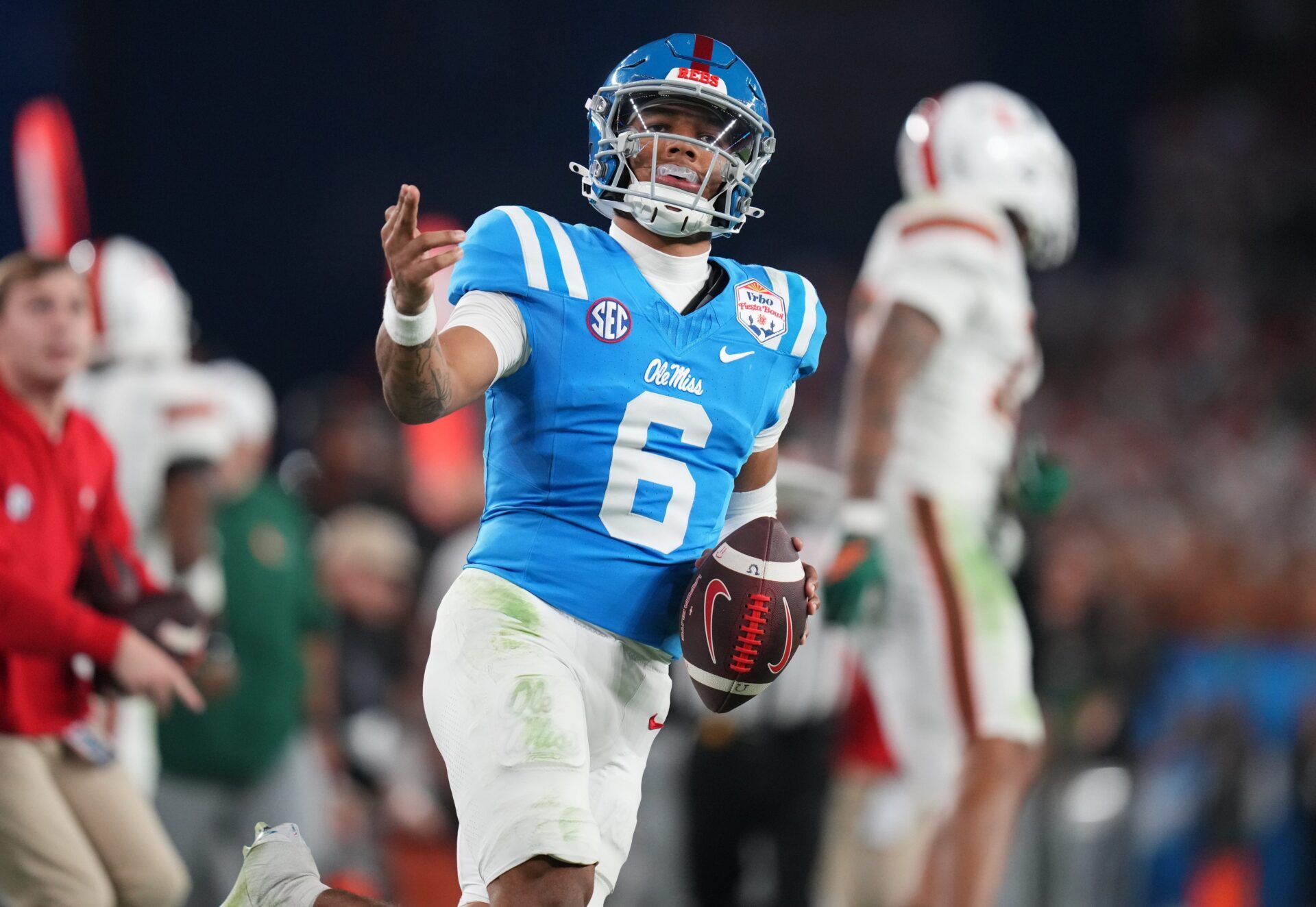
Trinidad Chambliss just made the smartest legal move of his eligibility fight. By shifting his NCAA lawsuit from federal to state court, the Ole Miss quarterback has dramatically improved his odds of suiting up for the Rebels in the 2026 college football season.

Why State Court Gives Chambliss an Edge in NCAA Eligibility Fight
The pattern is impossible to ignore. According to data compiled by Sam C. Ehrlich, a Boise State University professor who tracks sports litigation, players have won just six of 27 eligibility cases in federal court, a 22% success rate.
In state court? Players have won eight of 10 cases, an 80% clip that should have the NCAA’s legal team concerned.
“A lot of these eligibility lawsuits are finding recent success in state court,” Ehrlich wrote on social media platform X. “It seems to be the new strategy (justifiably so).”
Chambliss and his legal team clearly got the memo. Federal courts have historically given significant deference to the NCAA’s internal processes, treating eligibility decisions as matters best left to the governing body.
State courts have shown far less patience for that argument, particularly when a player’s career and earning potential hang in the balance.
The shift reflects a broader awakening among attorneys who handle these cases. Why fight on terrain that favors your opponent when a different venue offers a level playing field? Chambliss’ situation demanded urgency, and the state court offers the fastest path to a ruling that could get him on the field for the Rebels next fall.
What a Chambliss Victory Would Mean for Ole Miss
After swirling speculation linking him to the transfer portal and a reunion with former head coach Lane Kiffin at the LSU Tigers, Chambliss has stated his intent to return to Ole Miss for the 2026 college football season, continuing a fairytale story that saw the Rebels reach the College Football Playoff semifinal behind the former DII quarterback.
Time is of the essence for both player and program. While the Rebels made the decision to take a transfer portal quarterback as a security blanket, they need to know whether they’ll have their starter returning for 2026. For Chambliss, he needs to know if he’ll return to Ole Miss or enter the NFL Draft cycle, and all that process entails.
MORE: Pete Golding and Ole Miss Make 5-Star QB Decision After Trinidad Chambliss Ruling
Meanwhile, there’s a larger precedent being set here. Every successful state court challenge weakens the NCAA’s leverage in eligibility disputes. Athletes and their attorneys are watching these outcomes closely.
The playbook is writing itself: file in state court, cite the growing body of favorable rulings, and force the NCAA to defend decisions that often lack the procedural rigor courts expect.
Chambliss’ case won’t be the last to follow this path. But if he prevails, it’ll be another data point that reshapes how players approach these fights — and another reminder that the NCAA’s grip on eligibility decisions isn’t as firm as it once was.