
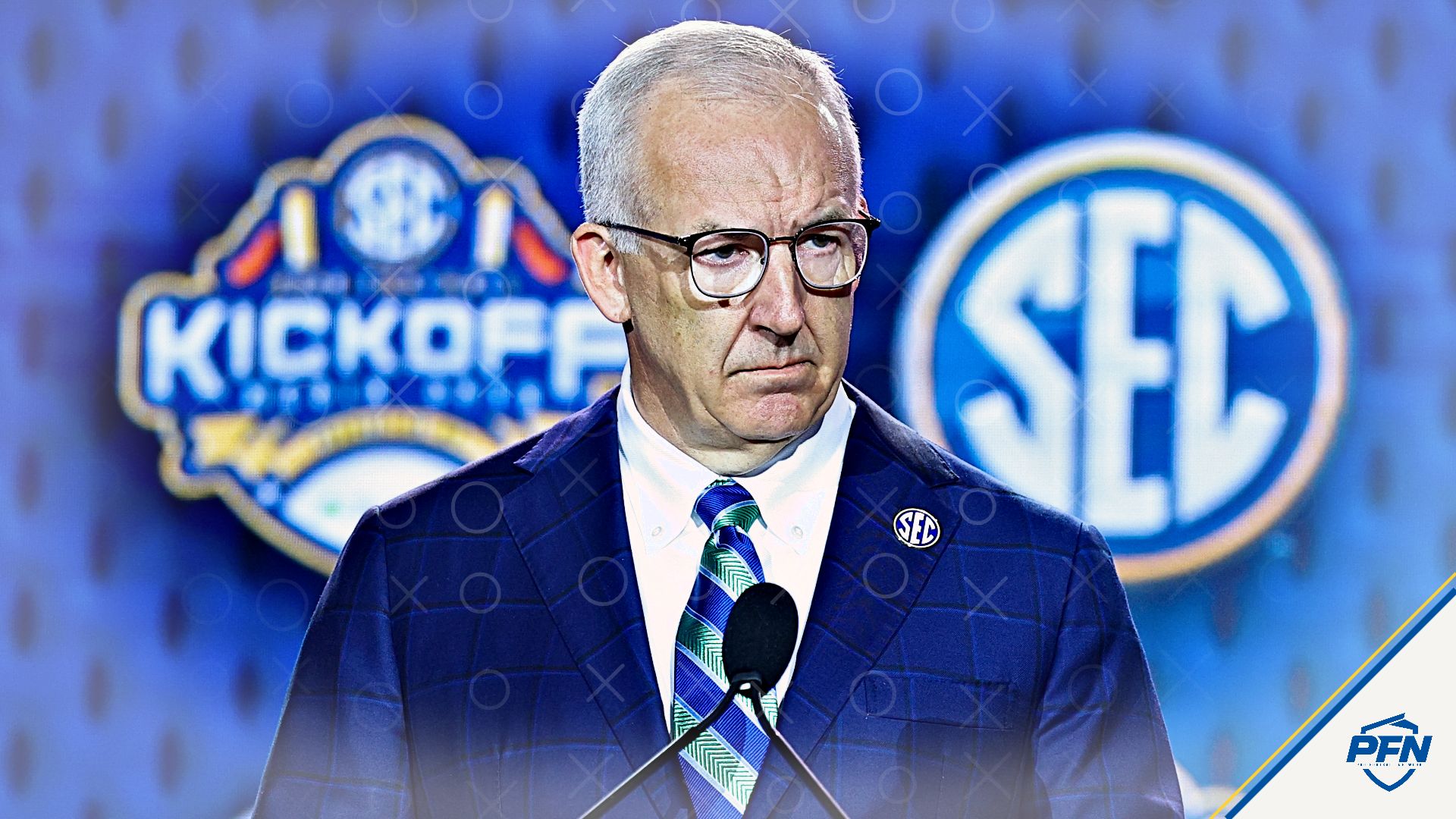
The SEC’s attempt to close the door on former professional athletes returning to college sports has run directly into a legal battle. The conference is making it clear that it does not view the latest temporary restraining order against commissioner Greg Sankey as the end of the fight.
A Louisiana state judge temporarily blocked the SEC and Sankey from enforcing penalties against member schools that roster players who signed professional contracts before seeking an additional season of college eligibility. ESPN’s Pete Thamel shared the conference’s response Sunday on X as LSU remains at the center of the dispute.

SEC Says Court Order Is Only Temporary
“The order entered against the SEC and Commissioner Sankey is a temporary restraining order, not a final ruling on the merits,” the conference said in the official statement.
The SEC added that it is prepared to challenge the plaintiffs’ allegations at a Thursday morning hearing and defend its authority as a voluntary athletic association. Until then, the league confirmed it will comply with the temporary court order.
That distinction is important because the temporary restraining order does not settle the underlying eligibility fight. It prevents enforcement for now while the court considers whether the SEC’s recently adopted policy can stand.
PREDICT THE CFB SEASON: PFN’s Free CFB Playoff Predictor
The conference established the rule after former Ole Miss players Dae’Quan Wright and Zxavian Harris pursued transfers to LSU after spending time on NFL rosters this summer. Former LSU edge rusher Jack Pyburn, who was waived by Tampa Bay, has also been linked to a potential return to Baton Rouge.
Under the SEC’s policy, athletes who signed professional contracts, appeared on professional rosters, or failed to properly withdraw from a professional draft are barred from returning to compete at league schools.
The penalties approved for violations are severe: a head coach could be suspended for half a season, a school could be fined an amount equal to 50% of that sport’s annual operating budget, and the institution could lose conference voting rights.
LSU Sits at Center of SEC Eligibility Fight
The legal battle traces back to the NCAA’s move to a five-season eligibility model. Athletes whose eligibility expired following the 2025–26 academic year were omitted from the transition, prompting several players to argue in court that they made professional decisions before knowing an additional college season would be available.
Wright and Harris are among the most visible examples. LSU coach Lane Kiffin has defended pursuing them, arguing that players granted legal relief would simply sign elsewhere if the Tigers declined to recruit them. PFN previously examined the SEC’s potential legal strategy as the dispute moved toward the courts.
The dispute has created a complex web of competing judicial rulings and conference policies.
A Texas judge issued a separate 14-day restraining order preventing the NCAA, SEC, and Sankey from blocking a group of 41 athletes from returning to college play, while the Big Ten, Big 12, and ACC have enacted similar restrictions on former professional players.
START PREPARING: PFN’s Free College Fantasy Simulator
Thursday’s hearing now becomes the SEC’s opportunity to push back formally, just two days before LSU opens against Clemson. The league is not conceding that Sankey lost his authority permanently. It is arguing that the court has only hit pause while the larger fight over who controls eligibility continues.
