
Quarterback development from college to the NFL has been one of the league’s most debated topics in recent years. Too often, highly touted prospects arrive at the professional level physically gifted but mentally unprepared, forcing teams to gamble premium draft capital on projection rather than polish. With the rise of Name, Image, and Likeness (NIL), that trend may finally be shifting.
NIL Helping the NFL
Recently, respected NFL draft analyst Daniel Jeremiah weighed in on X with a strong endorsement of NIL’s long-term impact on quarterback play: “Personal opinion: I believe the NIL era is going to improve QB play at the NFL level. There is now financial incentive for QB’s to stay in college and get more experience/development. We’re going to see more NFL ready QB’s because of that development.”
Coming from someone of Jeremiah’s stature, this statement carries weight. He has evaluated quarterbacks at every stage for years, and his point addresses the core issue NFL teams have faced: quarterbacks leaving school too early because football was their only path to financial security.
Before the NIL era, quarterbacks often felt pressured to enter the NFL draft as soon as they became eligible. Even if they weren’t ready, the risk of injury and the absence of guaranteed income pushed many to leave college prematurely. Now, NIL provides financial stability, enabling players to prioritize their development over immediate concerns.
Quarterback is arguably the most demanding position in sports, requiring mental processing, leadership, and emotional maturity just as much as physical talent. Extra reps, film study, and live-game experience matter, and NIL makes staying put a realistic option.
Fernando Mendoza: Development Pays Off
One of the more recent examples is Indiana quarterback Fernando Mendoza. After playing at Cal, Mendoza was eligible to declare for the NFL Draft, but doing so would have meant entering the league as a fringe prospect at best. Instead, he chose to remain in college, transferring to Indiana to play under head coach Curt Cignetti with a focus on long-term growth. That decision paid off massively.
At Cal, Mendoza posted a PFSN QB Impact Grade of 77.6. One season later at Indiana, that number skyrocketed to 93.2, the second-highest mark in the country, while also capturing the Heisman Trophy. His draft stock followed the same upward trajectory. According to PFSN’s Draft Big Board, Mendoza now ranks as the No. 2 quarterback in the class behind Dante Moore and the No. 8 overall prospect.
Just a year earlier, such an evaluation would have been unthinkable. NIL gave Mendoza the freedom to wait, improve, and fully unlock his potential.
Bo Nix and the Power of Patience
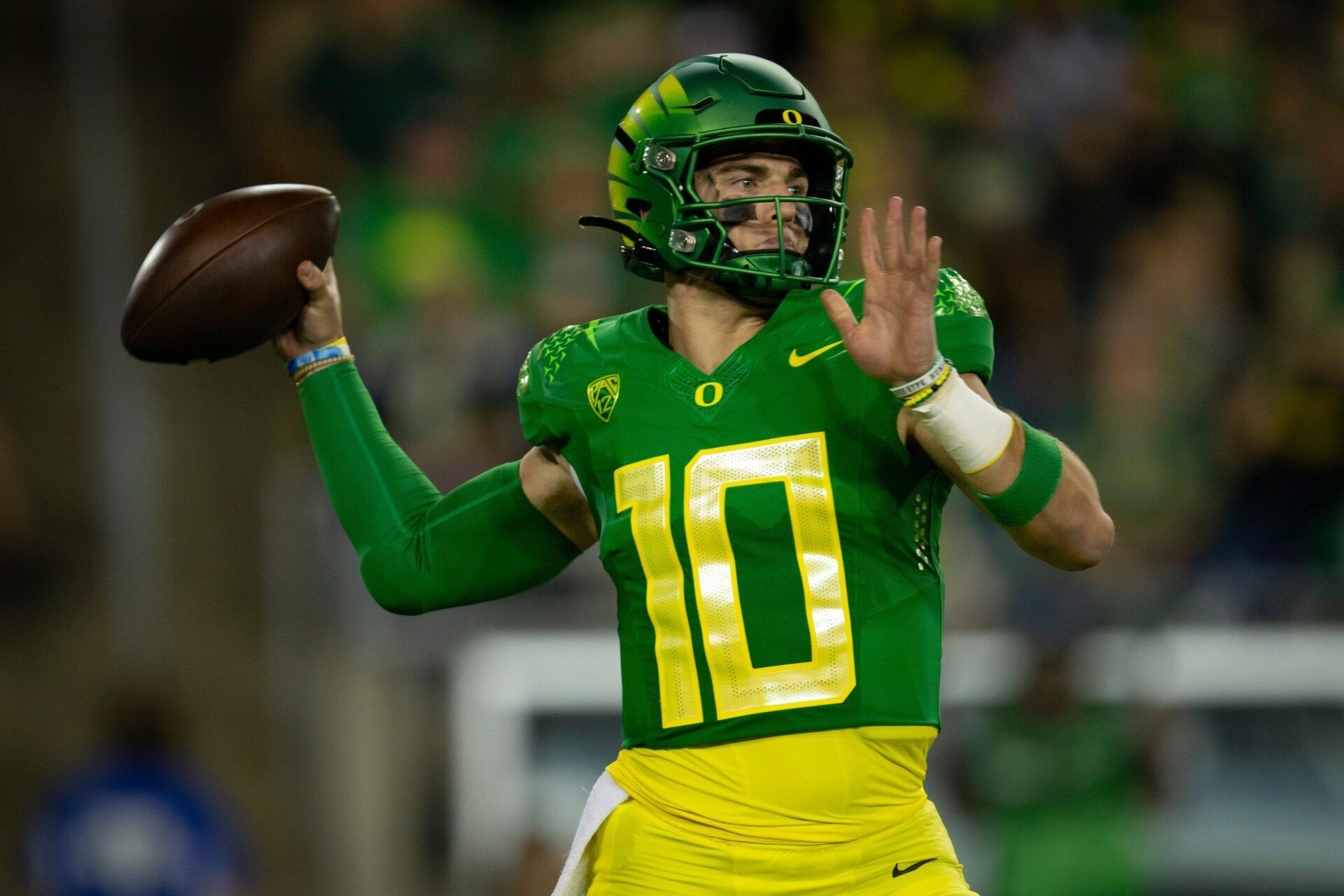
Another compelling case study is Bo Nix. Once viewed as a talented but inconsistent quarterback during his Auburn tenure, Nix’s career took a dramatic turn after transferring to Oregon. While jokes were made about how long he stayed in college, the extra time proved invaluable.
Across 61 career games, Nix amassed over 15,000 passing yards, 113 passing touchdowns, and nearly 2,000 pass attempts. At Auburn, his highest PFSN grade peaked at 78.8. At Oregon, his average grade jumped to 88.9 over two seasons, culminating in a Heisman finalist appearance and a top-12 NFL Draft selection.
Without NIL and the transfer portal, Nix may have entered the NFL far earlier and far less prepared. Instead, he arrived as a refined, confident quarterback capable of leading at the next level.
Long-Term Win for the NFL
Jeremiah’s point is simple but significant: NIL is aligning incentives with development. Quarterbacks no longer have to choose between financial security and readiness. They can mature physically and mentally before stepping into the most scrutinized role in professional sports.
While NIL certainly has its complications, its impact on quarterback development stands out as a clear positive. If this trend continues, the NFL could soon benefit from a deeper pool of polished, NFL-ready quarterbacks, something the league has been searching for over the last decade.
For a position that demands patience, leadership, and experience, NIL may be the best developmental tool college football has ever introduced.
