
It’s no secret that the NIL landscape in college football has been chaotic ever since it was legalized in 2021. With virtually no clear rules or oversight, the sport has become increasingly unpredictable, as programs and players navigate what many see as a lawless environment.
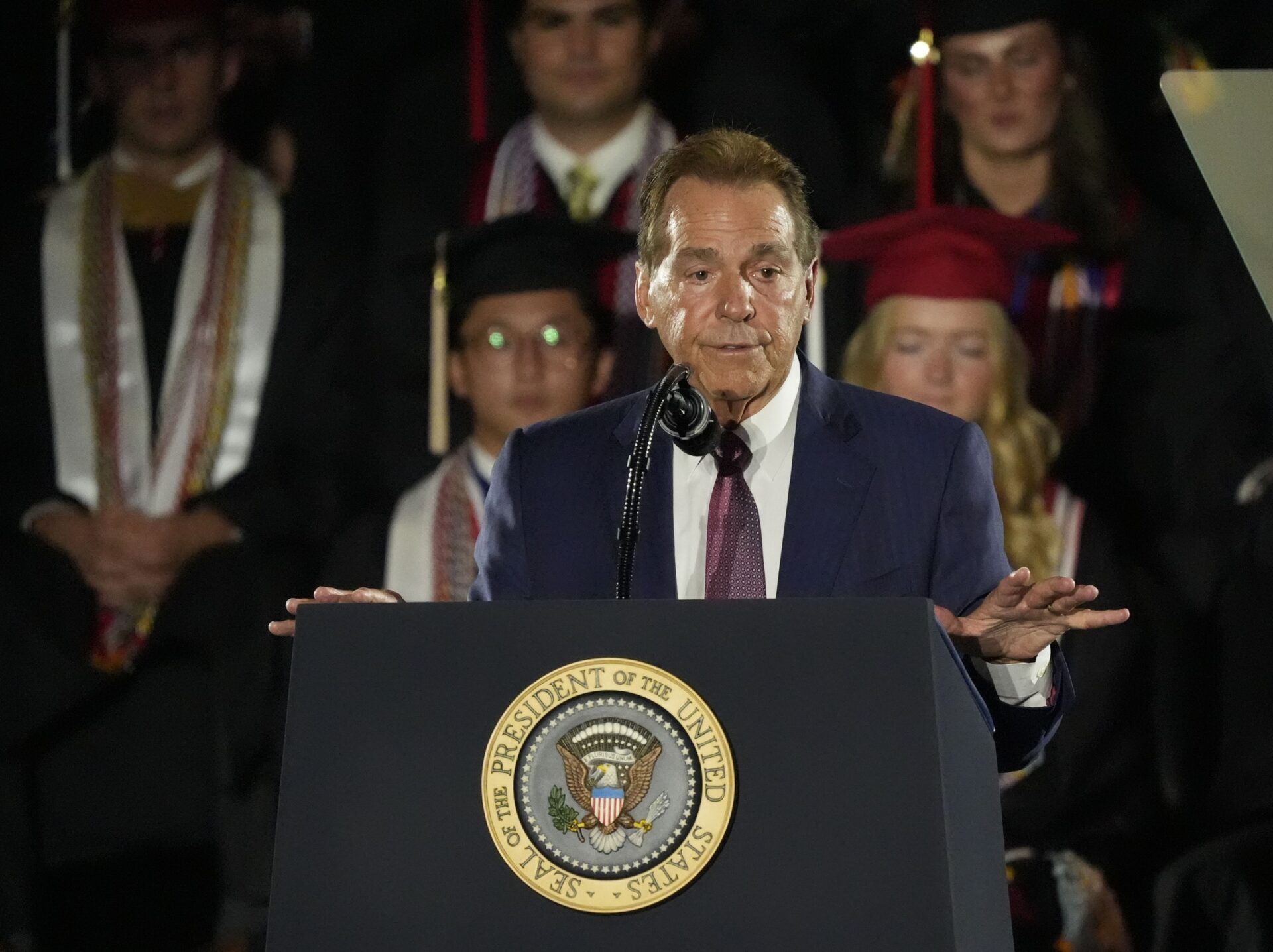
One of the most vocal critics of the current NIL system in college football has been former Alabama head coach Nick Saban, who is widely considered one of the greatest coaches in the sport’s history. Saban has repeatedly expressed concern that NIL has been implemented in a way that damages college football.
Still, he remains hopeful that the House v. NCAA settlement will bring about the meaningful reforms needed to preserve the game’s integrity.
Nick Saban Points to NCAA’s NIL Failures as Threat to College Football’s Future
When Saban speaks, the college football world listens. The legendary head coach recently appeared on the “Pure Athlete” podcast to explain how the current NIL system is ruining college football.
Saban believes that NIL was building a pay-to-win system in the sport, and that larger schools with better funding could out-spend smaller schools with less funding.
“I think the system that we had in college football the last few years, you could actually buy a championship,” Saban said. “If you were a school that could raise a significant amount of funds in a collective, you may be operating with a $30 million collective and playing against teams that have a $3 million collective.”
Saban went on to explain that for NIL to work, the fans need to see a good product on Saturdays. With how NIL was being run in the past year, Saban believed that the product was becoming significantly worse, and fans were disinterested in this sport.
“If you don’t have the fans, the support, and the interest, how are you going to maintain the standard of the financial benefits you need to be able to pay players and do all the things we’re talking about in improving the quality of life and having the kind of support for them that’s necessary for the future,” Saban said. “I don’t think we did a very good job of that the last few years in college.”
While Saban has his criticisms of how NIL has been run in the past few years, he believes that the House v. NCAA settlement, which caps NIL spending for each school at $20.5 million, will help even out the college football landscape.
“This is a step in the right direction, this House settlement that just occurred,” Saban said. It does give some guidelines.”
Only time will tell if the settlement can solve many of NIL’s issues, but it aims to level the playing field for all programs regarding spending. Saban’s opinion carries weight, and it’s clear he’s unhappy with the current direction of the sport.
