
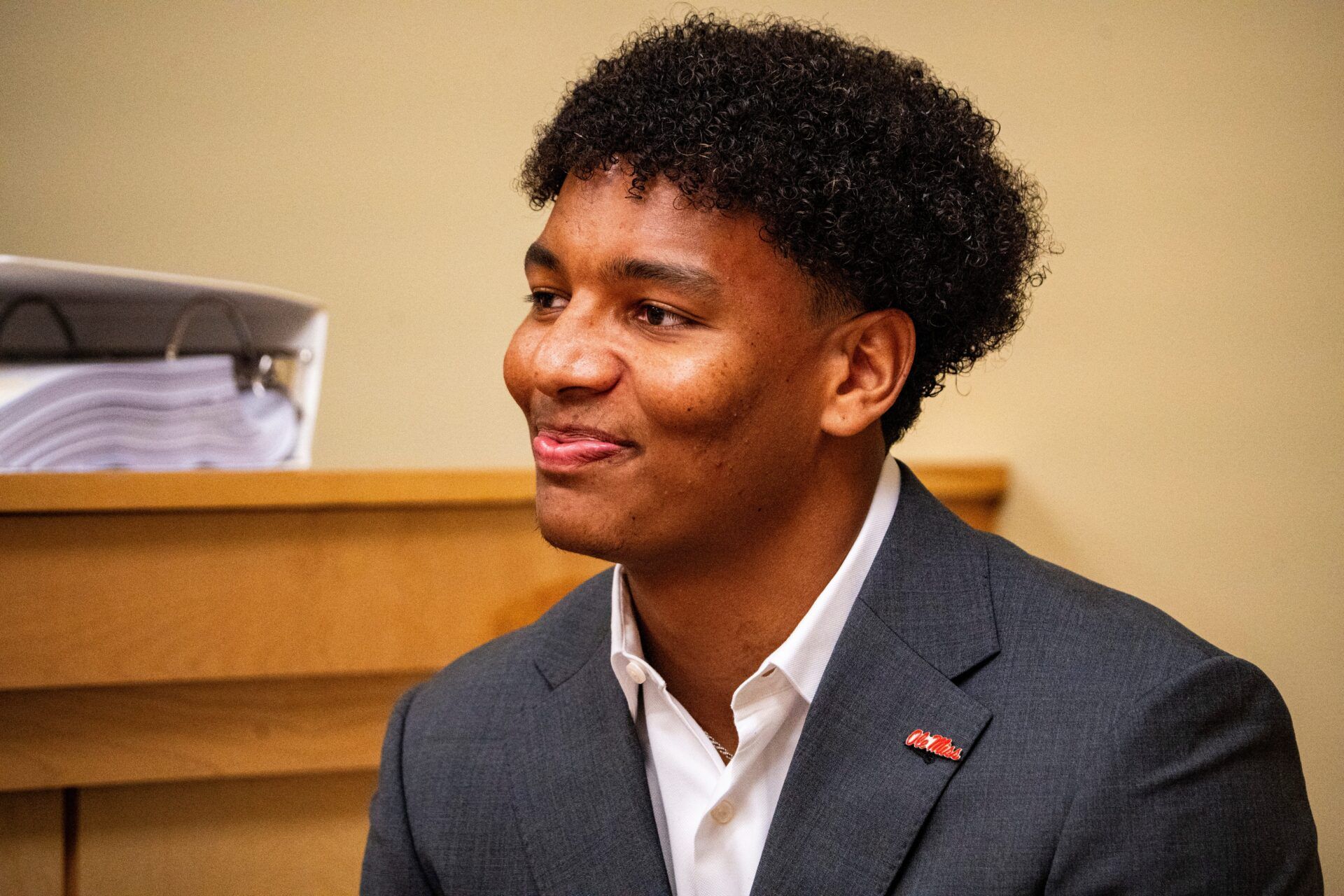
A state court awarded Trinidad Chambliss an extra year of eligibility after siding with the Ole Miss quarterback’s petition for an injunction Thursday. The judge ruled the NCAA did not act in good faith after ignoring medical evidence that led to the denial of his waiver.
The organization responded with a statement criticizing inconsistencies in state laws and court decisions, saying future partnerships with Congress are essential to stabilize and strengthen protections for current and future student-athletes.
NCAA Responds to State Court Ruling, Pledges To Defend Eligibility Regulations After Trinidad Chambliss Verdict
In a statement posted by ESPN college football senior writer and “College Gameday” insider Pete Thamel on social media, the organization reacted to the ruling, saying the verdict illustrates the problem of varying court decisions that aim to
“undermine rules agreed to by the same NCAA members who later challenge them in court.”
“We will continue to defend the NCAA’s eligibility rules against repeated attempts to rob future generations of the opportunity to compete in college and experience the life-changing opportunities only college sports can create,” the NCAA added.
Statement from NCAA: “This decision in a state court illustrates the impossible situation created by differing court decisions that serve to undermine rules agreed to by the same NCAA members who later challenge them in court. We will continue to defend the NCAA’s eligibility… https://t.co/ieku0P4tWI
— Pete Thamel (@PeteThamel) February 13, 2026
The organization credited member schools for implementing changes aimed at improving student-athlete welfare but criticized inconsistencies across state regulations and court decisions. It said those obstacles underscore the need to work with Congress to craft national laws that provide “stability for current and future college athletes.”
MORE: Trinidad Chambliss’ Future Confirmed as Judge Hands Down Ole Miss QB’s Verdict
The case was heard in Lafayette County Chancery Court before Judge Robert Whitwell. The filing of the petition was a strategic decision by Chambliss’ legal team. Whitwell ruled that the quarterback met the criteria to secure a medical redshirt for a sixth season.
The judge said Chambliss presented sufficient medical documentation in his request, but the NCAA set aside prior medical evidence and denied the waiver. He said the organization failed to act in good faith when it denied the waiver.
The issue stemmed from the NCAA’s denial of the quarterback’s petition for a sixth year of eligibility in January, followed by an appeal filed last week. Ole Miss filed a motion for reconsideration, citing new evidence, but the organization denied the request.
Its legal team argued that Chambliss’ case would have been different had he enrolled in a Division II school, where he would have been allowed to enroll as a part-time student and play his sixth year.
ESPN reported that the NCAA can still appeal the decision.
Chambliss initially played as a backup for Ole Miss until Austin Simmons sustained an injury early in the season. He finished the season with 3,337 passing yards, 22 touchdown passes, and 8 rushing touchdowns.
He led the Rebels to their first College Football Playoff appearance and won twice in the CFP, including a come-from-behind victory over Georgia in the Sugar Bowl, where he threw for 362 yards and rushed for 14 yards.
