
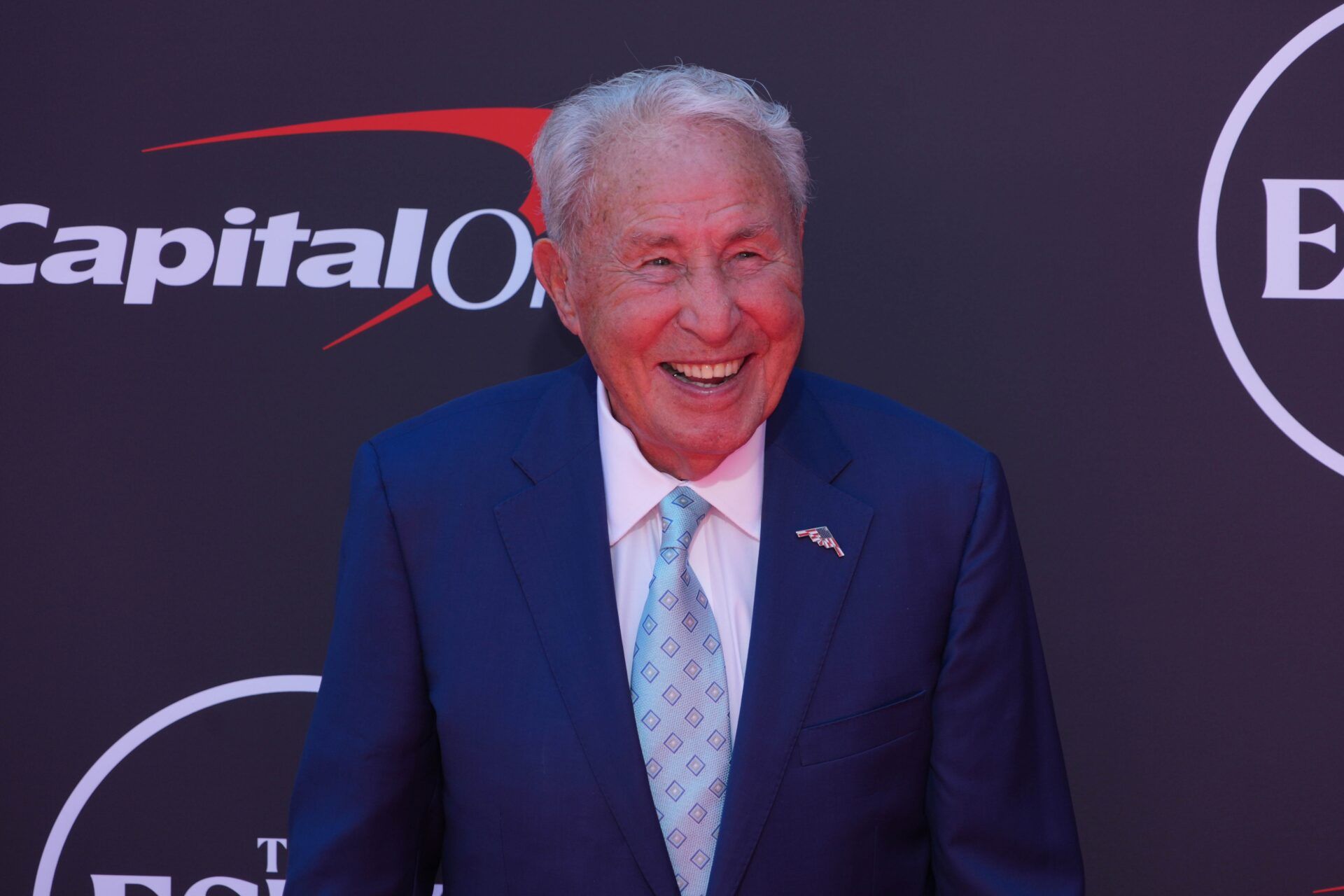
Behind every College GameDay legend lies a family story. When Lee Corso delivers his signature headgear selections and keeps millions entertained, his daughter Diane battles a disease that has significantly impacted their lives.
The Strong Bond Between Lee Corso and His Daughter Diane
Diane is the daughter of Lee, an ESPN College GameDay icon. While her father made a name for himself in college football, Diane was creating her own path in education and mental health advocacy in Orlando.
“Every morning he would go to the front house at the end of the driveway to get the newspaper. Part of his face had already started to droop, and he said, ‘I think I’m having a stroke,'” Diane recalled tearfully. The 2009 stroke left the College GameDay host struggling with speech and mobility, creating a vulnerable moment that brought father and daughter closer together.
“He fought like hell and it worked. And he won.”
In 2009, Lee Corso suffered a stroke, but he wasn’t going to let that stop him from doing what he loved. pic.twitter.com/gIrch2kb8J
— College GameDay (@CollegeGameDay) August 23, 2025
Diane’s struggles began in childhood with obsessive-compulsive behaviors. “I can remember at a very young age being real routine and scheduled, literally laying out my clothes in kindergarten from the head to the toe and everything in order,” she shared in a GrowingBolder interview.
Her world shifted dramatically at age 13 when Lee’s coaching career moved the family from small-town Indiana to Florida.
“When you’re a girl at 13, you’re going through all the things, and it was mid-year and I was kind of taken from a life that I knew my whole life and plucked into a completely different environment,” Diane explained.
However, unlike typical teenage cases, Diane’s eating disorder developed in her twenties while working as a teacher.
“I was on my own I was independent I was working living by myself and so I isolated myself,” she revealed. Her condition became life-threatening as she ran over 25 miles daily until her feet bled and bones fractured.
The most critical period came during her pregnancy with triplets. “I’ll never forget we were at I think it was probably like an IHOP and they were all ordering and then she said and for you and he said don’t worry she doesn’t eat,” Diane remembered, describing how her young son’s words became a wake-up call.
That moment sparked Diane’s transformation from victim to advocate. She channeled her struggle into advocacy through her book “The Uncomfortable Truth.””This is a disease this is mental this is not physical it looks physical and that’s the treatable part it’s the mental that needs to stick,” she emphasizes.
“Unfortunately we live like a hugely like what weight obsessed culture thinness is praised Fitness is praise so we kind of fall into that category and we can’t get out of it because the culture approves of it,” Diane explains, challenging misconceptions about eating disorders.
Today, as a single mother raising triplet teenage boys in Orlando, Diane continues managing her condition while supporting her father’s legacy in college football.
The bond between father and daughter, strengthened through their respective health battles, remains a source of resilience for both.
