
For as long as teams have competed in college football, certain rule infractions have happened. Tampering is one of them. While largely ignored publicly, the era of NIL brought the issue to the forefront. With millions at stake for NCAA players and schools, attention increased.
One conference commissioner took the opportunity to discuss the matter with the eyes of college sports upon him.
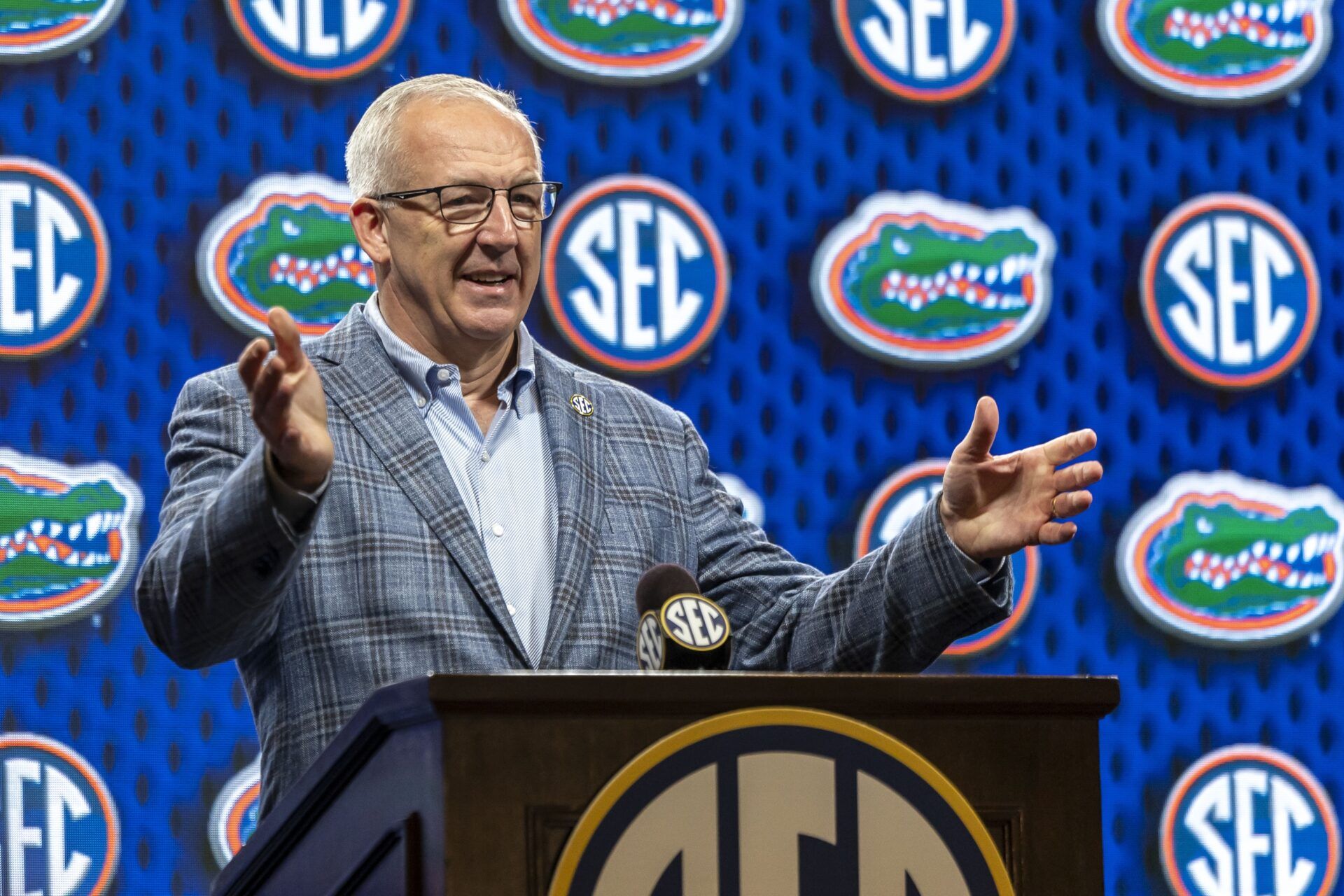
SEC Commissioner Greg Sankey Blasts NCAA Over Tampering Rules
During last week’s SEC Men’s Basketball Championship tournament in Nashville, the commissioner took the opportunity to voice his opinion and identify what he sees as the NCAA’s major issue: failing to provide clear guidelines. Sankey expressed his views clearly, as ESPN reported.
“We need clarity. Secondly, we need understanding on the part of policymakers of what’s actually happening. How’s this game being played? That doesn’t mean the NCAA should just stop.”
MORE: James Franklin Calls Virginia Tech QB Battle ‘Fluid’ Ahead of First Spring Practice
He responded to a memo issued by the NCAA, promising stronger penalties for infractions. At the heart of the matter, it seems like Sankey wants the governing body to acknowledge the wrongdoing and deliver clarity. However, members of the SEC were accused of serious infractions involving tampering.
For example, Ole Miss’s recruitment of former California linebacker Luke Ferrelli. Ferrelli left Cal for Clemson. According to head coach Dabo Swinney, Ole Miss contacted the defender as he was in classes at Clemson. Ferrelli abruptly left Swinney’s program to head to Oxford to play for Pete Golding.
In the midst of the NCAA memo release, one conference aligned with Sankey’s thoughts. The Big Ten sent a letter in response, requesting a temporary ban on tampering investigations. Additionally, the NCAA football oversight committee proposed emergency legislation that preserves the current state of the transfer portal.
More importantly, they want the NCAA to revise tampering rules to fit modern athletics. The current rules were designed before an antitrust settlement that charted a course for schools to compensate players under licensing deals. In other words, relaxing the current rules.
MORE: Steve Angeli Attends Syracuse Pro Day With Visible Limp, Still Unable to Throw
Meanwhile, the ACC and Big 12 disagree with any shifting of the rules structure. In essence, the SEC and the Big Ten sit on one side of the table, while the other two members of the Power Four sit at the opposite end. No conferences make more money in revenue than the SEC and the Big Ten.
As a result, the smaller two conferences believe that balance is needed. Usually, the NCAA conducts its annual convention in January. To accomplish what Sankey and the Big Ten want would take an immediate meeting and subsequent vote.
