
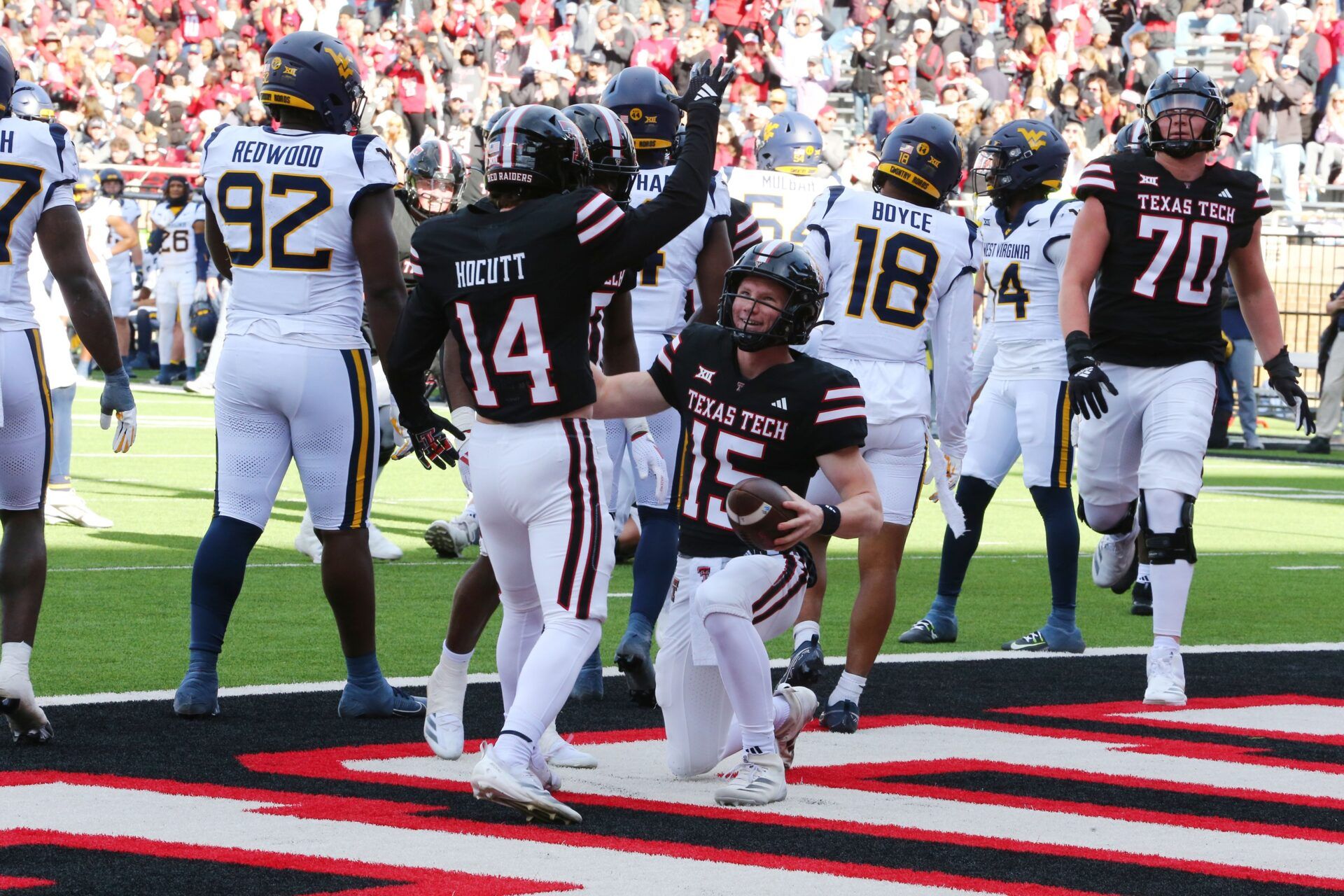
Texas Tech’s meteoric rise in college football’s NIL era, fueled by billionaire booster Cody Campbell, has reshaped the Red Raiders’ roster and sparked all colors of emotions and criticisms across the Big 12, including Colorado’s Legendary Deion Sanders playfully pleading for a share of the wealth at media days.
Thanks to a perspective shared by an OutKick insider, we got a better understanding of how Campbell’s $55 million in NIL contracts, strategic transfer portal dominance, and massive facility investments worth $300 million are positioning Texas Tech as a championship contender, while drawing comparisons to Texas A&M’s $51.4 million spending spree.

After Deion Sanders’ Callout, Analyst Explains How Cody Campbell’s Billions On A&M are Reshaping CFB
Campbell, a former Texas Tech offensive lineman and chairman of the school’s Board of Regents, has transformed the Red Raiders’ athletic landscape through The Matador Club, the program’s NIL collective.
According to reports, Campbell and his donor group have committed $55 million in NIL contracts across all Texas Tech sports for 2025, with a significant portion allocated to football.
This includes a reported football roster payroll north of $28 million, highlighted by a three-year, $5.1 million revenue-sharing deal for 2026 five-star offensive tackle Felix Ojo. Campbell’s wealth, supported by a $4.08 billion oil company sale with partner John Sellers, has funded front-loaded NIL deals, enabling Texas Tech to secure some of the nation’s top transfers with 21 commits, including top-50 prospects like USC running back Quinten Joyner and Miami (OH) receiver Reggie Virgil.
At Big 12 media days at The Star in Frisco, Texas, on July 9, 2025, Sanders marveled at Texas Tech’s spending, joking, “Yeah, Joey got some money. Joey, where you at, baby? Spending that money, I love it. Can you send a few of those dollars to us so we can get some of those players too?”
How Is Texas Tech’s Spending Influencing the College Football Ecosystem?
General manager James Blanchard described Campbell’s strategic vision as “forward-thinking,” anticipated the House v. NCAA settlement’s revenue-sharing era, and allowed Texas Tech to act swiftly before the July 1, 2025, cap of $20.5 million per school.
In his report on OutKick, Trey Wallace explains how Texas A&M’s NIL sends rapid ripples across the sport. To compete against Tech, Agggies also went big, allocating $51.4 million from July 1, 2024, to June 30, 2025, a leap from $19.1 million the prior year.
Of this, $49.2 million went to men’s sports, primarily football, basketball, and baseball, while women’s sports received $2.2 million. Like Texas Tech, A&M capitalized on front-loaded deals before the House settlement, ensuring its competitiveness in the SEC.
Final Four isn’t the only battle going on right now in basketball, as teams rush to sign players before House settlement
Front-loading deals?
‘What else are we going to do? We can’t be beaten by other schools that are willing to spend money’ P4 HC https://t.co/iZ6HgWUTQF
— Trey Wallace (@TreyWallace_) April 4, 2025
This spending has somewhat forced the trend among other Power Four schools like Oregon, Ohio State, and Michigan to pour massive sums into football to chase national titles.
However, Texas Tech’s $55 million across all sports, including a $1.2 million deal for softball pitcher NiJaree Canady, further shows Campbell’s ambition to elevate non-revenue sports alongside football, a strategy less emphasized at A&M.
Sanders’ plea highlighted the pressure on Texas Tech to convert Campbell’s billions into wins. However, many analysts, including Wallace, have warned that if it simply boils down to whoever has rich boosters wins football games, it may ruin the sport’s whole ecosystem for good.
Texas A&M faces pressure like Tech, with boosters gambling on titles for their $51.4 million investment. Campbell’s dual role as a competitor and reformer, he’s co-chairing a presidential commission to address college sports’ issues, making it more complicated as he advocates for a “values-first” model while dominating the NIL space.
