
Jim Knowles didn’t make excuses when critics questioned whether his defensive scheme was too complex for Penn State players to master. Instead, the defensive coordinator did something rare in college football — he looked in the mirror.
“That’s my fault,” Knowles said during his fall camp media session, taking full ownership of installation concerns that have followed his coaching career.

Why Does Jim Knowles Believe Defensive Complexity Is Essential for Penn State?
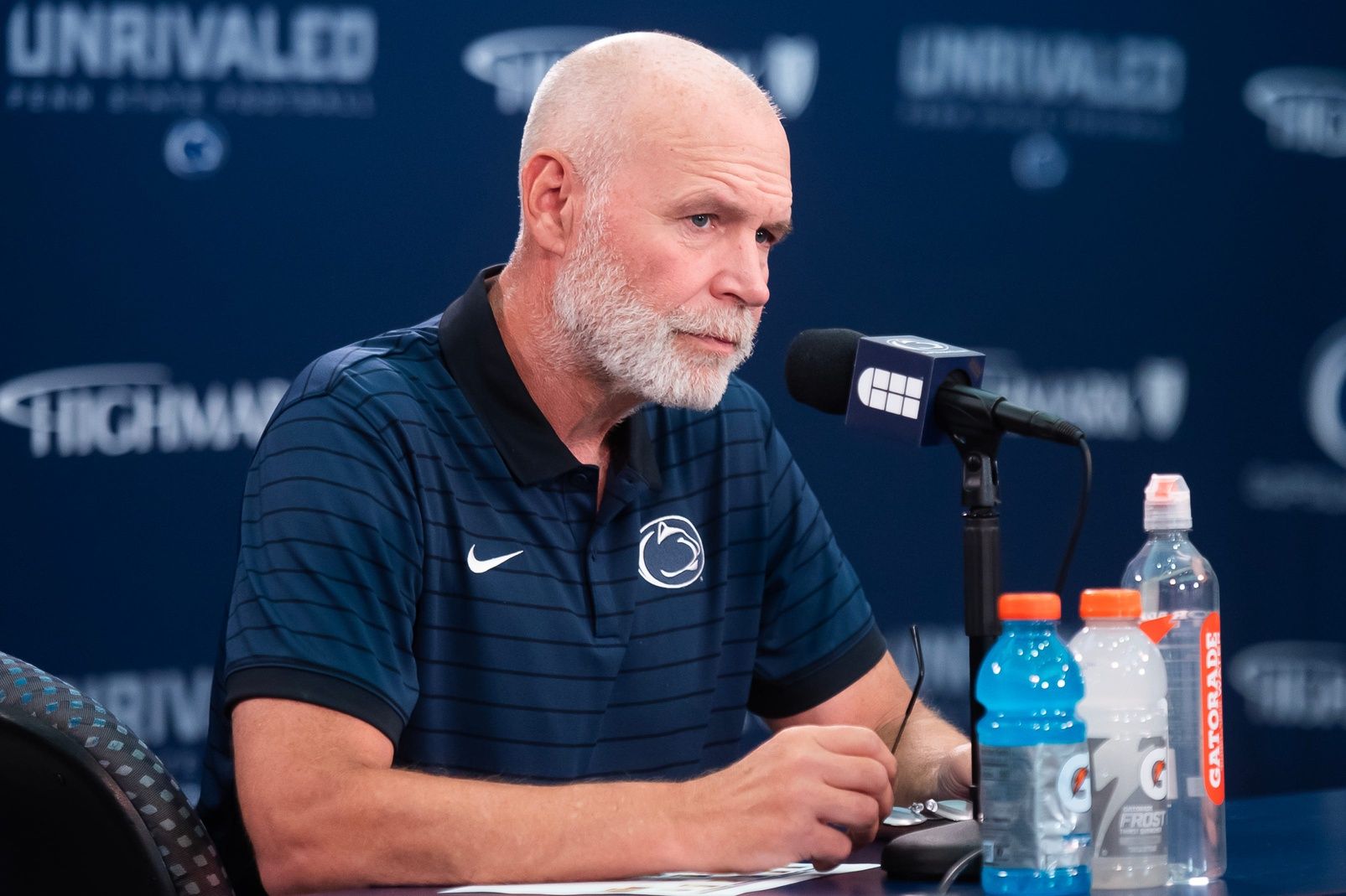
The former Ohio State coordinator addressed the criticism head-on during his August 2 press conference. When media members asked about his defense being too complicated and time-consuming to learn, Knowles offered a surprisingly direct response.
“Yeah, both,” he answered, acknowledging the validity of the concerns. However, his follow-up revealed the strategic thinking behind his approach and his commitment to Penn State’s championship goals.
Knowles explained why modern football demands sophisticated defensive systems. “I think in today’s game of football, it needs to be somewhat complicated because you need to have answers for everything, particularly at this level,” he said. “Offenses don’t run the same things in college, which in the NFL they do, so you better have all different kinds of answers.”
The complexity serves a purpose, but Knowles recognized that execution trumps theory. “Our charge is to be great now, so if it’s too complicated, or I can’t get it installed in a way that the players pick it up quickly, then that’s my fault,” he stated.
This accountability represents a shift in Knowles’ approach. Rather than blaming players for struggling with his system, he’s evolved his teaching methods. “I think I’ve developed a process that helps move it along at a more rapid pace,” he explained.
How Are Penn State Players Responding to Knowles’ Refined Installation Process?
Early fall camp results suggest Knowles’ “my fault” mentality is producing immediate results. His praise for individual players revealed both the system’s effectiveness and his players’ rapid development.
Linebacker Tony Rojas, who missed spring practice, impressed Knowles with his quick adaptation. The coordinator noted he was “very impressed” with Rojas’s physical development and ability to grasp concepts quickly.
Meanwhile, transfer linebacker Amari Campbell earned “defender of the day” honors in the first practice, with Knowles praising his “natural linebacker skills.”
The defensive line showed particular promise under the refined system. Established anchor Zane Durant drew high praise from Knowles, who explained the impact of productive defensive tackles.
“When your defensive tackles make tackles, right, instead of using up blocks, but when they’re actually productive, it changes the whole way that you plan defense,” he said.
In the secondary, Knowles highlighted the culture built by cornerbacks coach Terry Smith and praised players like A.J. Harris and Elliott Washington II. “If I had to use one word, it would be impressive,” he said about their performance.
Perhaps most telling was Knowles’ observation about the overall installation progress. He noted that “the first two days have shown that they responded to the installation without getting the reps.”
This rapid adaptation suggests his accountability-focused approach may be the key to unlocking Penn State’s defensive potential.
The coordinator’s willingness to shoulder responsibility for past installation struggles, combined with early evidence of improved player comprehension, positions Penn State’s defense for the success their championship aspirations demand.
