
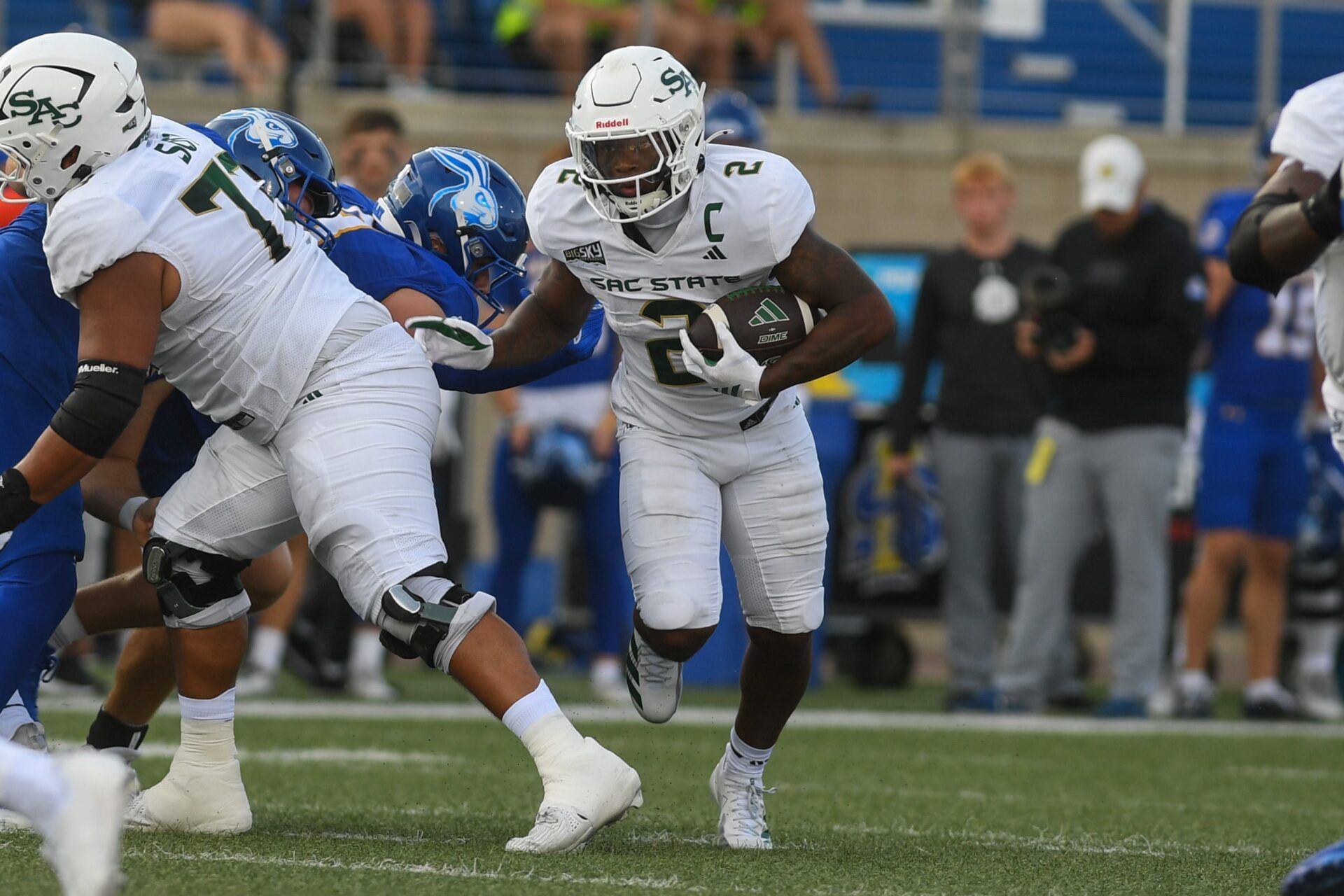
The Mid-American Conference (MAC) expands westward after adding Sacramento State. The Hornets, which replaced Mountain West-bound Northern Illinois, were voted in by MAC presidents as a football-only member.
Sacramento State reportedly paid $23 million to move from the Football Championship Subdivision (FCS) to the Football Bowl Subdivision (FBS). Of that amount, $18 million would be paid as an entrance fee to the conference, and $5 million would be given to the NCAA to move up to FBS.
Sacramento State’s FBS Move Gains Mixed Reactions From College Football Circles
The realignment move signifies significant changes for the conference, as the university becomes the first MAC program in the Pacific Time Zone. Before Sacramento State’s addition, the westernmost member was Western Michigan, which is about 2,180 miles (3,508.37 kilometers) away from Sacramento, California. It would take 31 1/2 hours to drive between Western Michigan and Sacramento State and vice versa.
It is farthest from UMass, which would take 43 hours for a one-way drive to Sacramento State, as it is approximately 2,950 miles (4,747.56 kilometres) from the new MAC program. The development will also require four MAC teams to play at Hornet Stadium every year beginning in the upcoming season.
MAC’s decision to add Sacramento State as its newest program follows North Dakota State’s move to the Mountain West, which cost $12.5 million. Former MAC member Northern Illinois paid a $2 million entrance fee to join the Mountain West.
MORE: Is Sacramento State Joining the MAC After NDSU? All About the Hornets’ $15M Move to FBS
The university’s move from FCS to FBS earned mixed reactions from the college football world, with Fox Sports Radio Sacramento announcer and podcast host Grant Napear describing the entry to the MAC as “stupidest” and “absurd.”
“Sacramento State Football going to the MAC is truly one of the stupidest things I’ve ever heard! Just absurd,” Napear wrote.
ESPN writer and book author Bill Connelly posted a “shruggie” emoticon, suggesting indifference or uncertainty about the move.
Extra Points founder and publisher Matt Brown questioned the logic behind Sac State’s FCS-to-FBS transfer, warning of the long-term effects of the move. “I don’t get the math behind Sacramento State and the MAC. Maybe after some of the ADs are able to walk me through it next week, I’ll come around. I did with the NIU/MWC move, after all. But it’s harder for me to make sense of this move, long term, for everybody,” Brown said.
College football analysts Herd Bros replied to Yahoo! Sports and On3 Sports writer Ross Dellenger’s post, comparing North Dakota State’s move to the Mountain West to Sacramento State’s move to the MAC, and wrote:
“MWC adds North Dakota State, a team relatively close to the existing conference footprint with a LOT of history (national championships, draft picks, etc.) MAC adds Sacramento State, a team nowhere close to the tight conference footprint. I hate this for the MAC.”
CFB fans, the Sickos Committee pointed out in a tweet that games played in Sacramento could run late due to the Pacific Time Zone.
“SACtion After Dark,” the account posted.
The entry payouts to the MAC and Mountain West occur at the same time, and more minor leagues are struggling to retain top talent in football and men’s basketball amid the waiver of transfer rules and the ability of other programs to pay players through NIL and revenue sharing.
The Hornets hired Arizona assistant coach Alonzo Carter as its head coach for the 2026 campaign, its fourth coach since 2022. Sac State won FCS playoff games in 2022 and 2023. Last season, they went 7-5, 5-3 in the Big Sky Conference.
The development will be the first FCS-to-FBS transfer in 57 years, following Fresno State’s and San Diego State’s moves in 1969. Last season, the university submitted a proposal to play as an Independent football team in the FBS through a waiver, but the NCAA denied the bid.
Following the move to the FBS, Sacramento State would not be postseason eligible for two years. For years, the university has been utilizing the area’s top 20 television market as the basis for its move to a bigger market. Its non-football sports, including men’s basketball, will be grouped in the Big West Conference beginning in the 2026-27 season.
