
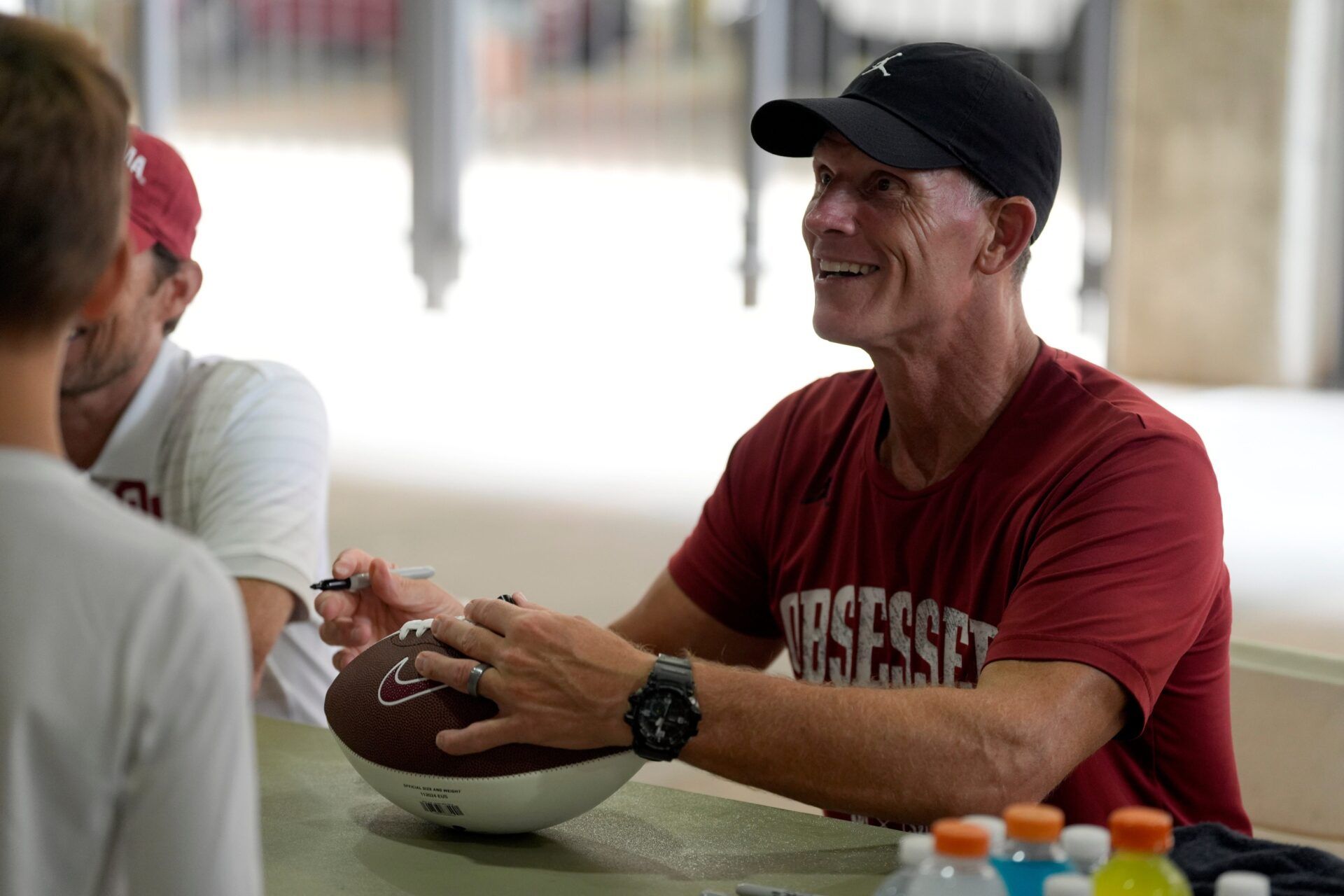
New coaches often inherit more than just players when they take over a program. According to Oklahoma head coach Brent Venables, what he discovered after Lincoln Riley’s departure to USC reveals a side of the previous regime that few saw coming. The revelations paint a picture that might completely change how you view one of college football’s most successful recent coaches.
When new coaches agree to a head coaching position, they typically inherit players left over from the previous regime. When installing a new culture, coaches often need to assess what occurred before their arrival. Before they can fully integrate the team into their vision, lingering issues from the past can affect the program and potentially disrupt the entire ecosystem.
What Did Brent Venables Discover About Lincoln Riley’s Oklahoma Program?
When Riley left Oklahoma for USC, no one outside of the program and connected media knew the situation surrounding the team during Riley’s tenure. When Venables assumed control, he wanted to build the program in his image, creating his envisioned culture.
Venables needed to strip away the remnants of the previous coaching staff, fully transforming the Sooners into his team. In a revealing press conference, the coach articulated what was left behind.
“Lack of ambition, and we had it, and there were broken spirits too, and guys that maybe weren’t confident in what we could become. We had a 2.2 team GPA and a lot of guys that didn’t pass drug tests a lot,” Venables said.
“And it’s not taking a shot at anybody, and I’m grateful for the players that were here and helped us get to this point, but the bottom line is we needed. We had to start completely over in many ways.”
Venables accused Riley of not running the tightest program, allowing players to skip class and fail drug tests. Those are serious allegations that Riley will ultimately need to address.
How Do These Allegations Change Lincoln Riley’s Oklahoma Legacy?
Riley compiled a 55-10 record with four double-digit win seasons in five years. During his tenure, he also developed two Heisman Trophy winners (Baker Mayfield and Kyler Murray).
However, despite the regular season success, the program managed just one bowl victory.
If Venables’ assertions prove factual, does Riley’s time with the Sooners look different in hindsight? The academic and disciplinary issues suggest problems beneath those impressive win totals.
All those players have since left the college game, so individual punishment remains out of the question. The NCAA has no realistic recourse regarding the Oklahoma program, as attempting to hold it accountable would mean punishing people who had nothing to do with the alleged violations.
Punishing a program where all the offending parties have left campus, including the head coach, would not be a good look for the governing body. Venables stands at 22-17 through three seasons, with three bowl losses and just one ten-win season. His schedule became significantly more difficult with the move to the SEC, though expectations remained high.
The question facing Oklahoma’s administration becomes whether they’ll evaluate Venables’ record on the field or weigh the academic progress he’s made off it. The answer could determine the program’s future direction.
