
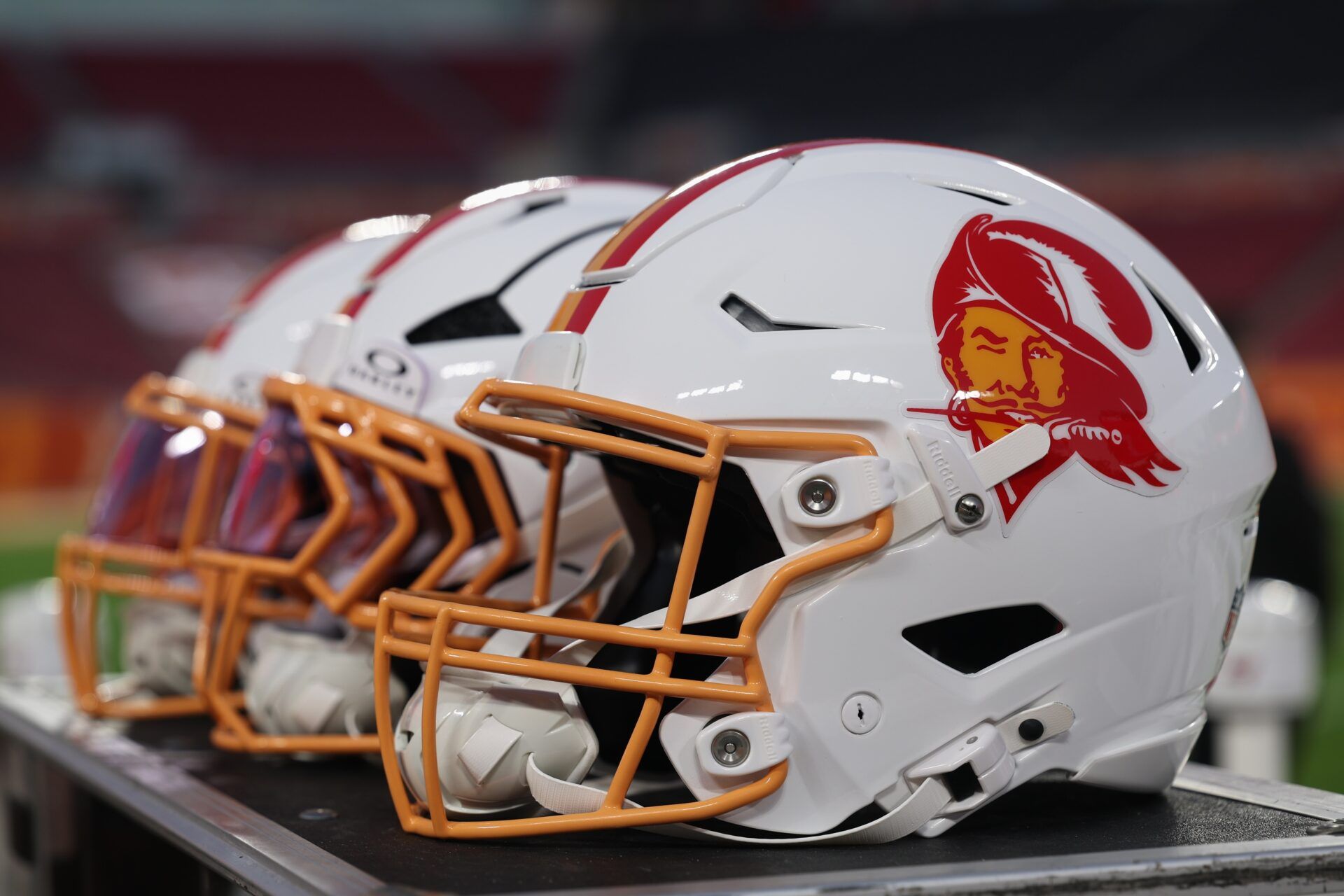
There’s something sobering about January football when you’re watching instead of playing. For the Tampa Bay Buccaneers, missing the postseason was not just a loss, it exposed the fine margins that separated them from relevance.
Now, with the No. 15 pick in the 2026 NFL draft, the organization faces a familiar yet delicate question: patch the obvious defensive leaks or reshape the offense’s identity altogether?
Why the Buccaneers and Kenyon Sadiq Could Be the Perfect 2026 NFL Draft Match
If the draft unfolds in a particular way, Oregon tight end Kenyon Sadiq, an 11-touchdown force over three years and the consensus TE1 in this class, could be the selection that quietly signals a shift in philosophy.
The Buccaneers struggled where it mattered most. In 2025, they ranked 24th in red zone touchdown efficiency. Without a towering, physical target to win in tight quarters, possessions too often stalled. The offense could move the ball between the 20s, but finishing drives felt like trying to thread a needle in a windstorm.
That issue becomes even more pressing when you consider the offseason situation. Mike Evans will be a free agent, and while Chris Godwin and 2025 first-rounder Emeka Egbuka headline a talented receiver room, neither replicates Evans’ above-the-rim dominance.
At tight end, Cade Otton is also a free agent, and the depth behind him offered little reassurance last season. Payne Durham, Devin Culp, and Ko Kieft combined for just two catches and 17 yards in 2025. That’s not a committee, it’s a placeholder.
At 6-foot-3 and 245 pounds, Sadiq, by contrast, feels like an answer waiting for the right question.
“Sadiq is a genuine receiving threat who can command the middle of the field. He has a huge catch radius, strong hands, and true run-after-the-catch ability. He’s an instant-impact player at a position of need, and one of the best players available at this point in the draft,” PFSN’s analysis of him reads.
And then there’s the schematic alignment. New offensive coordinator Zac Robinson, a disciple of the Sean McVay coaching tree, has shown a consistent commitment to 12 personnel.
Last season, Robinson’s offense deployed two-tight end sets on 38.2% of snaps, one of the highest rates in the league. The number sits just below their usage of traditional three-receiver formations.
Sadiq’s versatility makes him particularly compelling within that framework. He can line up in-line, flex into the slot, motion into the backfield, or split wide against smaller defensive backs. It’s the modern “Joker” archetype, a piece that forces defenses to declare themselves early and often.
Stay in base personnel, and he detaches for stress coverage. Counter with nickel, and he leans into his size advantage in the run game or on contested throws.