
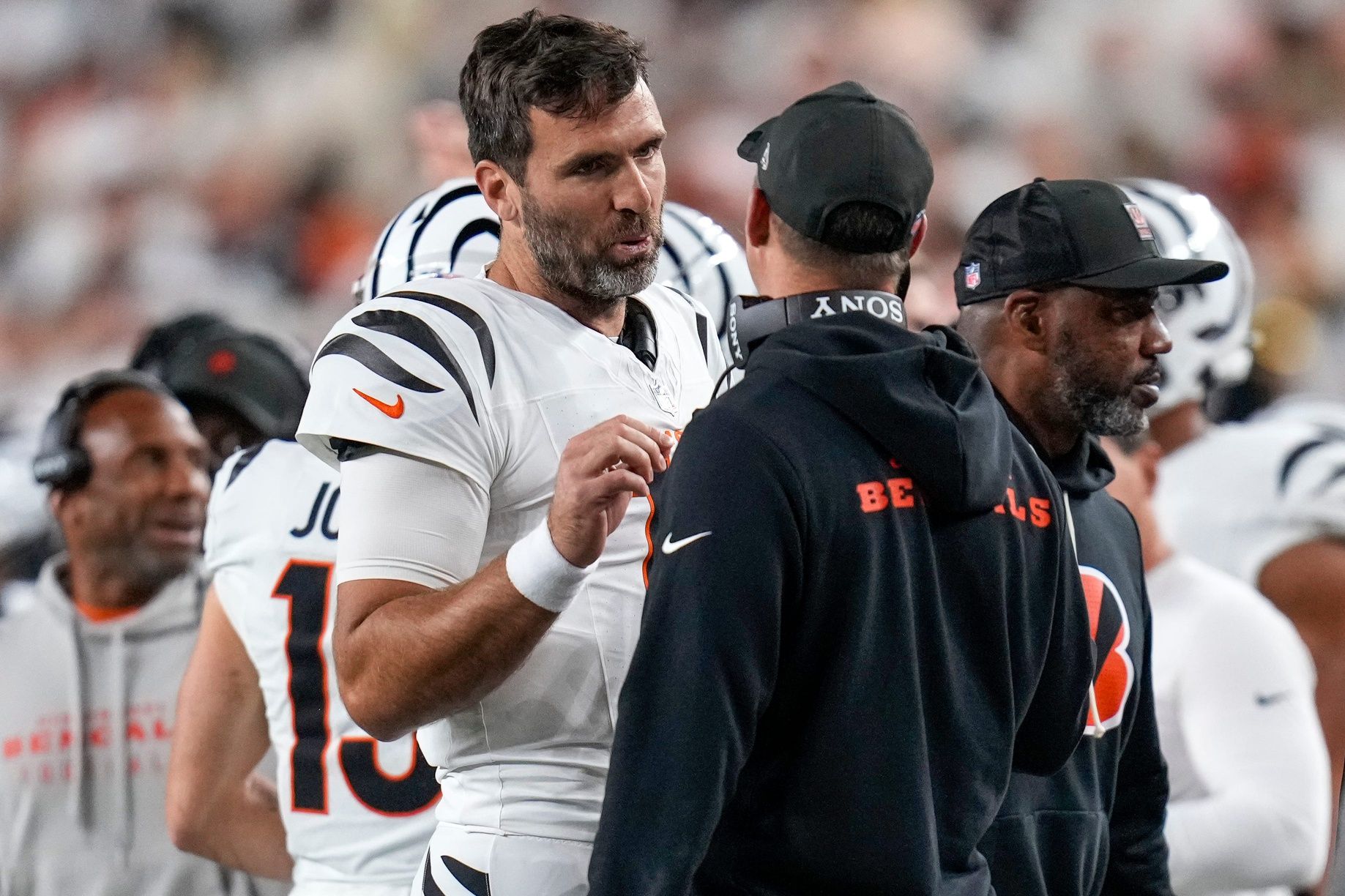
A sharp rebuke from a longtime Cleveland Browns analyst has reignited debate over Cleveland’s quarterback decisions. With Deshaun Watson’s fully guaranteed $230 million contract still the backdrop to every roster move, Tony Grossi publicly blasted the Joe Flacco transaction.

Browns Analyst Goes Off on Joe Flacco Handling
Grossi took to X to hammer the Browns’ handling of Flacco, writing: “Certifiably the 2nd worst trade in Browns history. More on RBS tomorrow.” He followed with a broader indictment via ESPN Cleveland: “They’re a laughing stock around the league… and they keep on doing stupid things.”
In Grossi’s view, Cleveland misjudged the quarterback market and undervalued recent performance, compounding the pressure created by Watson’s megadeal.
Grossi’s criticism landed because it touched two raw nerves for Browns fans. First, the lingering question of whether Cleveland correctly evaluated Flacco’s on-field value in light of what he showed most recently. Second, the wider roster-building implications of the cap and cash commitments tied to Watson, which have shaped the club’s risk tolerance and trade calculus since 2022.
Grossi argues that this combination reflects poor asset management, a charge that resonates in a city accustomed to seeing quarterback decisions define entire seasons.
Why Is the Browns Front Office Being Criticized Over Flacco?
Critics of the move point to timing, fit, and opportunity cost. The Browns have built a defense capable of controlling games, leaving the offense tasked with sustainable drives, careful ball security, and high-leverage execution on third downs and in the red zone.
Flacco’s recent form suggested the ability to deliver those situational standards in spurts, and that’s why analysts contend his value was misread. When a club’s quarterback room is unsettled, every marginal miscalculation at the position is magnified.
The Watson contract remains the anchor of this discussion. Fully guaranteed, long-term, and expensive, it affects every decision around the quarterback depth chart and all deadline calculus. The public perception challenge is equally weighty.
Cleveland’s credibility at the position hinges not just on who starts but on how the organization acquires, evaluates, and retains contributors who can stabilize the offense when needed.
In the broader lens, the critique is about process. Analysts have emphasized that modern offenses are graded by efficiency and leverage, not just raw totals. The Browns need a quarterback plan that consistently turns short fields into points, avoids negative plays, and sustains series when the defense already has the upper hand.
That is why the debate around Flacco is not simply about one player; it is about the template Cleveland uses to build and maintain an offense that matches its defense’s standard.
As Week 7 approaches, the Browns have a demanding path. They must win the week with a clear quarterback plan, prove the evaluation process delivers results under pressure, and let performances answer the criticism. The front office will be judged on outcomes, not words, and the schedule will provide the verdict soon enough.
