
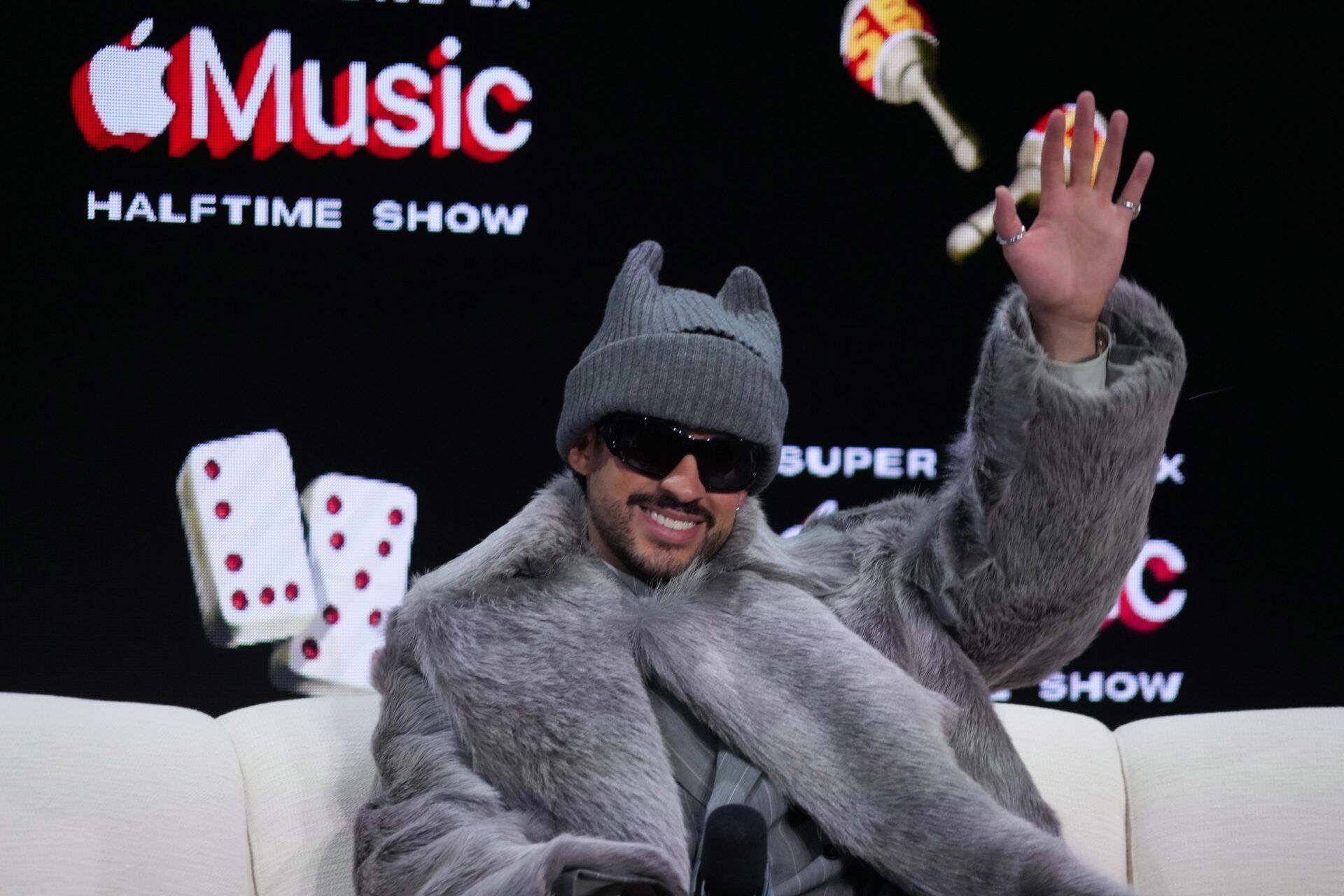
Bad Bunny’s headlining turn at Super Bowl 60 comes with Grammy momentum, cultural significance, and one of the biggest TV stages in the world. What it does not come with is a massive direct paycheck from the NFL.
Like previous halftime performers, the Puerto Rican superstar is stepping into the league’s showcase slot under longstanding compensation rules that treat the appearance more as a marketing platform than a high-dollar gig.
How Much Money Will Bad Bunny Earn for Super Bowl Halftime Show?
Bad Bunny is not receiving a special appearance fee from the NFL for performing the Super Bowl 60 halftime show. League policy has been that halftime artists are not paid negotiated performance fees for the event. Instead, they are compensated at standard union scale and have their production costs covered.
Under Screen Actors Guild-American Federation of Television and Radio Artists (SAG‑AFTRA) agreements, the union scale ranges from about $1,000 to $1,246 per day, based on recent contract figures cited in the reporting.
That structure applies across recent headliners. Mega‑stars such as Rihanna, The Weeknd, and now Bad Bunny all fell under the same basic arrangement: the league pays for the show’s production and logistics, but the performers themselves receive only the standard day rate rather than a bespoke multimillion-dollar performance contract.
Per reports, artists receive the SAG-AFTRA-mandated fee, and any additional costs are either absorbed by sponsors such as Apple Music or, in some cases, funded in part by the artists themselves. The Weeknd, for example, reportedly put several million dollars of his own money into his 2021 show.
Super Bowl Halftime Show Presents Massive Marketing Opportunity For Artists
The financial logic behind this model centers on exposure rather than direct pay. The NFL’s halftime slot reaches an audience of well over 100 million viewers in the United States alone.
As many as 100 million people are expected to watch Super Bowl 60, while Rihanna’s 2023 halftime performance drew a record 121 million viewers and became a launchpad for her Fenty Beauty brand, generating an estimated $5.6 million in earned media within the first 12 hours after the show.
League executives frame that visibility as the real compensation. Jon Barker, the NFL’s senior vice president and global head of major events, recently told The Athletic that standing on a stage “to reach 250 million people at one time” across live TV, social media, and streaming makes the halftime show “one of the most important stages in live entertainment.”
He said that feedback from artists over the years has consistently emphasized the value of simply being part of that platform.
READ MORE: Super Bowl 60 Predictions: Predicting the Winner, Final Score, MVP, and More
Historical examples support that view. Past Super Bowl halftime performers have seen sharp spikes in streams and sales after their sets. Kendrick Lamar’s 2025 show was followed by a reported 430% jump in Spotify streams. Earlier performances brought similar gains:
Maroon 5 saw a sales increase of more than 400% after the 2019 halftime show, and Justin Timberlake’s 2018 appearance was tied to a roughly 500% sales lift, according to industry reports cited in the coverage.
For Bad Bunny, the timing compounds that affect. His album “Debí Tirar Más Fotos” just won album of the year at the Grammys, the first all‑Spanish‑language project to earn that award. The halftime performance arrives less than a week later, giving him an immediate high‑profile follow‑up where he has said he wants to bring “a lot of my culture” and create “a huge party.”
The NFL and its partners cover the production costs, Apple Music sponsors the show, and union scale covers his time on stage. The tradeoff for forgoing a large appearance fee is the chance to turn a short set into sustained increases in streams, ticket demand, and brand visibility.
As with past headliners, the structure is based on the assumption that the marketing value of the Super Bowl halftime stage will far exceed the relatively modest paycheck.
