
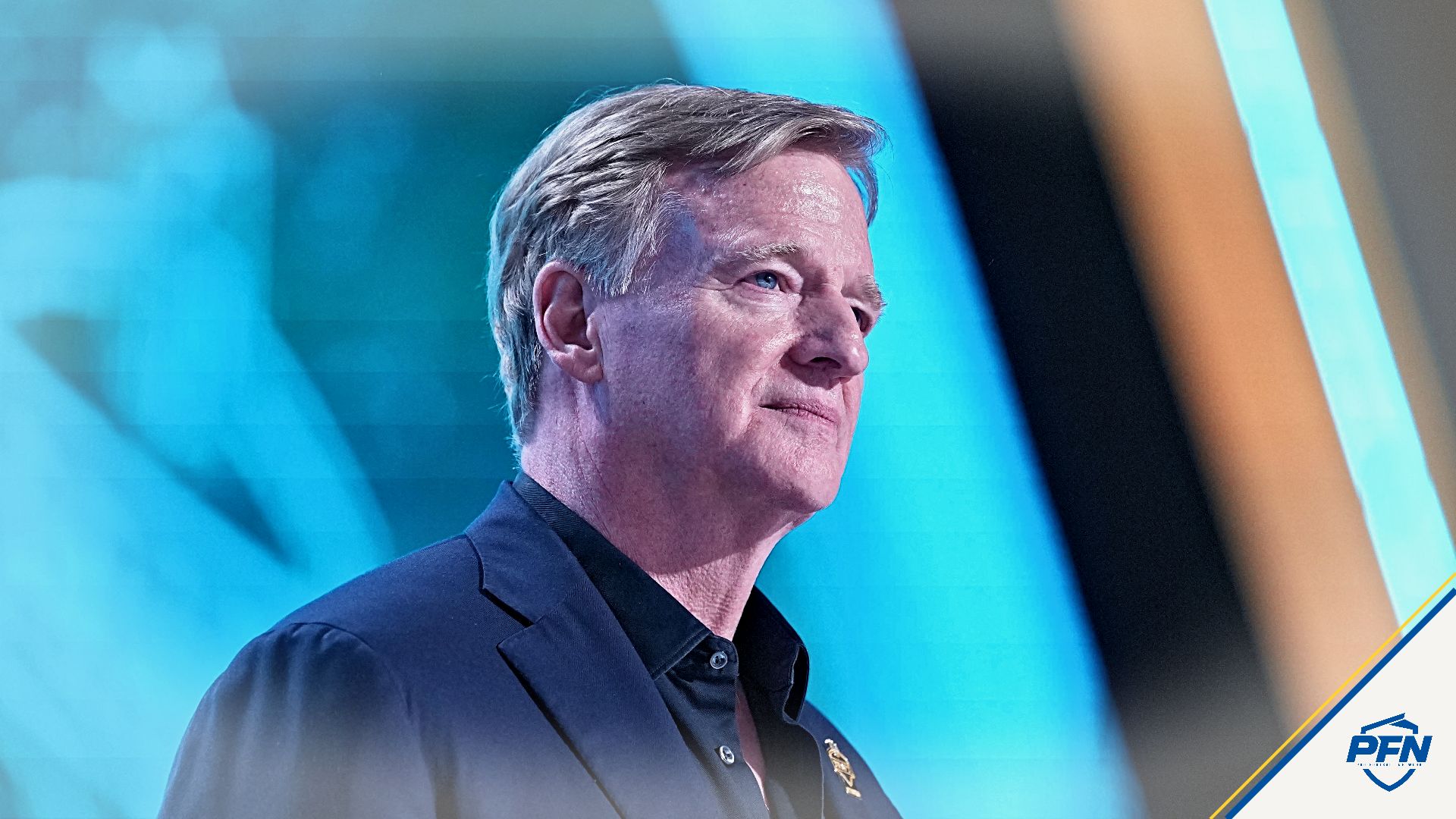
The Super Bowl still towers over American sports television, but its latest audience result has given critics something new to debate. A drop in audience from last year was already concerning, and now the NFL is pushing back against Nielsen’s new approach to measuring viewers.
That development has led Jason Whitlock to question whether the league’s hold on the American audience remains as strong as it once seemed.
Jason Whitlock Questions NFL Ratings, Roger Goodell, and ESPN’s Power Shift
Super Bowl LX averaged 125.6 million viewers, even though it was the revised data with a boost, falling from the record 127.7 million who watched Super Bowl LIX. Nielsen initially reported 124.9 million before revising the figure after a major data provider failed to properly collect device information on game day.
The Seattle Seahawks’ 29-13 victory over the New England Patriots still ranked among television’s biggest broadcasts, despite the year-over-year decline.
The halftime audience also slipped. Bad Bunny’s performance attracted 128.2 million viewers, while Kendrick Lamar drew 133.5 million the previous year. The broadcast reached a peak audience of 137.8 million viewers during the second quarter of Super Bowl LX, showing that there was still growth in interest.
BE THE GM OF YOUR FAVORITE TEAM: PFN’s Free NFL Mock Draft Simulator
With Nielsen introducing a new methodology for measuring viewership in the 2026 season, the NFL is reportedly “upset.” And the head of data and analytics, Paul Ballew, has even said that “it looks like a negative for sports.”
Whitlock addressed that concern on “Fearless with Jason Whitlock,” where he argued that the NFL and ESPN have a vested interest in maintaining the Super Bowl’s reputation as television’s dominant event.
Whitlock said, “The NFL and ESPN are doing everything in their power to save the belief that the Super Bowl is untouchable as a ratings force.”
Whitlock believes the result could also change how competitors view the league. He added, “Turning Point USA got that the league is vulnerable, that the biggest night in television can be dented, that the shield is losing its grip on American culture.”
START PREPARING: PFN’s Free Fantasy Draft Simulator
Whitlock placed particular emphasis on the ratings falling despite expectations that Nielsen’s updated system would produce a significant increase. He said, “The NFL’s biggest night, the one night America actually watches, it went backwards. A one-point dip on a night when Nielsen’s big data system promised at least a five-point rise.”
Whitlock then raised the stakes with a reference to NFL Commissioner Roger Goodell. He continued, “That was not a haircut. That was an attempt on the life of Roger Goodell.”
Whitlock followed that by describing the Super Bowl as a turning point for the league, saying, “There is before that Sunday Super Bowl, and there is after that Sunday Super Bowl.” Whitlock later called Goodell “Don Corleone Goodell,” continuing the Godfather comparison he used throughout his discussion.
With the NFL’s growing frustration with the Nielsen ratings system after the dip in this past year’s Super Bowl, Don Roger Goodell must make them an offer they can’t refuse. pic.twitter.com/955sTFkrMI
— Jason Whitlock (@jasonwhitlock) August 20, 2026
The analogy then moved into ESPN’s talent decisions. Whitlock portrayed Stephen A. Smith as “Fredo,” arguing that Smith has remained a major television personality without receiving ESPN’s biggest NFL assignments.
“He still has a contract,” Whitlock said. “He still has a poster. He does not have Monday Night Football. He does not have the Super Bowl.” Later, Whitlock mentioned Pat McAfee, as the godson, who was recently assigned the “Monday Night Countdown” role, being a former NFL player.
Whitlock further said that ESPN’s new model might be “Serving Don Goodell Corleone, anytime, anywhere.”
The ratings debate comes as the NFL remains at odds with Nielsen. The league averaged 18.7 million viewers per game during the 2025 season, up 10% from 2024, but it’s the average Super Bowl viewership that is becoming a target point.
With those concerns in mind, Whitlock views the Super Bowl decline as more than a single ratings result. He sees it as a moment that could force the NFL to confront questions about its television dominance, media strategy, and cultural reach.
