
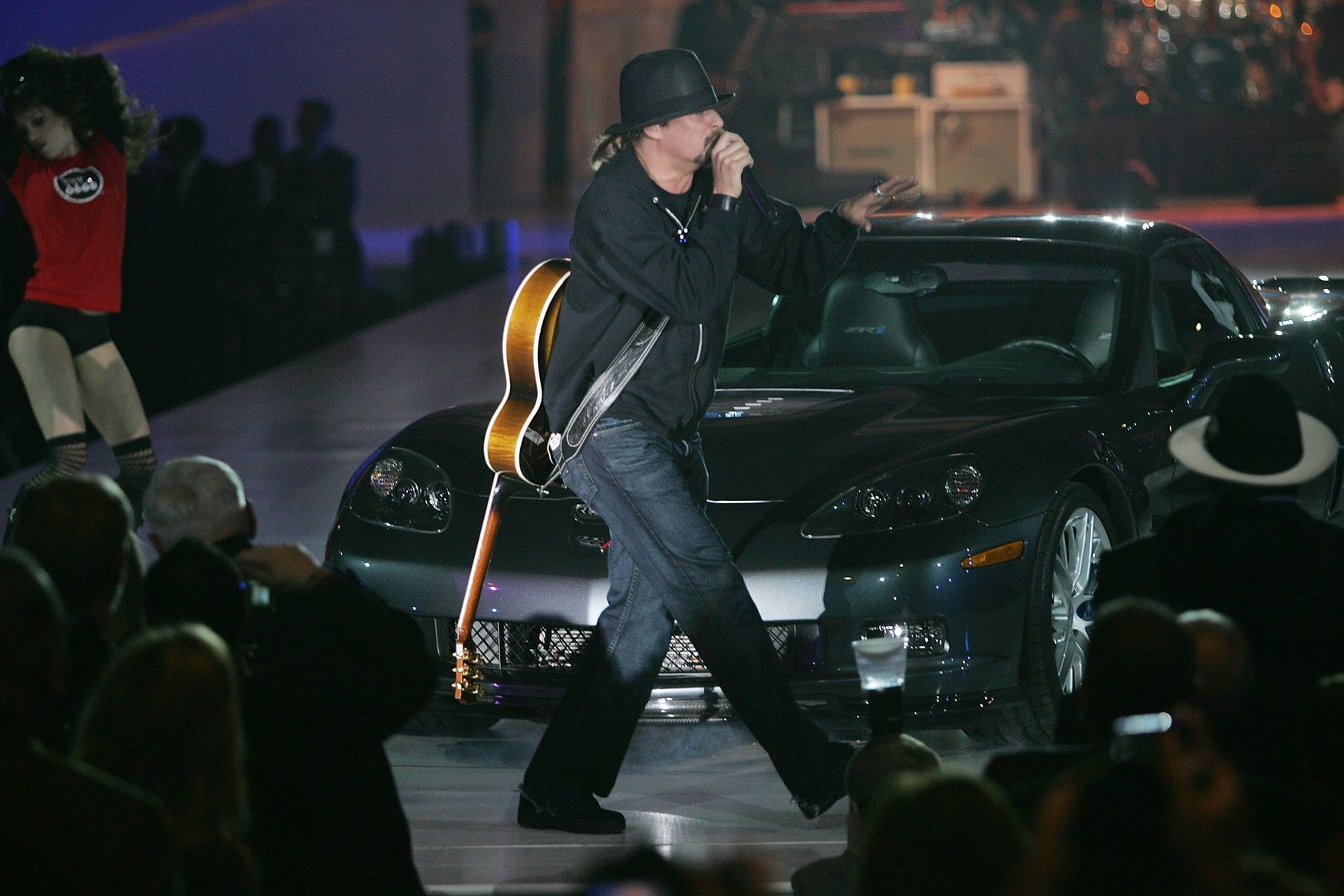
Turning Point USA set out to challenge the NFL’s official Apple Music Super Bowl 60 Halftime Show by staging its own “All-American Halftime Show” opposite Bad Bunny’s performance.
The counterprogramming, built around conservative-leaning country acts and promoted as an alternative for viewers angry about the league’s choice of headliner, quickly became part of the broader culture-war conversation surrounding Super Bowl 60.
As early audience data and streaming metrics emerged, the focus shifted from messaging to math, with critics highlighting just how small the countershow looked next to the main broadcast.
Turning Point USA’s Alternate Super Bowl Halftime Show Receives Backlash
The alternate halftime concert was organized by Turning Point USA, the group founded by conservative activist Charlie Kirk and now chaired by his wife, Erika Kirk. Marketed as the “All-American Halftime Show,” the pre-taped production featured Kid Rock, Lee Brice, Brantley Gilbert, and Gabby Barrett and was streamed on Turning Point’s YouTube channel, with an additional television window on Christian network TBN.
It was billed as a home for viewers frustrated with the NFL’s decision to put Bad Bunny at the center of Super Bowl 60’s entertainment slate.
That decision had already drawn sustained criticism from some on the right, who branded the Puerto Rican star “un-American” and a “Trump hater” ahead of kickoff. The alternate show leaned directly into that backlash, with Kid Rock describing the event in an interview as being “for people who love football, love America and love Jesus,” and Lee Brice telling another outlet he valued being able to speak “unapologetically” in that setting.
Other performers publicly embraced the event as a reflection of their faith and patriotism and shared promotional posts before and after the broadcast.
Once the game ended, though, the conversation around the countershow largely centered on its scale.
The puppy bowl even outperformed TPUSA with 12M viewers.
— Tim Hannan (@TimHannan) February 9, 2026
Streaming metrics showed the “All-American Halftime Show” peaking at roughly 6.1 million concurrent viewers on YouTube, with around 5 million watching during the direct head-to-head window with Bad Bunny’s performance.
As those figures circulated, they quickly became a punchline in broader sports and entertainment circles.
Social media personality Tim Hannan captured the tone of the backlash in a widely shared post on X, writing, “The Puppy Bowl even outperformed TPUSA with 12M viewers.”
Bad Bunny vs. Turning Point USA Super Bowl Halftime Show Viewership
Official Nielsen ratings for Super Bowl 60 and Bad Bunny’s Apple Music Super Bowl 60 Halftime Show have not yet been released, and final audited figures will determine exactly where the performance ranks among the most-watched in history.
Even so, early network projections and recent viewing trends already point to a massive gap between the league’s primary halftime broadcast and Turning Point USA’s alternative stream.
Preliminary data from the game’s broadcaster indicates that Bad Bunny’s halftime appearance is projected to meet or exceed 135 million viewers, a total that would eclipse last year’s record audience for Super Bowl 59.
Recent estimates for past Super Bowls show a steady climb, with 127.7 million viewers tuning in for Super Bowl 59 and more than 120 million for the championships before that.
Against that backdrop, the expectation is that Bad Bunny’s show, which featured guest spots from Lady Gaga and Ricky Martin and a high-production tribute to Puerto Rican and pan-American culture, reached a vast, multi-platform audience.
Turning Point USA’s numbers, by comparison, remained confined to streaming metrics and a smaller television footprint.
Early comparisons of those figures with the projected 135 million-plus watching the main halftime show suggest Bad Bunny’s audience exceeded the counterprogramming by more than 20 times.
That disparity fed into a wave of online ridicule aimed at the “All-American Halftime Show.” The same metrics that organizers pointed to as evidence of enthusiasm for their alternative event instead fueled a narrative that the effort struggled to keep pace not only with the NFL’s main broadcast but even with lighthearted staples like the Puppy Bowl, which critics cited as another example of programming drawing a wider audience than Turning Point USA’s politically charged halftime countershow.

Numbers aren’t out, and 12.8 million was last years numbers.