
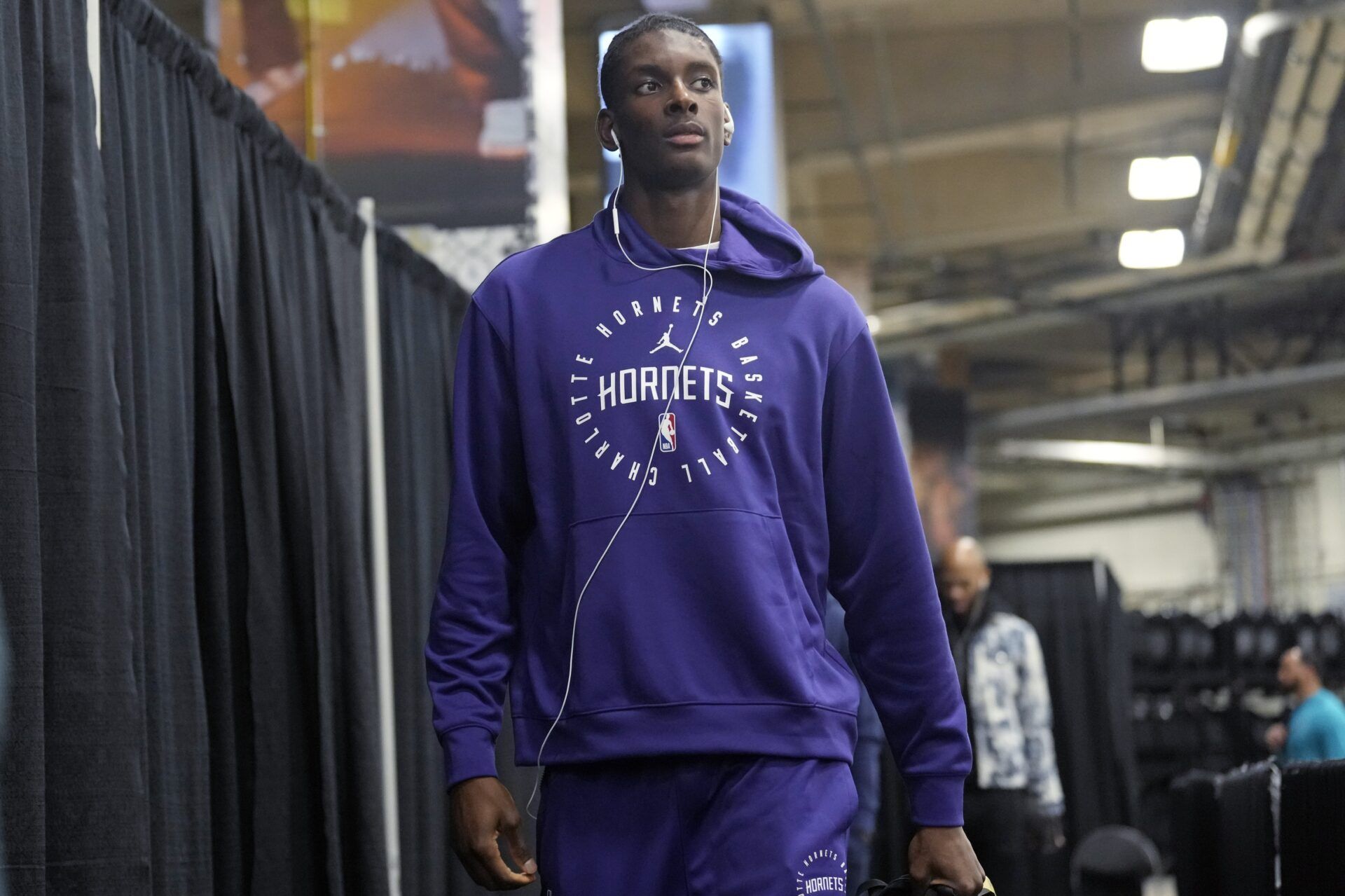
Charlotte Hornets center Moussa Diabaté joined a growing chorus of NBA players questioning the financial logic of professional basketball.
The 23-year-old forward expressed frustration during a recent podcast appearance, pointing out that college athletes earning six figures through NIL deals often make more than NBA professionals on two-way contracts. His comments highlight an unprecedented shift in basketball’s economic landscape.
NBA Veterans Struggling While College Stars Cashing In on NIL Deals
One a recent podcast appearance, Charlote Hornets center Moussa Diabaté highlighted the jarring contrast between college and professional compensation during his podcast appearance.
“You have players that are maybe averaging like six-to-seven points, making like $300-400k, like sometimes some of them, I heard some people, they [sic] making like $800k – 600k coming off the bench in college,” he explained.
The numbers support Diabaté’s frustration. Top college recruits now command massive NIL packages that dwarf entry-level NBA salaries. AJ Dybantsa, who committed to BYU this season, reportedly secured NIL deals worth $5-7 million. Cooper Flagg’s NIL contracts totaled $28 million, though his annual NIL valuation was $4.8 million during his Duke season.
Meanwhile, Diabaté’s current NBA salary of $2.27 million falls below what several college players earn annually.
This disparity hits particularly hard for players like Diabaté, who experienced college basketball before the NIL era. The consensus five-star recruit averaged 9.0 points and 6.0 rebounds as a freshman at Michigan during 2021-22 before declaring for the NBA Draft. He entered the league just as college athletes began securing lucrative endorsement deals.
Exuberant NIL Money Transforming College Basketball Culture
Financial concerns represent only part of Diabaté’s critique. He believes NIL fundamentally altered college basketball’s character and traditions.
“I definitely think it destroyed college, not more so in a sense of the game itself, like the basketball players like their skills and stuff like that, but more so like college itself,” he stated.
The combination of NIL money and the transfer portal eliminated the multi-year relationships that once defined college programs. Players who might have developed over three or four years now chase better deals elsewhere after each season.
“What you remember as being like coaches, like you have the players that stay three or four years, like you have those die-hard fans behind them, like because they’ve been growing up with those, like pretty much grown up from freshman to seniors, like you’re not going to have those anymore,” Diabaté continued.
The Charlotte Center argues that this shift created a generation of players who lack the resilience of their predecessors. When faced with adversity, today’s college athletes can simply transfer to another program rather than work through challenges.
“I think it’s the kids themselves, they losing that, I feel like the whole idea of the NBA is not as appealing no more,” Diabaté explained. “I think that, like character-wise, they’re not going to be understanding like they’re not going to be resilient at all like whenever something hard gonna happen they’re just gonna be like ‘Yeah I gotta get out, I gotta go.'”
The financial gap becomes especially pronounced for players entering the NBA through two-way contracts. These deals, designed to develop talent between the G League and NBA, pay approximately $578,577 annually, with only up to half potentially guaranteed.
Players on two-way contracts cannot participate in playoffs and face restrictions on their NBA appearances.
Diabaté articulated the frustration of watching college stars transition to the professional ranks only to earn less than they might have made staying in school.
“You have players that would be like player of the year in college, dominating college like real life dominating in college, go to, like obviously the goal is the NBA, go like maybe second rounds go as two ways and they will make less than like somebody that’s on the bench in college,” Diabaté stated.
KEEP READING: ‘Everybody Could Eat’ – Kiyan Anthony Opens Up on NIL Changing Things Drastically for College Athletes
The French-born center knows this reality firsthand. After being selected 43rd overall in the 2022 NBA Draft, he spent two seasons on two-way contracts with the Los Angeles Clippers before signing with Charlotte. His journey through the league’s developmental system exposed him to the financial challenges facing young professionals.
These economic shifts already influence player decisions about entering the draft. Only 106 players filed as early entrants for the 2025 NBA Draft, marking the lowest number in over a decade. Players increasingly choose guaranteed college money over uncertain professional opportunities.
When asked what NBA rule he would change, Diabaté focused squarely on reforming the two-way system. He believes the league must address the reality that former college stars now earn less as professionals than current college bench players make through NIL deals.
The transformation extends beyond individual players to reshape basketball’s entire developmental pipeline. Players like Diabaté represent a transitional generation that entered college before NIL riches became available, only to find themselves earning less as professionals than today’s amateur athletes.
As NIL deals continue growing and two-way salaries remain relatively stagnant, this gap will likely widen, forcing both the NBA and college basketball to reconsider their economic models.
