
The world of college football is getting more bizarre by the day. Earlier this week, a Louisiana judge issued a temporary restraining order, allowing dozens of players, including Jack Pyburn, Wydett Williams Jr., and Anthony Hankerson, to return to college football, despite some already signing NFL contracts. With such a wild situation, analysts are making their thoughts known, including PFN’s Ian Cummings.
Ian Cummings’ Thoughts on the Ongoing College Football Chaos
Speaking on PFN’s “Football Debate Club,” Cummings said, “The NCAA is stuck between an off-the-rails NIL system and a flurry of court rulings that have only magnified the chaos.”
“You can’t fault Pyburn and others for trying to return to school,” Cummings added. “They’re going to have potentially superior earning opportunities and playing time opportunities, but nonetheless, this complicates matters for coaches who have operated with a full, complete roster all through the offseason, and for new young players who are trying to make their mark.”
NFL players returning to college? 🤔@IC_Draft weighs in on the current state of NIL and eligibility in college football. 💰 pic.twitter.com/Y9w6b534fJ
— Pro Football Network (@PFN365) August 20, 2026
Cummings’ points are more than reasonable given the developing situation.
For players like current Tampa Bay Buccaneer and former LSU Tiger, Pyburn, it could make sense to come back to Baton Rouge for increased playtime and a check that could far exceed what he’d make in the first year of his NFL rookie contract.
PREDICT THE CFB SEASON: PFN’s Free CFB Playoff Predictor
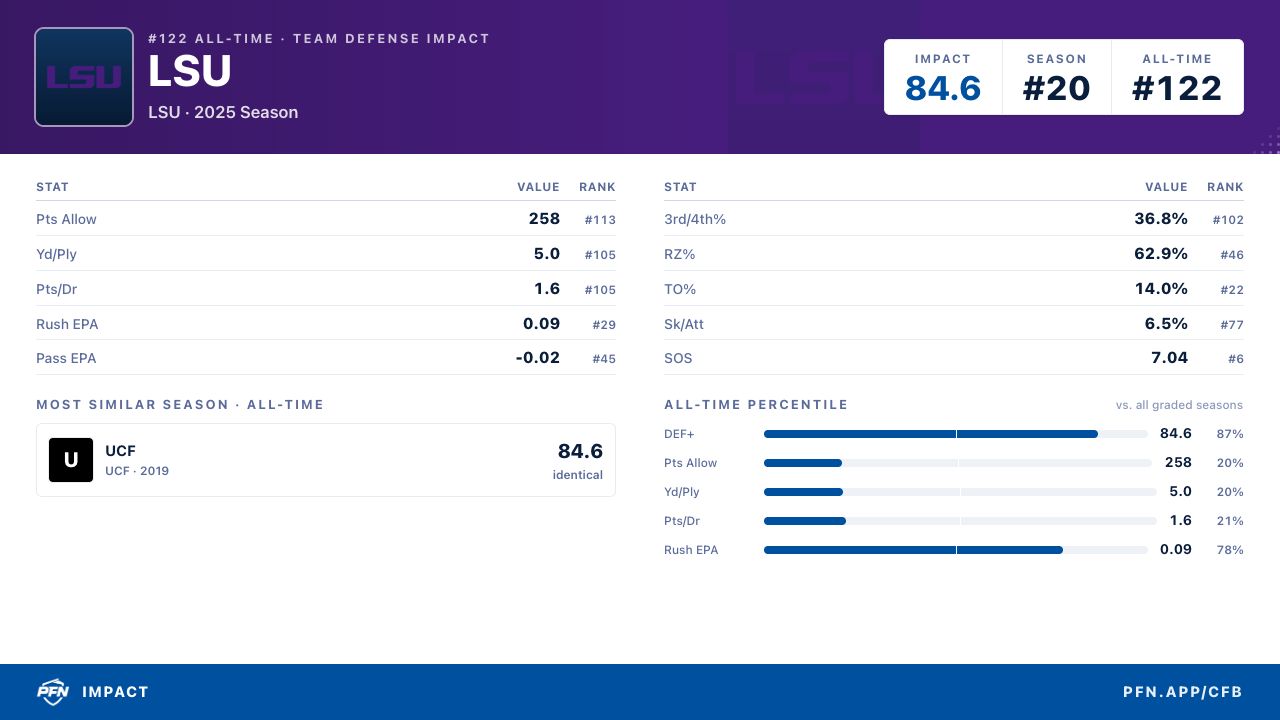
He played a notable role for the Tigers in 2025, recording 52 combined tackles, 5.5 tackles for loss, and 2 sacks. Pyburn’s efforts helped lead LSU to an impact score of 84.6 on PFN’s CFB Defense Impact Metric, which ranked sixth in the SEC.
Much of the downside to all this lies with the coaches.
If players are allowed to ultimately return, it’ll be difficult for an emerging starter to be told they’re headed to the bench in favor of a player who hasn’t been with the team in the offseason.
START PREPARING: PFN’s Free College Fantasy Simulator
Cummings continued, “In the long term, collective bargaining could be viewed as a solution. In certain states, public employees are barred from collective bargaining, and you could make the argument that student athletes at public universities do categorize as such. But I think there’s also an argument to make that, by extension, through these schools, these student-athletes are employed by the NCAA, a private entity.”
Regardless, the NCAA has a big problem on its hands, and the legal system isn’t making it any easier.
This situation isn’t exclusive to football either, as college basketball has also had similar issues emerge in recent years.
In the end, it’ll be up to the NCAA Division I Board of Directors to make things right, hopefully sooner rather than later.
