
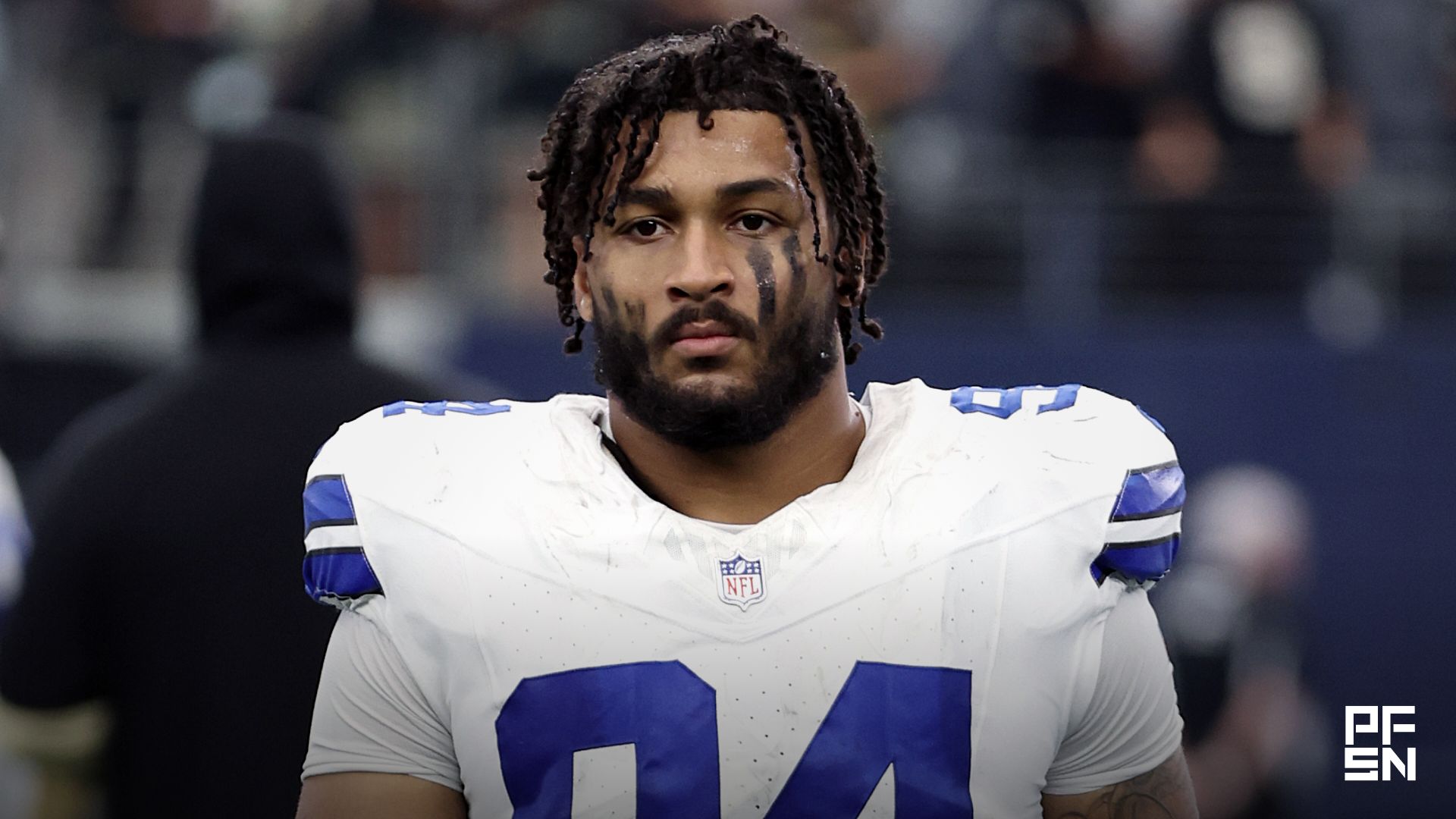
Boston University’s CTE Center posthumously diagnosed former Dallas Cowboys defensive end Marshawn Kneeland with Stage 1 chronic traumatic encephalopathy (CTE). Kneeland died by suicide in November last year, just weeks into his second season after being selected No. 56 overall by the Dallas Cowboys during the 2024 NFL Draft.
The defensive end’s diagnosis was made after his family donated his brain for research after his death.
Doctor Reacts to Marshawn Kneeland’s CTE Diagnosis
The director of the Boston University CTE Center, Dr. Ann McKee, revealed that Kneeland’s CTE diagnosis was not surprising due to its increasing frequency in athletes who die at a young age.
“Unfortunately, I was not surprised to find CTE in the brain of Mr. Kneeland, because we have found this progressive brain disease in nearly half of the athletes we’ve studied who have died before the age of 30,” McKee said.
“Thanks to the generosity of our brain donor families, we now better understand the earliest stages of CTE, and it is bringing us closer than ever to diagnosing it during life. My team and I are fully dedicated to finding effective treatments and a cure for CTE.”
BE THE GM OF YOUR FAVORITE TEAM: PFN’s FREE NFL Mock Draft Simulator
Kneeland played for the Western Michigan Broncos between 2019 and 2023, during which he was a second-team All-MAC selection in his final season of college football.
After the revelation of the diagnosis, the former defensive end’s family and girlfriend, Catalina Mancera, released a statement addressing the new development’s context on his death.
“While this diagnosis does not change the tragedy of his passing, it provides important context about some of the struggles he may have been facing. We share this information to help people understand what NFL and other high-contact sport athletes might be struggling with,” the statement read.
“Raising awareness is important to us. We continue to remember Marshawn with compassion for the person he was, rather than defining him by the final moments of his life. One Love.”
PREDICT THE NFL SEASON: PFN’s FREE NFL Playoff Predictor
According to a report by ESPN, there had been increasing concerns around Kneeland’s mental health, dating back to his college football career, where he had to relinquish his firearm to the police until a counselor gave the all-clear. In addition, authorities were contacted after he expressed his wish to be run over by a train at a railroad track, leading to his hospitalization.
Concussion & CTE Foundation CEO Chris Nowinski gave a glum prediction about the occurrence of CTE among players in the league despite the updated rules to protect them.
“Mr. Kneeland played in the modern era of concussion protocols and better helmets, and yet he still developed CTE,” Nowinski said. “We have no reason to believe the current generation is at a lower risk of CTE than previous generations.
“Concussion protocols do not prevent CTE, because CTE is caused by repeated head impacts, not just concussions. If we want to reduce CTE risk, we must implement CTE prevention protocols and aggressively reduce the number and strength of head impacts at every level of the game.”
CTE has become a hot and almost taboo topic in NFL circles and has four stages, with Stage 4 being the most damaging.