
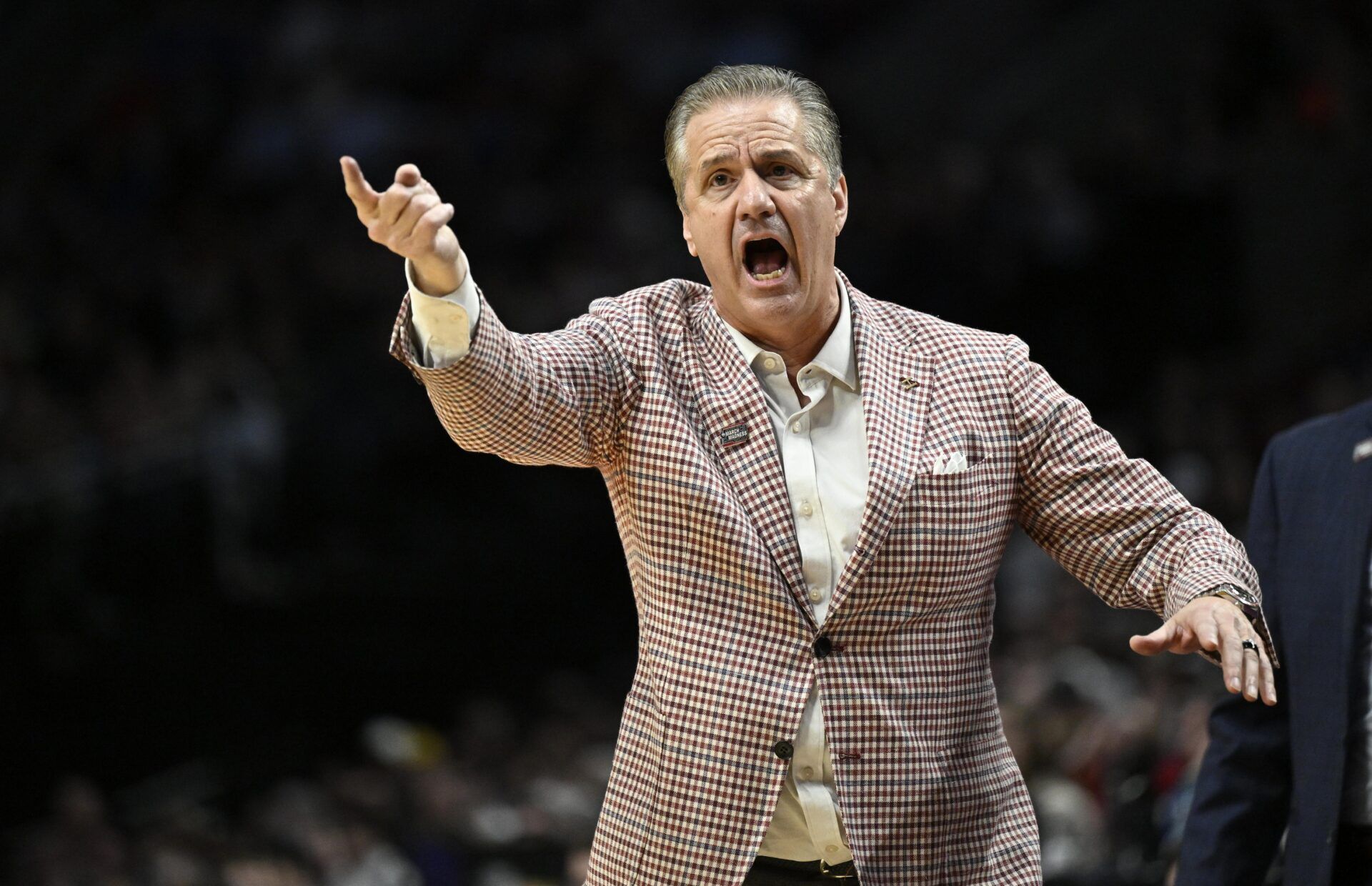
For John Calipari, a cinematic scene is playing out, and it glows in Arkansas red. His Razorbacks are still dancing, still defying neat predictions, still riding the restless energy that carried them through a 94-88 win over High Point and into a second straight Sweet 16 under his watch.

John Calipari on College Basketball Age Limits and the Transfer Portal
Calipari’s team did not get there quietly. It rarely does. Arkansas plays like a team allergic to hesitation, led by Darius Acuff, whose scoring bursts feel less like sequences and more like plot twists.
A week removed from an SEC Tournament title, the Razorbacks now find themselves staring down top-seeded Arizona, a team widely expected to end this particular story. But March, as always, prefers its own endings.
Nevertheless, here’s the thing about Calipari: Even when he’s winning, he sounds a little like someone arguing with time. During a recent appearance on “The Pat McAfee Show,” he peeled back the curtain on his frustration that landed plainly: the game, in his eyes, has stretched itself too far.
MARCH MADNESS: Fill In Your Bracket Now!
“Here’s the issue: we’re letting 27 and 28-year-olds play in college basketball. If you want to be a pro, go pro. There should be an age limit – 25. We’re letting kids transfer every year – well, they can transfer four-to-five times,” Calipari said. “I couldn’t have done what I did at UMass, and probably not at Memphis, in this environment.”
But nothing about the current college landscape is simple.
There’s the transfer portal, spinning constantly, reshaping rosters before coaches can even settle into them. Players leave, arrive, and leave again.
“We’re letting 27 and 28-year-olds play in college basketball. … I couldn’t have done what I did at UMass, and probably not at Memphis, in this environment.”
Arkansas head coach John Calipari joins the @PatMcAfeeShow and talks about the issues across college basketball 🏀 pic.twitter.com/YxJ8ARxGaf
— SportsCenter (@SportsCenter) March 24, 2026
For Calipari, who built his reputation on intensity and honesty, that churn comes with a cost. The old formula, push hard, demand more, doesn’t always hold now that leaving is easier than staying.
“When you’re hard on kids and you challenge them and you’re truthful, they want to leave,” he added.
And yet, there is a quiet irony in all of it: this Arkansas team, thriving in the very system he questions, might be his most emotionally intuitive group in years.
During another segment, Calipari talked about meeting with his players recently, not to diagram plays, but to steady them. He wanted to remind them that this part, the fleeting, breathless stretch of March, goes faster than anyone expects. There’s something almost tender in the way he describes it: telling them they belong, telling them to lean into who they already are instead of trying to become something else overnight.
Against Arizona, Arkansas isn’t supposed to win. The numbers say so. The odds agree.
But Calipari, for all his complaints about the system, isn’t asking his team to fight it. He’s asking them to exist fully inside the moment, to play fast, trust themselves, and let the outcome catch up later.