
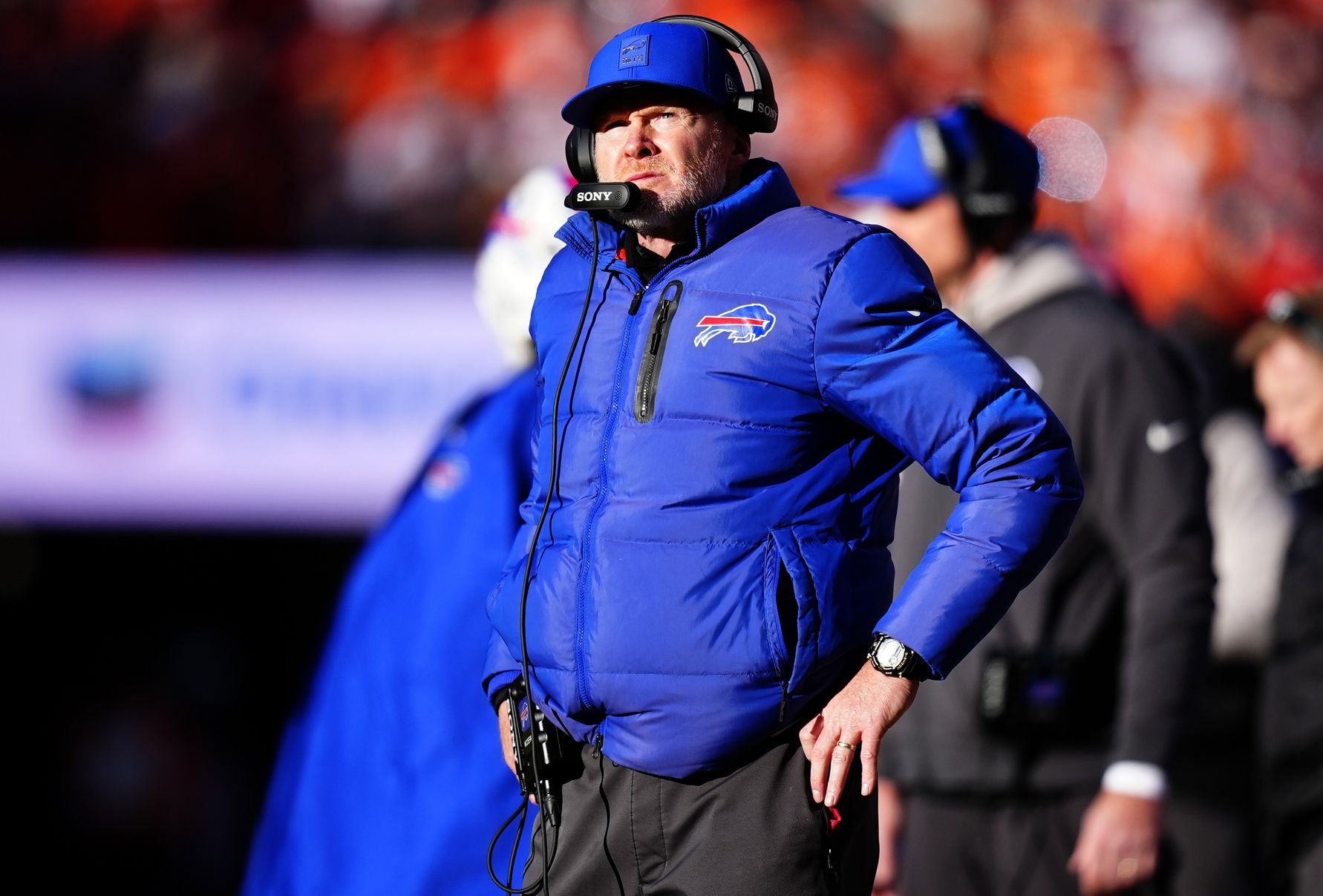
The Buffalo Bills have fired Sean McDermott, ending a nine-year partnership that produced five division titles and zero Super Bowl appearances. Ian Rapoport of NFL Network confirmed the move, which came less than 48 hours after the Bills’ 33-30 overtime loss to the Denver Broncos in the AFC Divisional Round. McDermott, 51, finishes with a 98-50 regular-season record and an 8-8 mark in the playoffs. He built Buffalo into a legitimate contender. He could not turn them into a champion.
The firing was not overly surprising. At most, it was eyebrow-raising after how the season finished. This was a franchise that entered January with its clearest path to the Super Bowl in the Josh Allen era. The Kansas City Chiefs missed the playoffs entirely. So did the Baltimore Ravens and Cincinnati Bengals. For the first time since Allen emerged as an MVP-caliber quarterback, the Bills did not have to go through Patrick Mahomes, Lamar Jackson, or Joe Burrow to reach the AFC Championship Game. They lost anyway.
McDermott’s Defensive Identity Became His Undoing
The cruel irony of McDermott’s tenure is that he rose through the NFL ranks as a defensive architect, only to be ultimately undone by defensive collapses in the biggest moments. Before arriving in Buffalo in 2017, he built his reputation coordinating units in Philadelphia and Carolina. His calling card was game management, situational football, and defenses that tightened in the fourth quarter.
In the playoffs, that script flipped. The Bills have now blown a fourth-quarter lead in four of their last five postseason eliminations under McDermott. The pattern became defining. In January 2022, they surrendered 44 yards in 13 seconds, allowing Kansas City to force overtime. They went on to lose.
In last year’s AFC Championship, they gave up 11 unanswered points to the Chiefs in the fourth quarter. On Saturday, they held a 27-23 lead after Matt Prater’s 31-yard field goal with under seven minutes remaining. Denver drove 73 yards for the go-ahead touchdown, then went on to win the game in overtime after Josh Allen’s controversial interception on a pass intended for Brandin Cooks.
Bills fired HC Sean McDermott, per source. pic.twitter.com/snnTXfzJaD
— Adam Schefter (@AdamSchefter) January 19, 2026
The defense allowed 24 or more points eight times this season, including the postseason. For a coach whose identity was forged on that side of the ball, the timing of those failures told the story. McDermott could get the Bills to the dance. He could not close it out.
The numbers paint a damning portrait of defensive regression under McDermott’s watch. According to PFSN’s Defense Impact metric, the Bills peaked in 2021 under defensive coordinator Leslie Frazier, posting an 88.2 score that ranked first in the league. During Frazier’s six seasons (2017-2022), Buffalo fielded top-10 defenses four times, including elite units that ranked fourth in 2019 and seventh in 2022. Those years coincided with the Bills’ emergence as legitimate Super Bowl contenders, and with McDermott’s reputation as one of the game’s brightest defensive minds.
That reputation eroded after Frazier’s departure following the 2022 season. McDermott assumed playcalling duties himself in 2023 and produced a respectable seventh-ranked unit, but when he handed the defense to Bobby Babich in 2024, the results were disastrous. Buffalo’s Defense Impact score plummeted to 72.6, a C- grade that ranked 19th in the league and marked the second-worst mark of McDermott’s tenure. The 2025 defense improved marginally to 78.0 (13th), but still graded out as just a C+, a far cry from the dominant units that once defined McDermott’s teams.
The timing made the decline particularly unforgivable. McDermott’s two worst defensive seasons came precisely when the path to the Super Bowl was clearest—first in 2024 when the Chiefs were vulnerable, and again in 2025 when Kansas City, Baltimore, and Cincinnati all missed the playoffs entirely. A coach who built his career on defensive excellence could not summon it when it mattered most.
Allen’s performance in Denver was far from blameless. He finished with 283 passing yards and three touchdowns but committed four turnovers: two interceptions and two lost fumbles, tying a career-high for giveaways in a single game. After the loss, he took full responsibility. “I let my teammates down tonight,” Allen said through tears. “This is gonna stick with me for a long time. Can’t win with five turnovers.”
But Allen also threw for those three scores, rushed for 66 yards, and gave the Bills a chance to win despite his mistakes. The defense could not hold. The pattern continued.
What Comes Next for Buffalo
The Bills now become the most attractive head coaching job on the market. The roster includes a reigning MVP at quarterback with multiple years left on his contract. Allen will turn 30 in May, placing urgency on every decision the franchise makes. His prime is not over, but the margin for error is shrinking.
This has been a historic coaching cycle. John Harbaugh was fired by Baltimore after 18 seasons and landed with the Giants. Mike Tomlin stepped down in Pittsburgh after 19 years, though he reportedly does not plan to coach in 2026. Kevin Stefanski was fired by Cleveland and hired by Atlanta. Mike McDaniel was let go in Miami. The carousel has not stopped spinning.
Buffalo will look for someone who can take what McDermott built and push it over the final hurdle. The infrastructure is in place. The quarterback is elite. The cap situation is manageable. What the Bills need now is a closer.
McDermott deserves credit for transforming a franchise that had not made the playoffs since 1999 when he arrived. He made the postseason in eight of nine years and established a culture of accountability. Those accomplishments are real. They are also insufficient for a team that expected more.
The Bills chose not to run it back. Nine years, no Super Bowl. That is the epitaph for the McDermott era in Buffalo.