
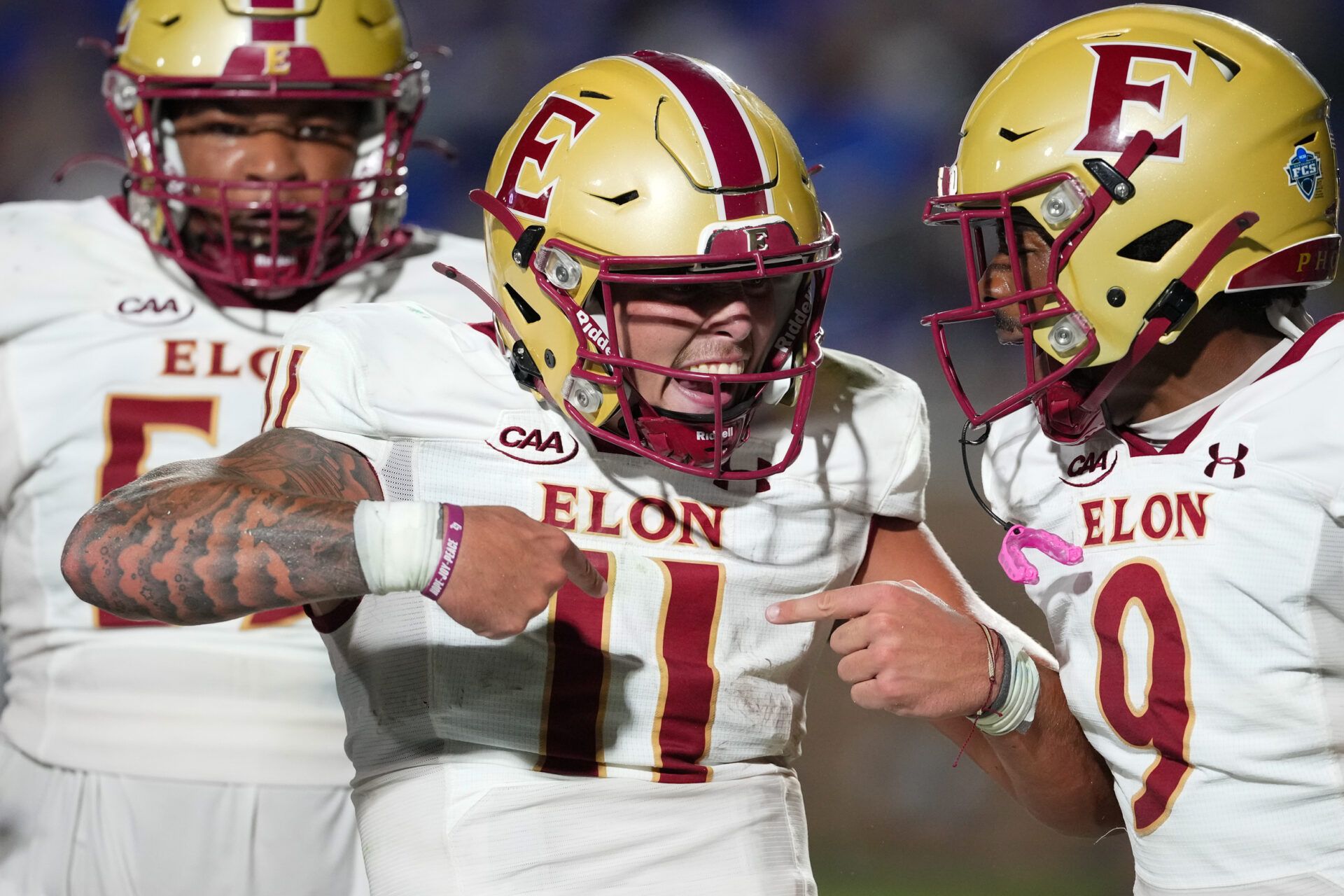
Elon Phoenix signal-caller Landen Clark enters the transfer portal as a Jerry Rice Award finalist after throwing for 2,321 yards and rushing for 614 more during a breakout redshirt freshman campaign, boasting a dual-threat profile that mirrors Heisman Trophy Finalist Cam Ward’s FCS origin story almost exactly.
Why Landen Clark’s Transfer Portal Entry Has Power Four Programs Watching
The comparisons aren’t lazy. They’re structural.
Ward won the Jerry Rice Award in 2021 after throwing for 2,260 yards and 24 touchdowns in just six games at Incarnate Word. He was a zero-star recruit running the Wing-T in high school who nobody wanted.
Clark arrived at Elon after leading Radford High School to Virginia’s Class 2 state championship in 2023, finishing with 4,583 total yards — third-most in VHSL single-season history — and 66 total touchdowns, earning state Offensive Player of the Year honors. He had more polish coming in, but the FCS-to-stardom trajectory looks remarkably similar.
Clark accounted for 29 total touchdowns for the Phoenix this fall, second-most in a single season in program history. He threw 18 scores and ran for 11 more, setting Elon’s FCS-era record for rushing touchdowns by a quarterback. The CAA named him co-Offensive Rookie of the Year, and he earned conference rookie of the week honors three times.
MORE: Ohio State’s Transfer Portal Shopping List Just Got Urgent
What stands out on film is Clark’s ability to extend plays without abandoning his progressions. He’s not a scrambler who happens to throw; he’s a passer who can hurt defenses with his legs when the pocket breaks down.
Against Davidson in Week 2, he threw for three touchdowns and rushed for another. The following week at Western Carolina, he went for 305 passing yards, two touchdowns through the air, and two more on the ground.
Ward needed two seasons at Incarnate Word before transferring to Washington State, where he spent two more years before finally landing at Miami for his Heisman finalist campaign. Clark is entering the portal with multiple years of eligibility remaining and a full offseason to develop before competing for a starting job at the FBS level.
What Separates Clark From Other FCS Transfer Portal Quarterbacks?
The physical tools are obvious. Clark stands 6’0″ and moves like a running back when he tucks the ball. His arm isn’t elite, but it’s more than adequate for modern spread offenses that emphasize timing and ball placement over downfield velocity.
More important is the context. Clark didn’t inherit a loaded roster at Elon. He won a quarterback competition against Iowa transfer Marco Lainez, then led a Phoenix team that finished 6-6 through a full CAA schedule.
The production came against legitimate competition, not cupcakes.
“He’s got work to do, but he’s getting better every day,” Elon offensive coordinator Doug Martin said during the season. “He learns more, and he doesn’t make the same mistakes twice.”
The learning curve matters here. Ward’s path from FCS to first overall pick took five years and three schools. Clark could compress that timeline significantly if he lands somewhere with an established offensive system and adequate protection.
Programs looking for a developmental quarterback with starter upside should be paying attention.
Clark led Radford to a perfect 15-0 record and the program’s first state title in 51 years before arriving in North Carolina. He knows how to win, and he’s already proven he can do it at the college level against older, more experienced defenders.
The portal opens Jan. 2. Power Four programs hunting for their next franchise quarterback would be wise to make Clark an early call.