
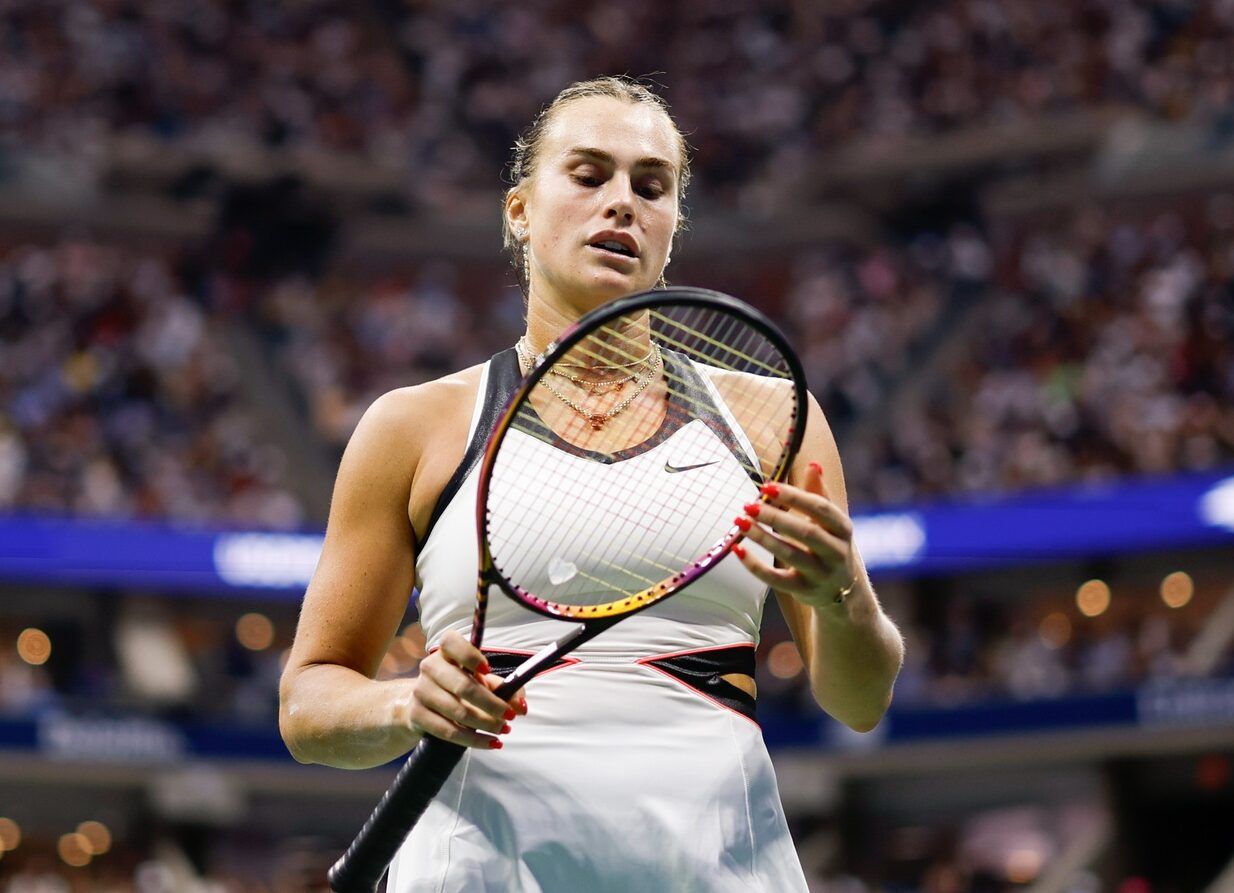
Former British No. 1 Greg Rusedski did not mince words after Nick Kyrgios beat Aryna Sabalenka in a Battle of the Sexes exhibition in Dubai, offering a blunt assessment that cut through the buzz. Rusedski labeled the event a “gimmick” and questioned its value to the sport, arguing that the spectacle leaned too heavily toward showmanship while failing to deliver meaningful competition.

Inside the Nick Kyrgios-Aryna Sabalenka Battle of the Sexes Exhibition
The match, played on Dec. 28, 2025, in Dubai, was promoted as entertainment rather than a ranking or tour-sanctioned contest. Kyrgios won 6-3, 6-3 over Sabalenka, the women’s World No. 1, under modified rules intended to narrow the gap between the men’s and women’s games.
And that’s all she wrote!
Nick Kyrgios defeats Aryna Sabalenka to win the Battle of the Sexes 👏 pic.twitter.com/9Yysdt6F5V
— Tennis Channel (@TennisChannel) December 28, 2025
Sabalenka played on a slightly shortened court, and both players were restricted to one serve per point. The format drew attention and a lively crowd, but it also revived familiar debates about the purpose and optics of cross-gender exhibitions in modern tennis.
Rusedski’s criticism focused squarely on what he felt did not work. Speaking on his Off Court with Greg podcast, he said, “Gimmick, gimmick, gimmick. I did not enjoy it. I just felt Kyrgios was dictating.”
He added that while the opening set showed flashes of competitiveness, the overall presentation fell flat for him. “We saw it a little bit close in the first set. I didn’t like the look of the courts,” Rusedski said, before pointing to Kyrgios’ current standing. “And let’s not forget he’s 671 in the world. Did we actually need this? And is this good for tennis? I’m not so sure.”
Rusedski was careful to praise Sabalenka’s credentials, calling her “a brilliant tennis player, World No. 1, multiple slam winner,” but he remained unconvinced that the matchup served a broader purpose. In his view, the sport already settled the conversation decades ago. “We’ve had the battle of the sexes,” he said, singling out the lone exception.
“There’s no other one in my opinion apart from the one with Billie Jean King and Bobby Riggs, which was historic and created so much drama, created equal prize money in a lot of the events.”
Why Does Greg Rusedski Believe the Conversation Was Settled Long Ago?
He went further, noting the ripple effects that followed, including the financial success of women’s tennis. “You have the 12 highest-paid sports women who are tennis players in the history of sport. So it’s already done that,” Rusedski said.
Returning to the present, he questioned the logic of centering a modern exhibition on Kyrgios’ ranking and recent inactivity. “You’ve got to remember you’re talking about the 671st player in the world. A guy who hasn’t been in shape, hasn’t played for three years. You could see him sweating profusely on the court, and I just felt like it just didn’t work for me.”
Framed as a modern take on the 1973 Billie Jean King-Bobby Riggs match, the event emerged amid increasingly complex debates surrounding gender and fairness in sports. Critics said reviving the concept risks trivializing a landmark moment in women’s sports and may reinforce comparisons that undermine women’s achievements.
