
The New York Jets are heading into yet another franchise-defining quarterback search, and once again, the possibilities extend far beyond the upcoming NFL Draft. While the Jets would ideally land one of the projected top prospects in the 2026 class, Indiana’s Fernando Mendoza, Alabama’s Ty Simpson, or Oregon’s Dante Moore, nothing about the draft landscape is guaranteed.
College players can return to school, draft stocks rise and fall, and with seven games left this season, the order itself remains far from settled. Even with five first-round picks over the next two years, the Jets cannot assume they’ll have access to the quarterback they truly want. That’s why the organization must explore every avenue, including trade candidates, bridge quarterbacks, and veteran stopgaps.
Mac Jones: A Viable Bridge Option
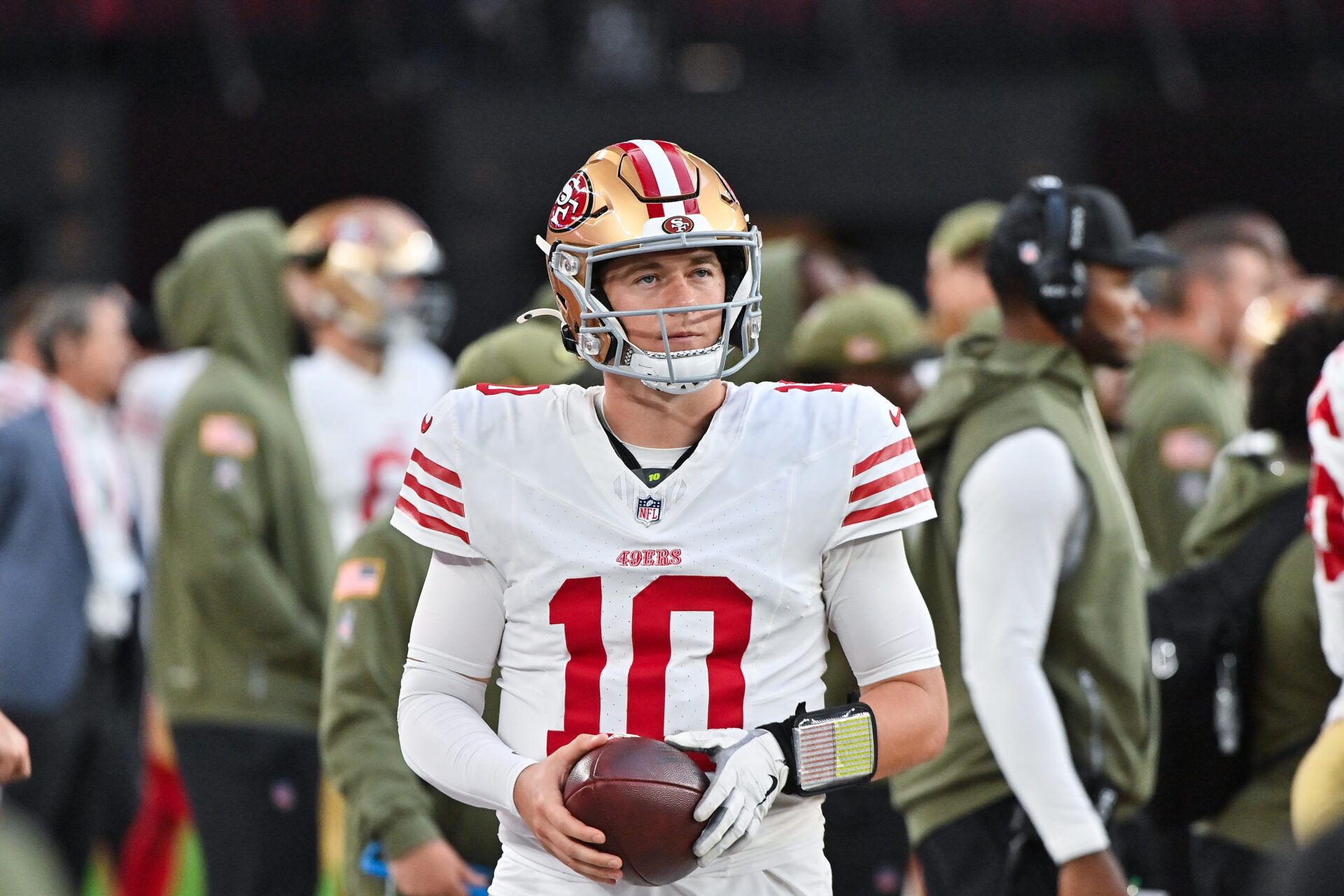
One realistic, attainable option is Mac Jones. The former Patriots first-round pick signed a two-year, $8.4 million deal to serve as Brock Purdy’s backup, but he has significantly outperformed that contract. Jones has looked much closer to the poised rookie who once led New England to a 10-win season, completing over 70% of his passes and demonstrating his ability to operate efficiently within a structured system.
NFL Network’s Ian Rapoport recently reported that multiple teams are expected to inquire about Jones, calling him “a starting quarterback that can win games.” Jones seems like the best option for this team if they are looking for a player who can help them win, without having to open up the bank account, and without having to trade too much.
He’s proven himself in a big way this year with Purdy getting hurt and getting extensive amounts of playing time. He holds an 80.2 QB Impact grade in PFSN’s metric, placing him 11th among all qualifying NFL quarterbacks. He’s inexpensive, he’s experienced, and he fits the mold of the type of bridge quarterback the Jets could pair with a rookie.
The Big Swings: Kyler Murray or Trevor Lawrence
If the Jets want to take a major swing, two names could potentially be available, though both remain long shots.
Kyler Murray is the most intriguing. When healthy, Murray is a dynamic playmaker capable of beating defenses with his arm and legs. But staying healthy has been his biggest issue; he has missed games in three of the last four seasons. This year is no different, having been sidelined since Week 5 before being placed on IR with a foot injury.
Murray’s slight frame and inconsistent production make him seem more like a question mark if New York should make a move like this. He has struggled this year with a 75.3 grade on PFSN’s grading scale(18th in the NFL).
Arizona faces a major decision with Murray as his $19.5 million salary for 2027 becomes fully guaranteed early in the new league year. With the Cardinals at a crossroads, a trade isn’t impossible, and a fresh start in a big market like New York could rekindle his upside.
Trevor Lawrence is another hypothetical trade option, though even less likely. The former No. 1 pick continues to underwhelm in Jacksonville, completing under 60% of his passes with 11 touchdowns and eight interceptions this season. Last year, the Jaguars gave him a five-year, $275 million extension with a full no-trade clause. Moving that contract would require both a massive trade haul and Lawrence’s approval.
Lawrence hasn’t met expectations at all, grading out at a 66.3 in PFSN’s grading structure(32nd in the NFL). Still, given his struggles, the idea of a change of scenery will inevitably generate offseason speculation. Could the Jets tap into that potential that once made him viewed as a “generational” prospect?
Free Agency Doesn’t Offer Much
The 2026 free-agent class is not inspiring. The most notable name is Daniel Jones, but a reunion with the Giants appears unlikely, both because of how his tenure with the team ended and because he is playing well for the Colts. Indianapolis would not let him walk for nothing and without having any other viable option on the roster. They would be expected to franchise tag him.
This means free agency is unlikely to provide a true long-term answer, making it a supplemental route rather than a primary one.
Veteran Stopgaps Still Make Sense
If the Jets choose to exercise patience, and they should, there are affordable veteran options who can serve as short-term starters while New York grooms a rookie quarterback. Players such as Gardner Minshew, Kirk Cousins, or Jake Browning could all be available for low-cost draft capital.
They’re not long-term franchise answers, but they can keep the team competitive while the Jets wait for the right opportunity in either the 2026 or even the 2027 NFL Draft.
Patience Might Finally Be the Right Play
For once, the Jets cannot simply draft a quarterback because they are not feeling pressured to do so. They must draft their quarterback, the one they believe in, the one they can build around, the one they’re willing to commit to for a decade.
If that player isn’t available in 2026, waiting until 2027 is not only acceptable but potentially a smart move. With a stockpile of draft picks, the Jets have more flexibility than most franchises. They don’t need to rush. They need to get it right.
The Jets have spent years chasing quick fixes. This time, patience and the right bridge plan might be the key to finally ending their quarterback carousel.
