
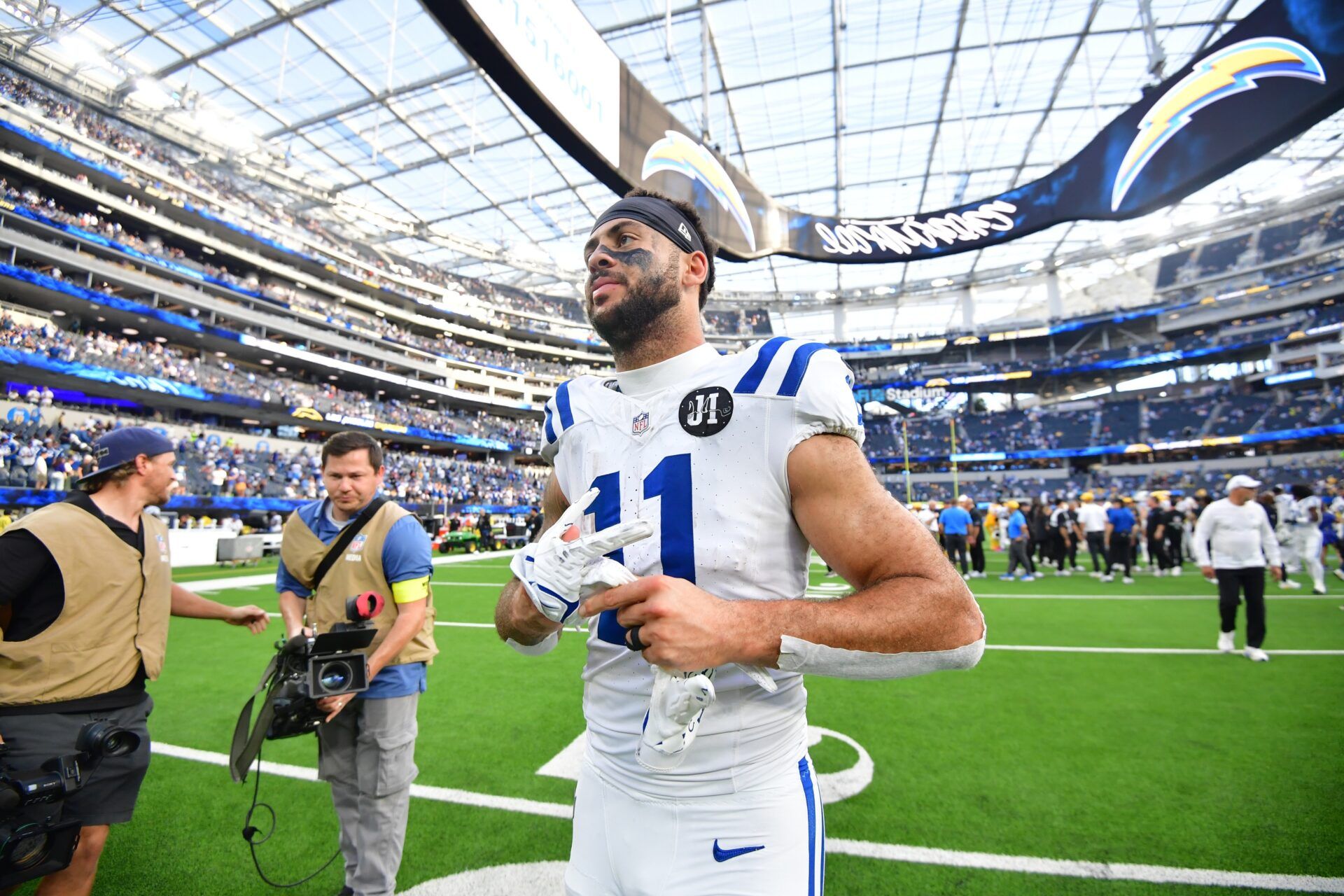
Michael Pittman Jr.’s NFL path traces directly to a father who spent 11 seasons in the league and won a Super Bowl. Michael Pittman Sr. played as a running back in the NFL from 1998 to 2008, with long stints in Arizona and Tampa Bay before finishing his career in Denver.
He helped steer his son from the backfield to wide receiver as the younger Pittman grew into a 6-foot-4 frame. Their shared story is a rare blend of on-field legacy and deliberate position coaching at home.

What NFL Teams Did Michael Pittman Sr. Play For In His Pro Career?
Pittman Sr. entered the league with the Arizona Cardinals in 1998, becoming a featured back across four seasons in the desert. His tenure in Arizona established the workload that would define an 11-year career and set the stage for a move to the NFC South.
Arizona Cardinals, 1998-2001
From 1998 to 2001, Pittman Sr. logged his first four NFL seasons with the Cardinals, building a volume-rushing profile and multi-year production in the backfield.
The stretch anchored his reputation as a durable runner ahead of the prime years that followed.
Tampa Bay Buccaneers, 2002-2007
Pittman Sr. signed with Tampa Bay in 2002 and became a core offensive contributor through the Buccaneers’ Super Bowl run, highlighted by 124 rushing yards in the Super Bowl XXXVII win over the Las Vegas Raiders. He remained with Tampa until 2008, compiling 3,362 rushing yards and 10 touchdowns over his tenure with the Buccaneers.
Denver Broncos, 2008
In 2008, Pittman Sr. joined the Denver Broncos for his final NFL season, closing an 11-year career that had spanned three franchises and a title. The brief Denver stop capped a run that included time under and alongside notable coaches and future head coaches.
Michael Pittman Jr. And Michael Pittman Sr. Playing Style Comparison
Pittman Jr. grew up immersed in football, initially modelling himself after his father as a running back and wearing No. 32. As he shot past 6 feet in high school, Pittman Sr. counselled a position switch to wide receiver, a move that matched the son’s size, ball skills, and emerging vertical game.
The elder Pittman emphasized technique and pro habits rather than pressure, connecting his son with former NFL receivers and guiding him toward a program at Oaks Christian High School with pro-level coaching. That network of coaching and mentorship helped accelerate the younger Pittman’s transition to receiver before USC and ultimately the NFL.
At USC, Pittman Jr. refined contested-catch skills and downfield timing, culminating in a 2019 season with 101 receptions, 1,275 yards, and 11 touchdowns, a profile far closer to a boundary receiver than a backfield runner. The father’s evaluation proved prescient as the son developed into a physical, high-point target with work habits shaped by pro guidance.
In nine games this season, the Colts’ star has recorded 52 receptions for 561 yards and six touchdowns. According to PFSN’s WR Impact metric. Pittman Jr. is currently ranked 19th among the receivers in the league.
Stylistically, the father’s success came through durability, vision, and backfield production, while the son’s strengths center on size, catch radius, and perimeter winning. Both trace their approach to routine and accountability, but the positions they occupied diverged as the game evolved, and the son’s frame dictated a better fit on the outside.
Today, Pittman Jr. carries forward the family’s NFL lineage as a wide receiver, crediting early counsel for the path change and the pro-standard training environment his father cultivated. It is the rare father-son blueprint that balanced legacy with honest assessment, yielding two distinct NFL roles that share a common foundation of preparation.
