
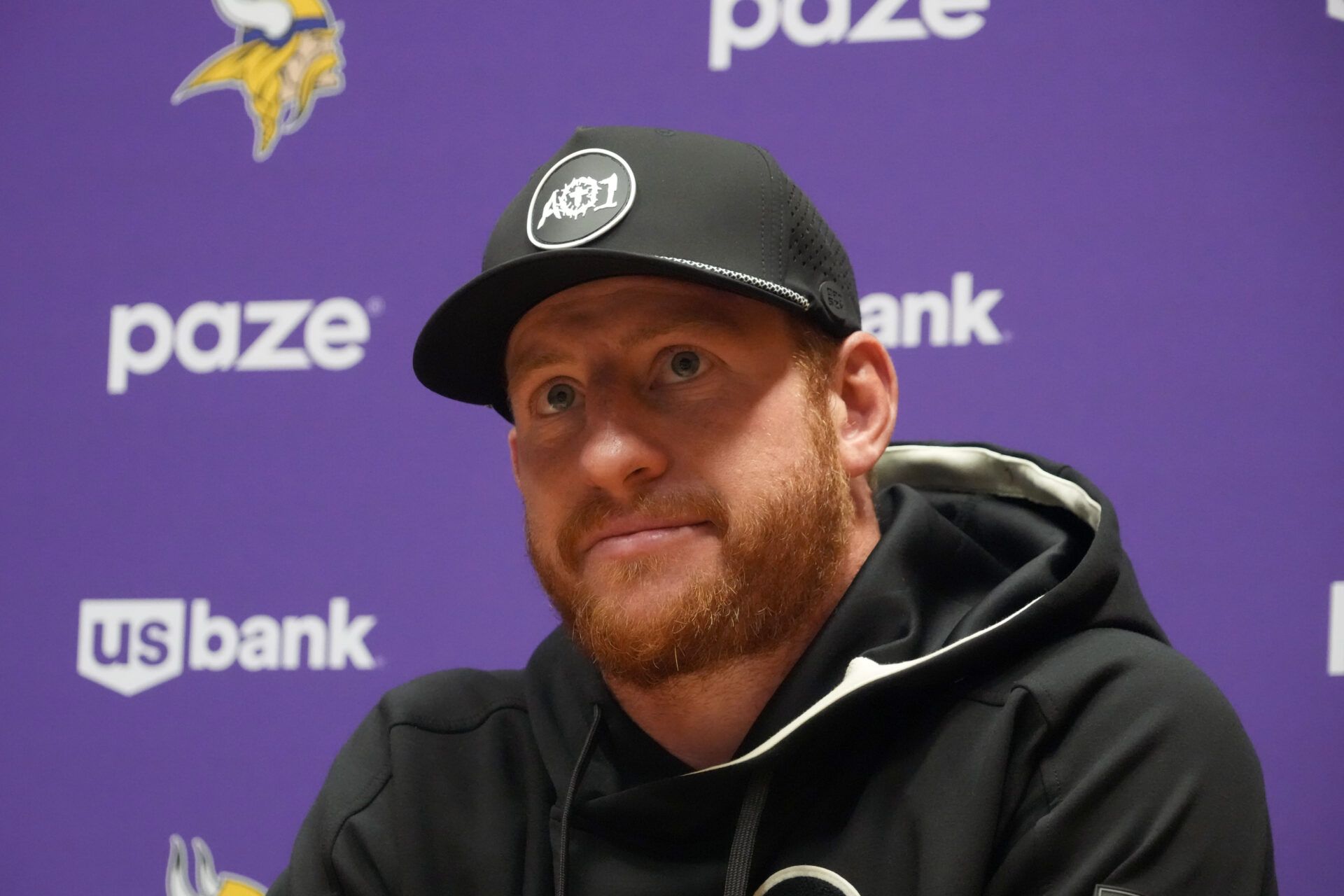
Carson Wentz left SoFi Stadium hurting, angry, and out for the season. Despite a 3-4 record and a loss to the Chargers on Thursday, which raised more questions than answers, Wentz made a lasting impression on the Vikings’ locker room. They witnessed a veteran give his all for a team in transition. This is a career crossroad for Wentz and a revealing moment for Minnesota as J.J. McCarthy steps back into the huddle.
Carson Wentz Shows Real Grit
For the past several weeks, Wentz played through a dislocated left shoulder with a torn labrum and fractured socket. He wore progressively bulkier harnesses, took five sacks in Los Angeles, and still tried to push the ball while grabbing his arm between snaps. Weeks earlier in London, he returned from a shoulder injury to complete all nine passes on the final drive against the Browns, throwing the game-winning touchdown to receiver Jordan Addison with seconds remaining. That is real, documented pain tolerance.
Head coach Kevin O’Connell has said the medical guidance was clear. The staff believed Wentz was not risking further structural damage and that the decision came down to pain management. Wentz wanted to keep playing. He told coaches he could, and he did, until the reality of the situation outweighed the will.
The human side matters. Teammates saw a veteran chase a childhood dream in purple, manage pain, and handle a tough role with humility. That puts useful tape into the market for a 32-year-old who will be a free agent after shoulder surgery. Toughness sells to quarterback rooms that value trust and professionalism.
Kevin O’Connell’s Decision and What It Means
O’Connell framed it as honoring a quarterback’s mentality. He said there was never a point when the team went against medical best interest or Wentz’s wishes. That explains the choice in the moment. It does not erase the optics of leaving a clearly compromised passer in a game that completely slipped away.
There was a football argument to sit Wentz once the three-score margin arrived late in the third at Los Angeles. The team’s top two offensive tackles were out due to injury. Pressure was relentless. The Vikings’ offensive line ranks 30th in PFSN’s OL Impact metric. The comeback odds were microscopic. Backup quarterback Max Brosmer could have handed off, thrown quick-game, and helped the team land the plane. Coaches chose continuity with the veteran instead.
The line between honoring a player and protecting him is thin. The Vikings must own that balance now that Wentz is headed for surgery. The decision will be discussed alongside other injury storylines this season. Fair or not, it becomes part of the wider evaluation of process as Minnesota tries to stabilize.
So, Is Wentz’s Career Over?
The short answer is no, not yet. The next steps are surgery, rehab, and a market that always finds room for reliable quarterbacks who can hold a season together. Wentz has already shown the traits that keep players employed.
Minnesota will move forward with McCarthy, but the league will remember what Wentz did before his season ended. He kept standing up when he could have stayed down. He fought through pain that would have sidelined most players. His body finally gave out, but his mindset never did.
Wentz may not be done with football. Football may not be done with him either.
